To learn a new skill, make the first version smaller than the whole ambition. Learning a language might begin with a short conversation pattern; learning to cook might begin with one reliable dish. A specific starting point lets you practise instead of repeatedly researching how to begin. Choose a skill that interests you and a pace that fits your available time.
Define a practice task you can repeat
A broad goal such as become creative does not tell you what to do today. Choose an action with a clear beginning and end. Keep the first task simple enough that you can notice what changed between attempts. Avoid buying a large course or equipment collection before understanding whether you enjoy the practice itself.
NHS wellbeing guidance includes learning new skills. A manageable practice routine can make an interest easier to explore without promising a fixed learning speed.
Background guidance: NHS: Five steps to mental wellbeing; NIH News in Health: Creating healthy habits.
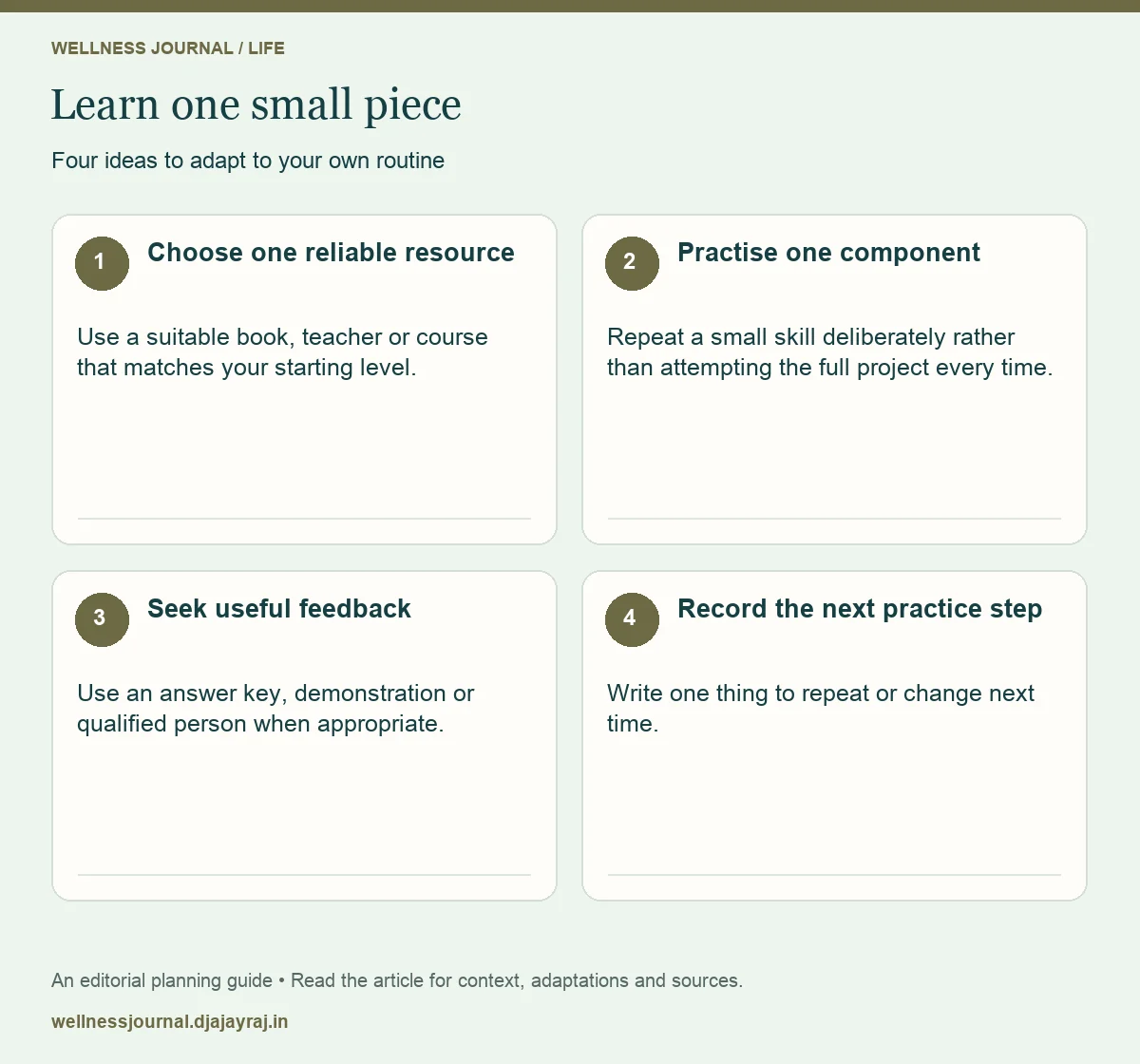
Four practical steps
Choose one reliable resource
Use a suitable book, teacher or course that matches your starting level. Check qualifications when safety or professional standards matter. Too many resources can create conflicting instructions before you have learned the basics.
Practise one component
Repeat a small skill deliberately rather than attempting the full project every time. Notice the part that is difficult. A manageable challenge gives you something specific to improve.
Seek useful feedback
Use an answer key, demonstration or qualified person when appropriate. Ask a focused question about the component you are learning. General praise or criticism is less useful than information about the next adjustment.
Record the next practice step
Write one thing to repeat or change next time. Keep the note short. This makes returning easier and reduces the temptation to restart the research process at every session.
Turn an interest into practice
| Interest | Small practice task | Feedback source |
|---|---|---|
| Language | One short conversation pattern | Teacher or reliable model |
| Cooking | One tested simple dish | Recipe result and safe method |
| Drawing | One shape or observation | Comparison with the subject |
| Music | One short passage | Suitable instruction |
Make it work for you
Let progress be uneven
Some parts will become easier quickly while others need more time. Avoid treating a difficult session as a verdict on ability. Adjust the task size, resource or practice conditions. If the skill involves physical risk, use qualified instruction and appropriate equipment rather than experimenting beyond your knowledge.
End while the next step is clear
Write the next action before putting materials away. You do not need to practise until exhausted to make the session count.
Quick checklist
- Start with one component.
- Use a suitable resource.
- Ask for specific feedback.
Common questions
How many hours does mastery take?
There is no universal number that predicts your result. The skill, instruction, practice and goals all matter.
Should I practise every day?
Choose a frequency you can sustain. Regular practice can be useful, but the schedule should fit the skill and your circumstances.