To maintain friendships during a busy season, make the next contact easier to answer. We should catch up sometime is warm but vague; a short walk on a particular day gives the other person something concrete to consider. The aim is not to schedule every relationship like a project. It is to remove a little friction from spending time with people you value.
Offer a plan with a low entry cost
Consider travel, money, childcare, accessibility and energy. A long evening out may be difficult while a short call is possible. Choose a format that fits the friendship and leave room for a different suggestion. An invitation should communicate interest, not create an obligation or demand an explanation when someone cannot make it.
NIH and NIA resources describe social connection as relevant to wellbeing. Connection can take different forms and does not require a packed social calendar.
Background guidance: NIH: Social wellness toolkit; NIA: Staying connected.
Four practical steps
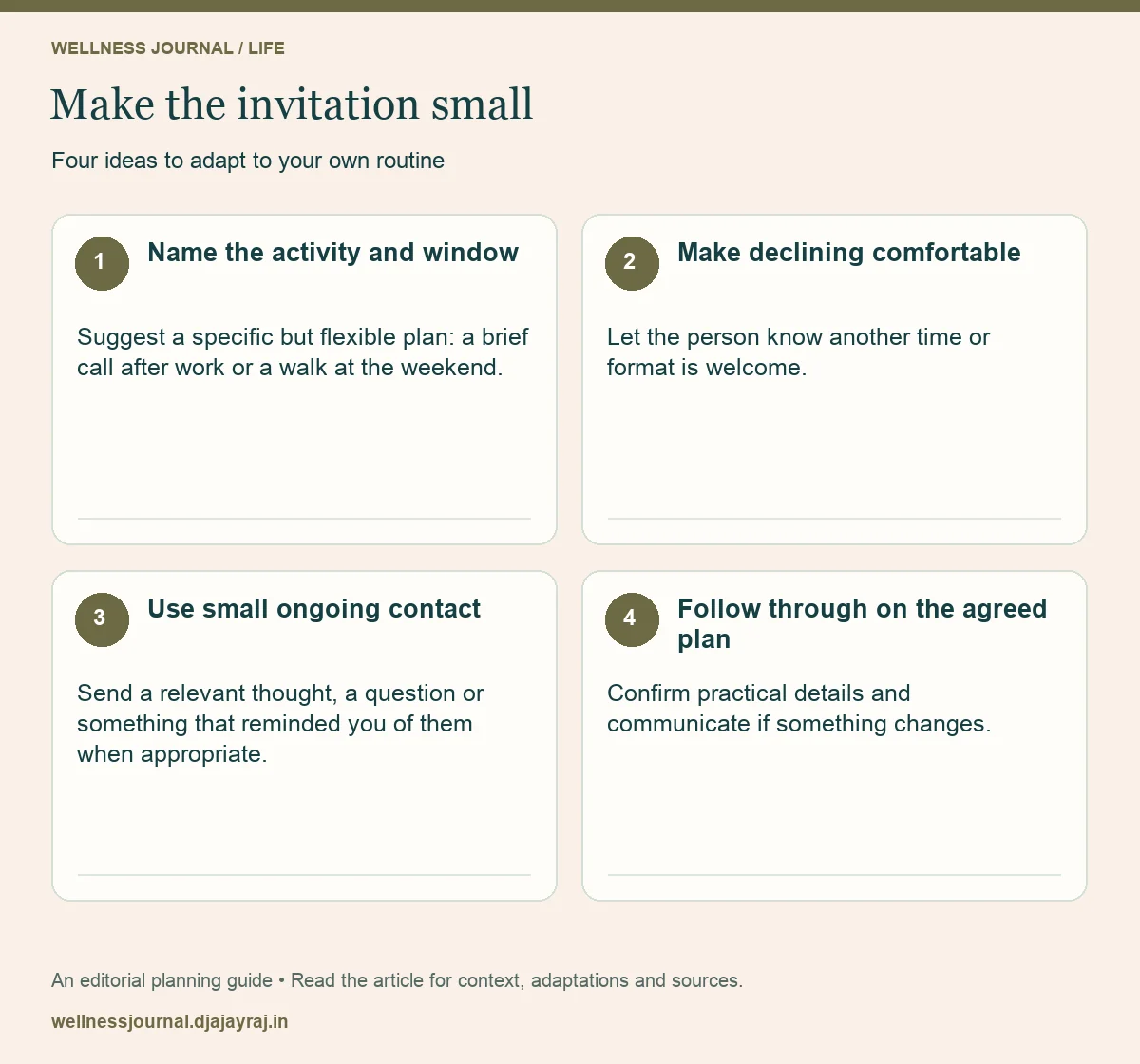
Name the activity and window
Suggest a specific but flexible plan: a brief call after work or a walk at the weekend. Include enough detail that the person can decide. Avoid sending a complicated list of possibilities that turns the invitation into another task.
Make declining comfortable
Let the person know another time or format is welcome. A decline may reflect circumstances rather than the value of the friendship. You can express interest without asking someone to prove that they care by accepting.
Use small ongoing contact
Send a relevant thought, a question or something that reminded you of them when appropriate. Keep contact reciprocal over time, while recognising that capacity changes. You do not need to maintain daily conversation for a friendship to matter.
Follow through on the agreed plan
Confirm practical details and communicate if something changes. Reliability makes small invitations useful. If cancellations keep happening, discuss a format that genuinely fits instead of repeatedly making the same impossible plan.
Match the invitation to the circumstances
| Constraint | Possible invitation | Keep it clear |
|---|---|---|
| Little free time | Short call | Suggest a manageable window |
| Limited budget | Walk or time at home | Avoid hidden costs |
| Distance | Video or voice conversation | Consider time zones |
| Low energy | Quiet, brief visit | Make an easy exit possible |
Make it work for you
Notice the quality of the connection
A larger contact list is not automatically a more supportive social life. Consider whether you can be yourself, listen and feel respected. If a relationship repeatedly leaves you unsafe or undermined, the answer is not simply to schedule more contact. Seek support where needed and choose boundaries appropriate to the situation.
Send one clear invitation
Pick one person and one manageable activity. Avoid turning the exercise into contacting everyone you have not seen recently. A specific next step is enough for today.
Quick checklist
- Consider cost, access and energy.
- Allow an easy no or alternative.
- Follow through on the plan you agree.
Common questions
How often should friends talk?
There is no universal frequency. Relationships differ; shared expectations and the quality of contact matter more than a fixed schedule.
What if I always initiate?
You can discuss it or adjust the effort you invest. Consider the person's circumstances, but do not ignore a pattern that leaves you consistently unsupported.