A small home library can be one shelf, a box or a few borrowed books beside a chair. The point is to make reading easy to choose, not to display a complete identity. Keep current interests accessible and give books a place that suits the room. A modest collection you use can be more enjoyable than a large pile that creates pressure.
Separate current reading from long-term storage
Choose a small number of books you genuinely want to open soon. Put the rest elsewhere if space allows. This reduces the need to scan a large collection every time you have a few minutes. Borrowed and digital books can be part of the same system, with due dates or access details kept where you will notice them.
Learning and enjoyable routines can fit everyday wellbeing. A useful reading space is defined by access and use, not the number of books owned.
Background guidance: NHS: Five steps to mental wellbeing; NIH News in Health: Creating healthy habits.
Four practical steps
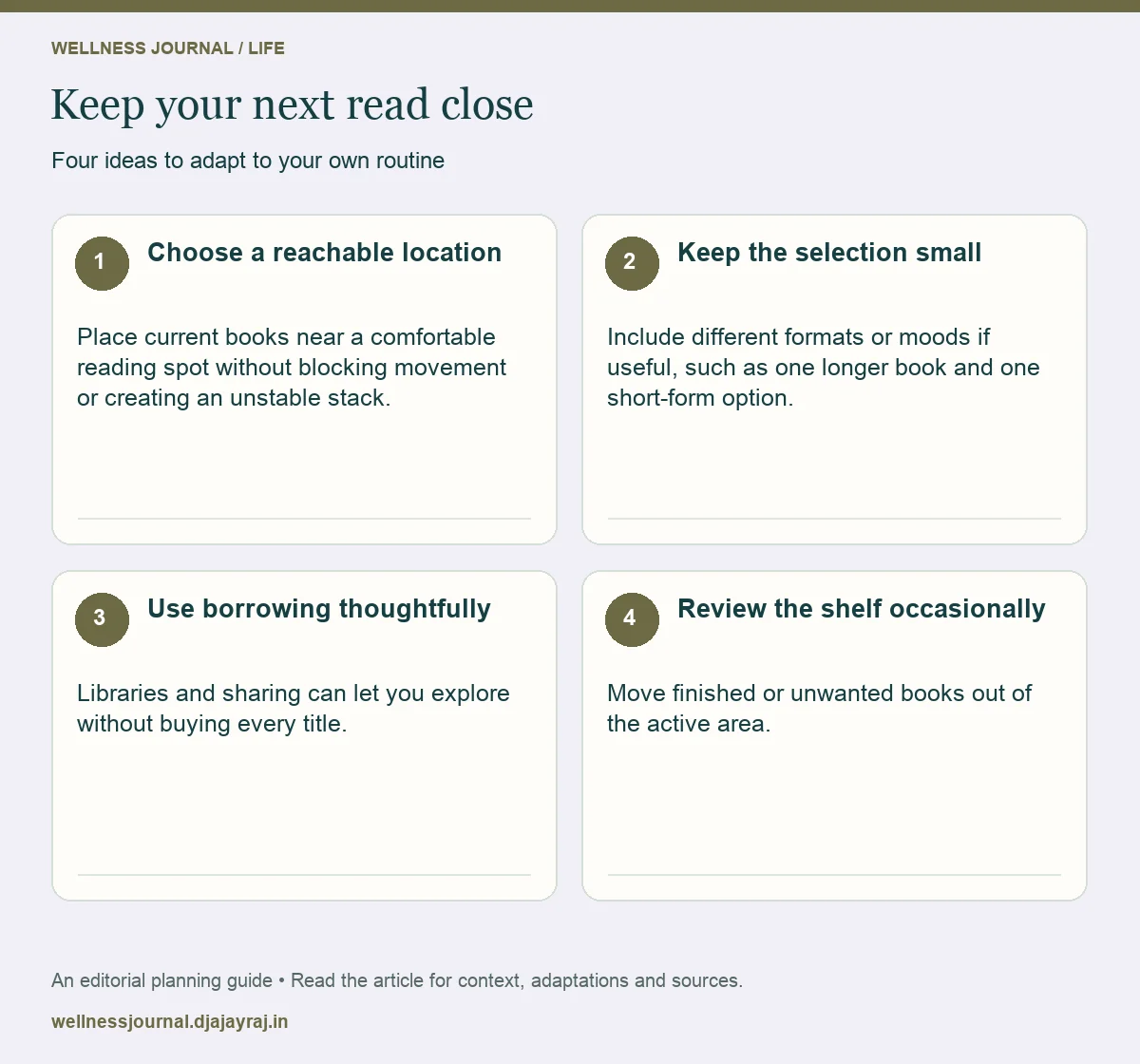
Choose a reachable location
Place current books near a comfortable reading spot without blocking movement or creating an unstable stack. Consider light, accessibility and the way the room is used by others.
Keep the selection small
Include different formats or moods if useful, such as one longer book and one short-form option. Avoid treating every unread book as an urgent commitment. You can change the selection when your interests change.
Use borrowing thoughtfully
Libraries and sharing can let you explore without buying every title. Track return dates and treat other people's books carefully. Check current local services and accessibility options through official information.
Review the shelf occasionally
Move finished or unwanted books out of the active area. Donate, return or store them through appropriate channels when you choose. Keep books with personal value without requiring every item to justify itself through productivity.
A small reading-space structure
| Area | What belongs there | Useful limit |
|---|---|---|
| Current reading | A few appealing titles | Easy to choose from |
| Borrowed books | Items with return dates | Keep dates visible |
| Reference | Books used for specific tasks | Store near the task |
| Long-term collection | Books you want to keep | Safe, suitable storage |
Make it work for you
Make the format fit your needs
Large print, ebooks and audiobooks can be part of a personal library. Physical shelves are not the only valid form. Choose accessible formats and avoid buying storage furniture before you know what you need. The library should support reading rather than become a separate organising hobby unless you enjoy that too.
Put one book where the next pause happens
A visible, appealing choice near your usual seat can make reading easier to begin. Keep it safe from spills and shared-space clutter.
Quick checklist
- Keep current reading accessible.
- Track borrowed-item dates.
- Avoid unsafe stacks or blocked routes.
Common questions
How many books make a library?
There is no minimum. A few useful or enjoyable books can serve the purpose.
Should I keep books I did not finish?
Only if you want to return to them or value keeping them. An unfinished book is not an obligation.