A day out planning checklist should remove predictable problems without scheduling every minute. Start with the people, the destination and the main reason for going. Check the few details that could derail the day: opening hours, transport, accessibility and food. Then leave room for a slower pace, a change of interest or an earlier return.
Choose one main anchor
Make the primary activity clear and treat other stops as optional. A long chain of must-do attractions can turn a pleasant outing into a timetable. Consider how much walking, waiting and travel the day involves, not just the time spent at the destination. Different people may need different breaks or exit options.
Practical planning should account for access, weather and individual needs. During hot conditions, official heat guidance may require changing the outing.
Background guidance: NIH: Social wellness toolkit; CDC: Heat and your health.
Four practical steps
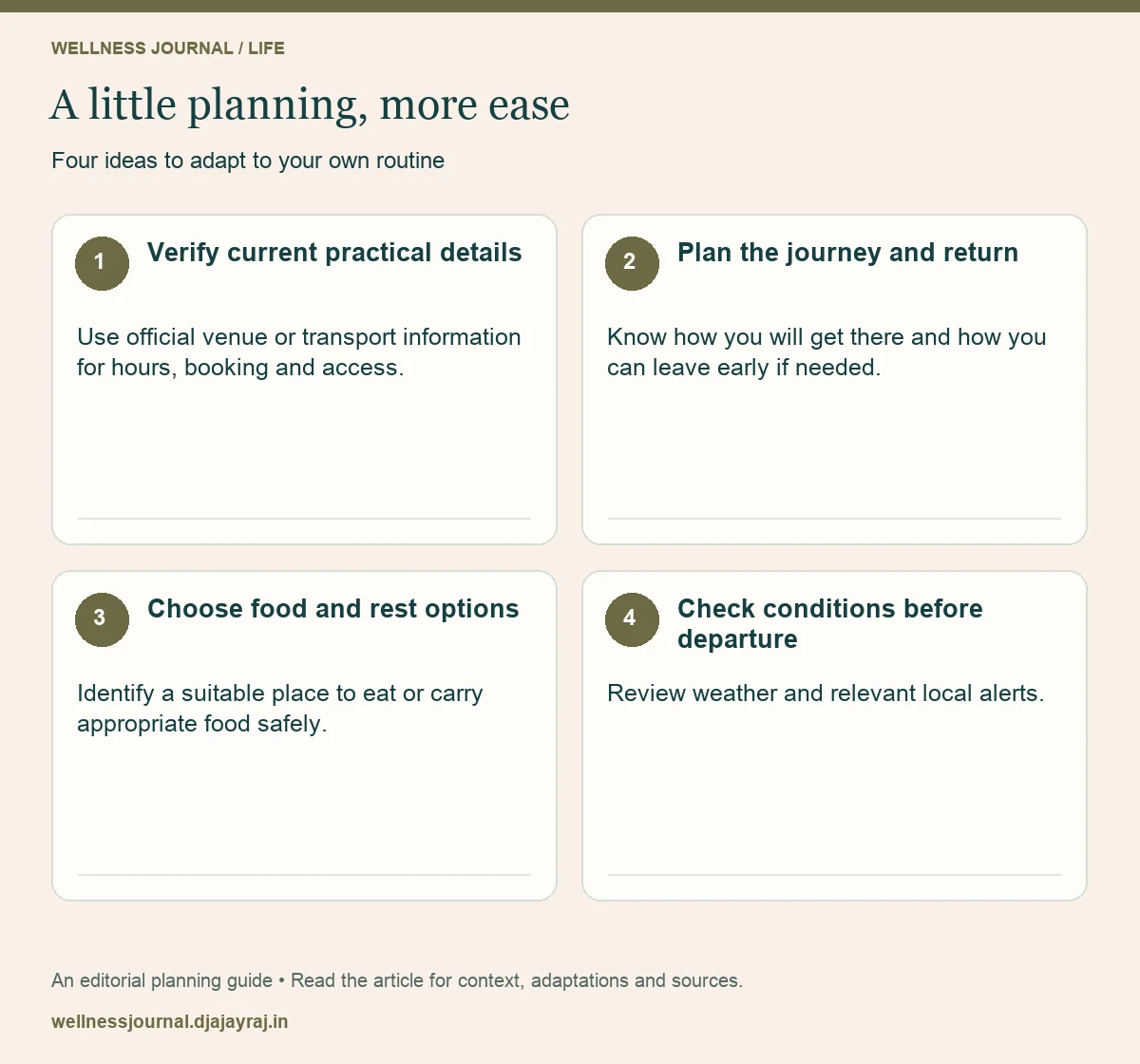
Verify current practical details
Use official venue or transport information for hours, booking and access. Check whether reservations or identification are required. Do not rely on an old social post for a time-sensitive detail.
Plan the journey and return
Know how you will get there and how you can leave early if needed. Consider delays, cost and accessible routes. Keep essential contact or ticket information available without depending on a weak connection.
Choose food and rest options
Identify a suitable place to eat or carry appropriate food safely. Leave time for breaks. Allergies, medicines and other individual needs may require more specific preparation.
Check conditions before departure
Review weather and relevant local alerts. Change the plan for unsafe heat, storms or other concerns. A backup should preserve the enjoyable part without forcing the original destination.
The essentials to check once
| Area | Question | Useful backup |
|---|---|---|
| Venue | Is it open and accessible? | Another suitable activity |
| Travel | How do we return? | Earlier or alternate transport |
| Food | What fits everyone's needs? | Safe portable option |
| Conditions | Are weather and alerts suitable? | Indoor or postponed plan |
Make it work for you
Agree on how flexible the day can be
Discuss whether people prefer a fixed schedule or room to improvise. A brief agreement can prevent frustration later. If someone needs to leave or rest, treat that as part of the plan rather than a failure of enthusiasm. The outing should fit the participants, not require them to ignore their needs.
Pack only the essentials you will use
Keep the load manageable and ensure important items are easy to reach. A heavy bag of just-in-case objects can make the day less comfortable.
Quick checklist
- Verify current official details.
- Plan a workable return.
- Leave time and permission for breaks.
Common questions
Should I book every hour?
Usually a few anchors are easier to adapt. Add detail where timing genuinely matters, such as transport or reservations.
What if the weather changes?
Use the backup or postpone when necessary. Completing the original plan is less important than a safe, enjoyable day.