A shared calendar routine works when people agree what the calendar means. Does an entry require someone else's help? Is a tentative plan confirmed? Who updates a changed appointment? These small questions matter more than the app's colour scheme. Use a simple system that fits the household's devices, privacy needs and willingness to maintain it.
Choose what genuinely needs sharing
Include events that affect transport, care, shared space or another person's availability. Not every private appointment needs full details. A simple unavailable block may be enough. Agree on privacy and access before adding sensitive information, especially when the calendar is shared beyond the immediate household.
Clear communication and priorities can support household coordination. A calendar is a shared planning aid, not a substitute for discussion.
Background guidance: NIH: Social wellness toolkit; NIMH: Caring for your mental health.
Four practical steps
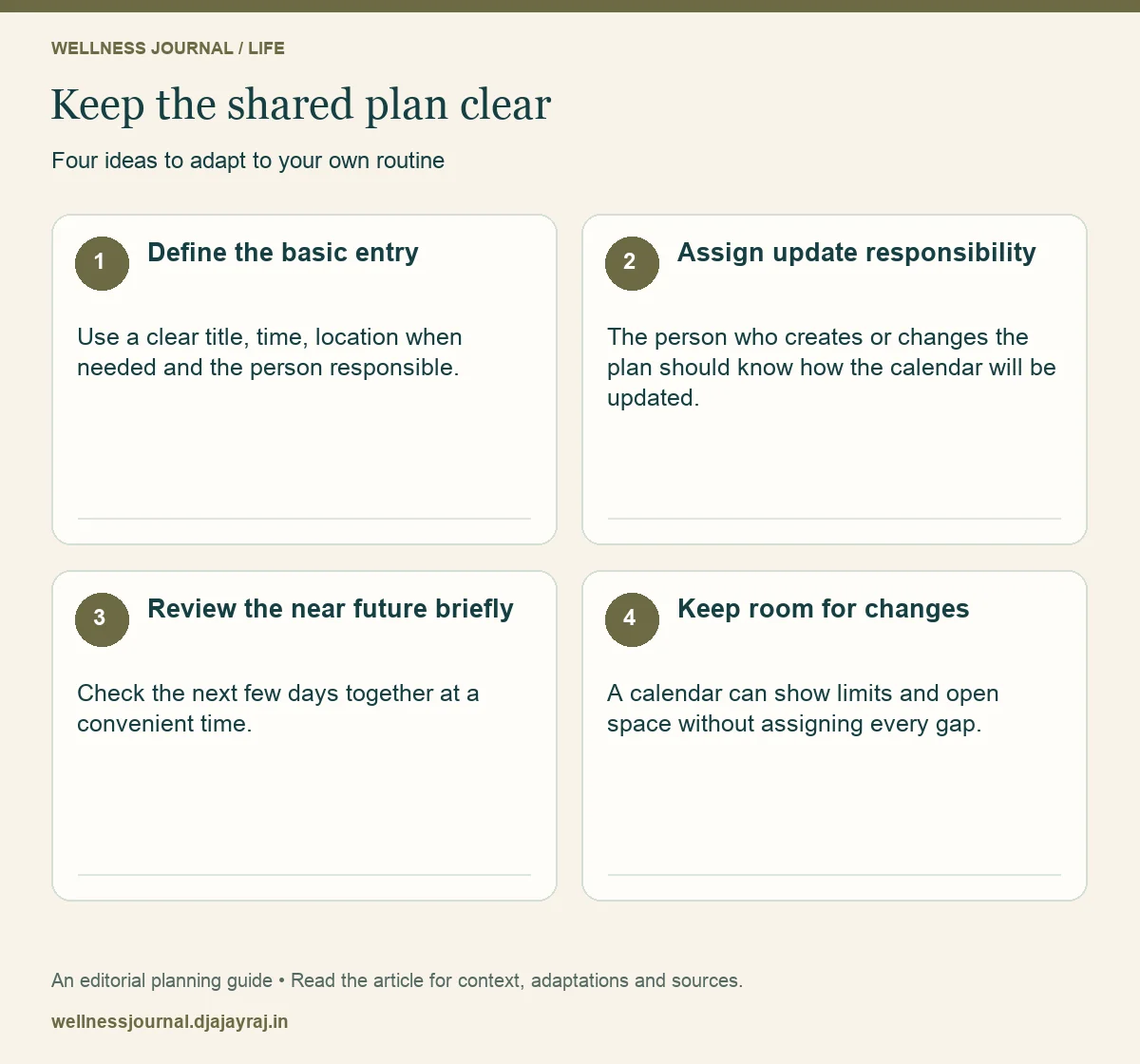
Define the basic entry
Use a clear title, time, location when needed and the person responsible. Mark tentative plans distinctly. Avoid vague entries that require several messages to understand.
Assign update responsibility
The person who creates or changes the plan should know how the calendar will be updated. Do not assume one household member will discover every change and enter it for everyone.
Review the near future briefly
Check the next few days together at a convenient time. Look for overlapping responsibilities or missing transport arrangements. The review can be a short conversation rather than a formal meeting.
Keep room for changes
A calendar can show limits and open space without assigning every gap. When plans change, communicate clearly and update the relevant entry. Avoid using the calendar as evidence in every disagreement.
A useful shared entry
| Field | What to include | Why it helps |
|---|---|---|
| Title | Clear event or availability | Quick understanding |
| Time | Start and relevant travel window | Realistic coordination |
| Responsibility | Who handles the task | Fewer assumptions |
| Status | Tentative or confirmed | Avoids false certainty |
Make it work for you
Use the simplest accessible format
A paper calendar can work as well as an app if everyone can see and update it. Digital tools may help with reminders and remote access, but they also need permissions and maintenance. Choose the format the household will actually use, and make accommodations for vision, language or device access.
Check one crowded day together
Resolve the transport or responsibility conflict before discussing the whole month. A concrete improvement shows whether the calendar is doing its job.
Quick checklist
- Share only necessary private detail.
- Assign update responsibility.
- Leave unplanned time available.
Common questions
Should every household member see every detail?
No. Share what is needed for coordination and respect privacy. Availability can often be shown without sensitive information.
What if people forget to update it?
Simplify the process and agree on a clear responsibility. The system may need to fit existing habits better.