A reading habit does not need an annual book target or a shelf designed for photographs. Start with a format and subject that make you curious enough to return. A few pages, an audiobook segment or a short essay can be a useful session. The goal is more time with reading you value, not proof that you are a particular kind of reader.
Choose the easiest book to return to
Pick something that fits your current attention and interest. A difficult book may be rewarding, but it is not always the best choice for restarting. Libraries, borrowed books and samples can help you explore without buying a large pile. You are allowed to stop a book that is not serving the reason you chose it.
NHS wellbeing guidance includes learning, while NIH habit guidance discusses practical routines. Reading preferences and benefits differ between people.
Background guidance: NHS: Five steps to mental wellbeing; NIH News in Health: Creating healthy habits.
Four practical steps
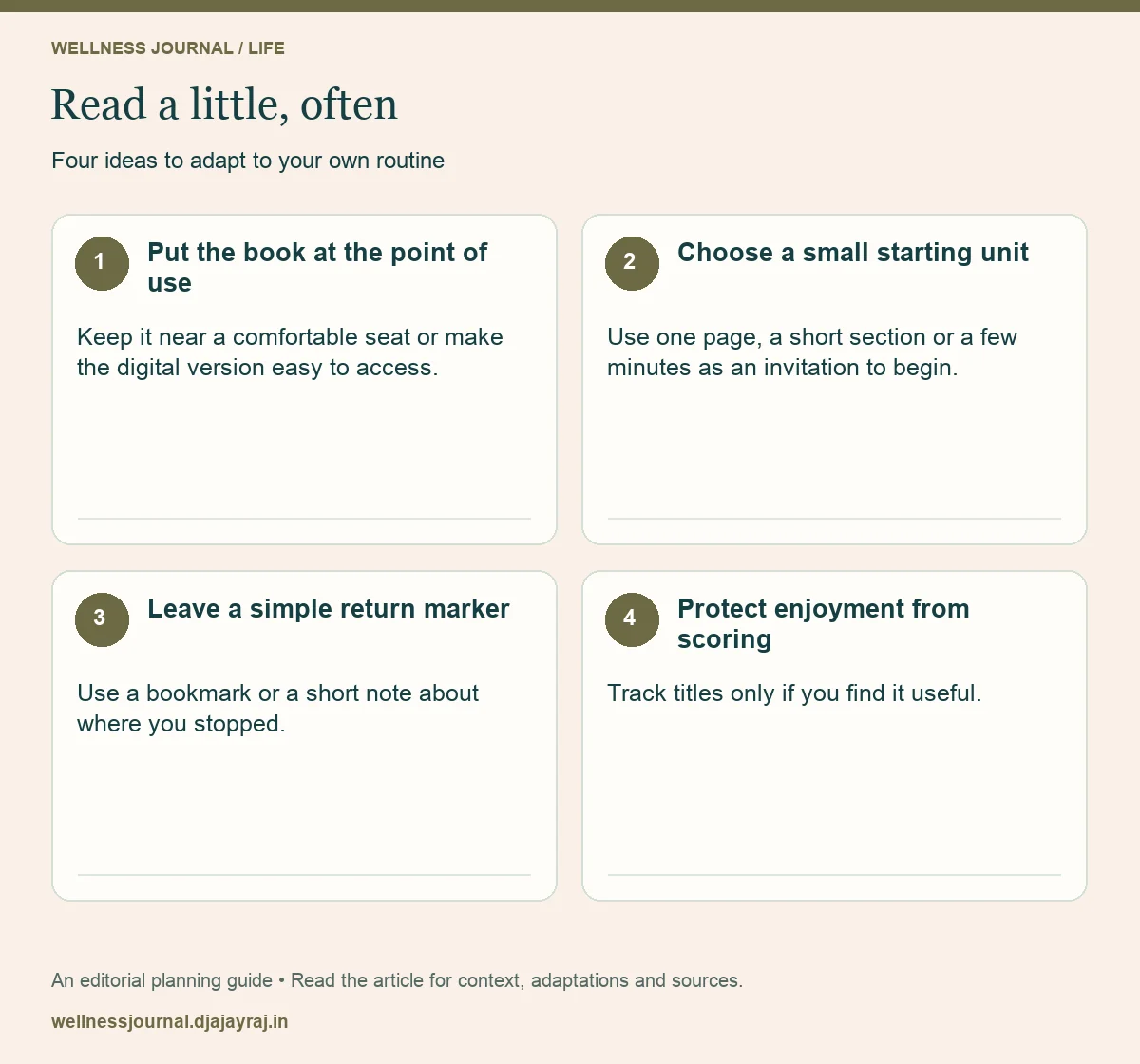
Put the book at the point of use
Keep it near a comfortable seat or make the digital version easy to access. If you use an audiobook, have the next section ready. Reduce the searching that can turn a brief opportunity into another activity.
Choose a small starting unit
Use one page, a short section or a few minutes as an invitation to begin. You can continue if you want. Avoid making the minimum so large that reading only seems possible on unusually quiet days.
Leave a simple return marker
Use a bookmark or a short note about where you stopped. If the material is complex, write one question you want to answer next. This keeps the next session connected without requiring a detailed reading journal.
Protect enjoyment from scoring
Track titles only if you find it useful. A count can motivate some people and pressure others. You do not need to finish quickly, read the most difficult books or compare your pace with a social feed.
Match the format to the situation
| Situation | Possible format | Useful adjustment |
|---|---|---|
| Short evening gap | Print or ebook | Keep a bookmark ready |
| Hands occupied safely | Audiobook | Choose an appropriate listening situation |
| Limited attention | Short essay or chapter | Stop at a natural break |
| Exploring interests | Library loan or sample | Try before buying |
Make it work for you
Use accessible formats without apology
Larger print, screen readers, audiobooks and other accessible formats are valid ways to engage with reading. Choose what works with your vision, attention, language and daily life. There is no need to defend the format to someone else's idea of serious reading. If a format causes discomfort, adjust it or seek appropriate advice.
End with a reason to return
Mark a passage, question or scene you want to continue. A little curiosity can be more useful than a strict timer. You can also simply stop when you are satisfied.
Quick checklist
- Choose material you want to read.
- Keep the starting step small.
- Use the format that fits your needs.
Common questions
Do audiobooks count as reading?
For building a habit of engaging with books and ideas, choose the format that works for you. A personal habit does not need a competition rule.
Should I finish every book I start?
No. You can stop, skim appropriately or return later. Your purpose for reading should guide the decision.