A realistic morning routine begins with the time you actually wake, the people who need you and the moment you must leave or start work. It does not begin with someone else's five-o'clock schedule. Choose a sequence that helps you get ready with less friction. A good morning can be ordinary, quiet and short; it does not need to contain every healthy habit you want to build.
Separate essentials from optional extras
List what genuinely must happen: prescribed care, hygiene, food if you want or need it, and preparing to leave. Then identify optional activities you enjoy. Keeping the two groups separate prevents a missed journal entry from making the whole morning feel unsuccessful. If mornings are consistently rushed, some preparation may belong the evening before.
Habit guidance emphasises workable routines. Protecting sleep matters more than copying an unusually early wake-up schedule.
Background guidance: NIH News in Health: Creating healthy habits; NHLBI: Healthy sleep habits.
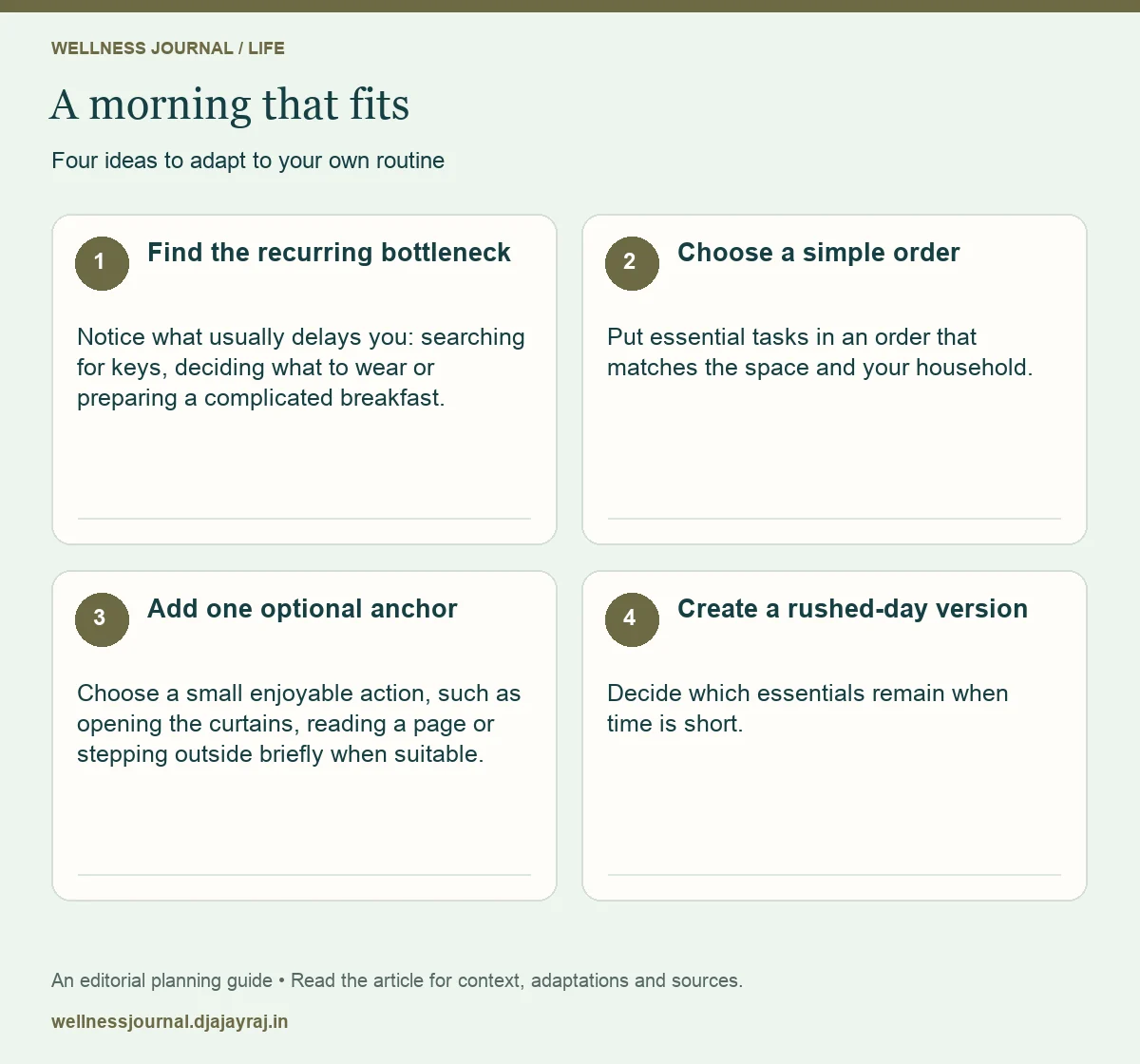
Four practical steps
Find the recurring bottleneck
Notice what usually delays you: searching for keys, deciding what to wear or preparing a complicated breakfast. Solve one bottleneck before adding a new habit. The most useful change may be a fixed place for your bag.
Choose a simple order
Put essential tasks in an order that matches the space and your household. Avoid unnecessary trips between rooms. If you share facilities, agree on practical timing instead of assuming everyone can follow an individual ideal routine.
Add one optional anchor
Choose a small enjoyable action, such as opening the curtains, reading a page or stepping outside briefly when suitable. Keep it easy to omit when necessary. An optional activity should improve the morning, not create another deadline.
Create a rushed-day version
Decide which essentials remain when time is short. Prepare those first and leave extras for another time. Do not borrow repeatedly from sleep to maintain a routine that is too large for the available morning.
Design two versions of the morning
| Part | Ordinary day | Rushed day |
|---|---|---|
| Essentials | Complete the normal sequence | Prioritise necessary care |
| Food | Preferred simple option | Convenient suitable option |
| Preparation | Check bag and schedule | Take prepacked essentials |
| Optional anchor | A small enjoyable activity | Skip without penalty |
Make it work for you
Let responsibilities shape the routine
Parents, carers, shift workers and people managing health conditions may have unpredictable mornings. Use a flexible order rather than a minute-by-minute script if that fits better. The routine should serve the household, not make you feel behind before the day begins. Review the parts that repeatedly fail and change the setup instead of blaming motivation.
Prepare one decision the night before
Choose tomorrow's first task or set out an essential item. Keep the preparation brief enough that it does not delay sleep. One removed decision can be more useful than an elaborate morning checklist.
Quick checklist
- Protect sleep opportunity.
- Separate essential tasks from extras.
- Keep a minimum version ready.
Common questions
Do I need to wake earlier to have a routine?
No. Start by arranging the time you already have. Waking earlier only helps if you can still get enough sleep and it suits your life.
Should I follow the same routine every day?
A familiar sequence can help, but different days may need different versions. Flexibility is part of a useful plan.