Restful weekend ideas are not limited to doing nothing, and they do not require a busy list of experiences. A useful weekend may include one necessary chore, one enjoyable plan and time that remains unassigned. Begin with what the week has asked of you. If you are tired, the weekend does not need to become a two-day attempt to catch up with an ideal life.
Choose what would make Monday easier
Identify one practical task that will remove a real problem, such as getting groceries or preparing an essential item. Then distinguish it from tasks that are merely available to do. A weekend can disappear when every unfinished chore is treated as equally urgent. Choose a small number of outcomes and leave the rest visible but unassigned.
Wellbeing guidance includes rest, connection and enjoyable activities. There is no single weekend schedule that suits every household.
Background guidance: NIH: Emotional wellness toolkit; NHS: Five steps to mental wellbeing.
Four practical steps
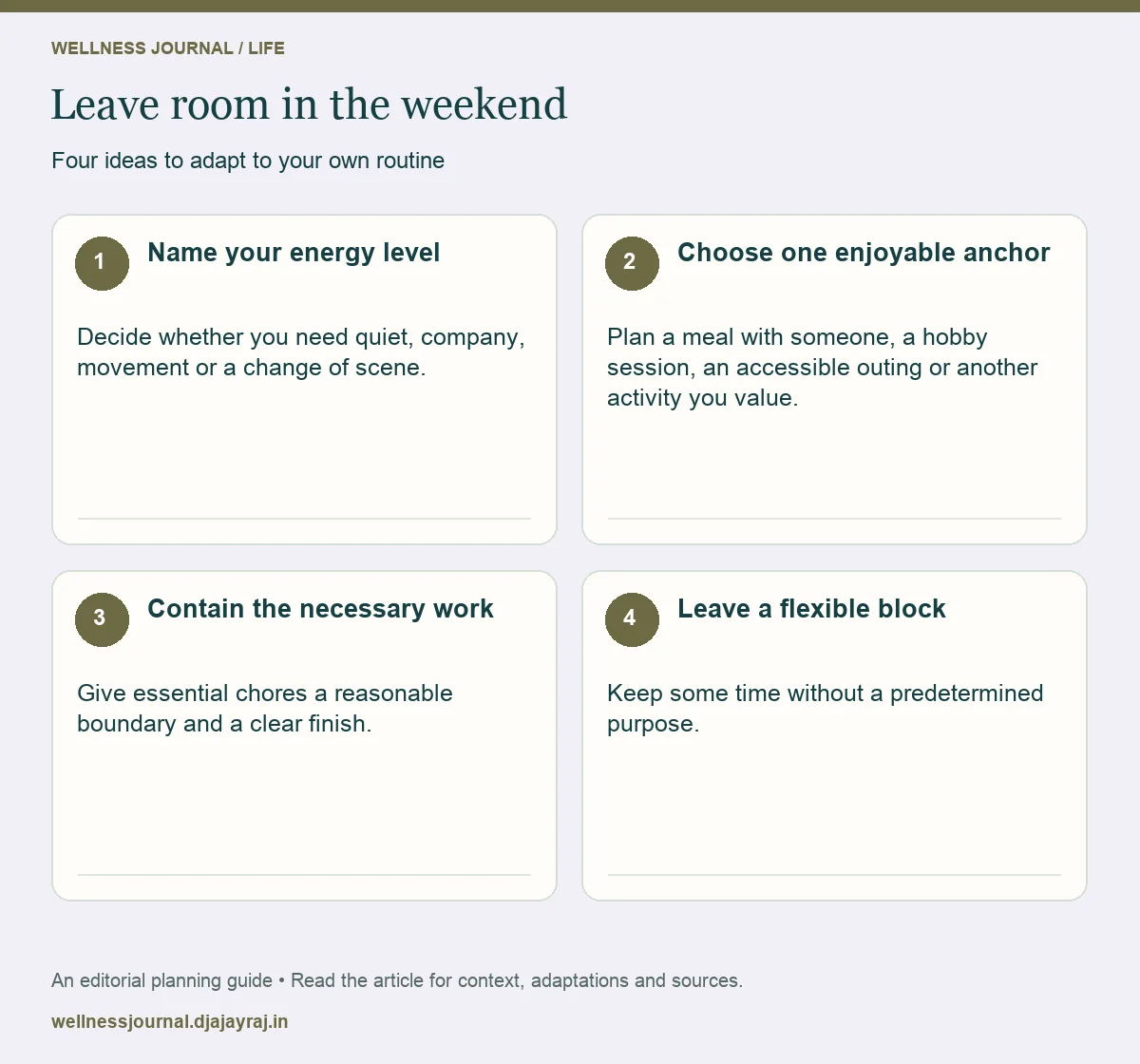
Name your energy level
Decide whether you need quiet, company, movement or a change of scene. You may need more than one, but not all at once. Use how you actually feel rather than the weekend you think you should want.
Choose one enjoyable anchor
Plan a meal with someone, a hobby session, an accessible outing or another activity you value. Keep travel and preparation in mind. The anchor should give the day shape without taking control of the whole day.
Contain the necessary work
Give essential chores a reasonable boundary and a clear finish. If a task is larger than expected, decide whether to continue by choice or stop at a useful point. Avoid silently sacrificing all rest because the list exists.
Leave a flexible block
Keep some time without a predetermined purpose. You can use it for rest, a spontaneous invitation or finishing something you genuinely want to finish. Unassigned time is not wasted time.
A weekend with room to breathe
| Part | Example | Useful boundary |
|---|---|---|
| Practical need | Groceries or essential preparation | One clear outcome |
| Enjoyment | Hobby, outing or shared meal | Manageable travel and cost |
| Connection | A call or visit | A format that fits energy |
| Open space | Rest or spontaneous choice | No automatic chore assignment |
Make it work for you
Plan around nonstandard workweeks
If you work weekends or have caring responsibilities, apply the idea to whatever break is available. A restful block may be a few hours rather than two days. Share practical responsibilities where possible, and avoid comparing your available time with someone else's. The aim is a useful balance within your circumstances, not a universal Saturday template.
Use a one-plan day
On a tired day, choose one necessary or enjoyable plan and let the rest remain flexible. You can add something later if you want. Starting with less leaves room to respond to your energy.
Quick checklist
- Choose a few outcomes rather than a full schedule.
- Include something you enjoy.
- Protect some unassigned time.
Common questions
Is staying home a wasted weekend?
No. A weekend's value is not measured by how many places you visit. Rest and ordinary enjoyment can be worthwhile.
What if chores cannot wait?
Prioritise the necessary ones, look for shared help where possible and protect a smaller rest period. The plan should acknowledge real responsibilities.