To make time for hobbies, start by removing the expectation that the hobby must become impressive. You can draw badly, grow one plant, read slowly or learn a few notes of music. The activity is allowed to be enjoyable without producing income, content or a new identity. A small repeatable session often fits more easily than waiting for a whole free afternoon.
Choose the version with the lowest setup cost
Think about what you want from the activity: curiosity, quiet, play, making something or spending time with others. Then choose a version that fits your space and budget. Borrow equipment, use what you own or try an introductory session before buying a full kit. Expensive preparation is not the same as time spent doing the hobby.
NHS wellbeing guidance includes learning new skills. NIMH also includes enjoyable, relaxing activities among self-care options.
Background guidance: NHS: Five steps to mental wellbeing; NIMH: Caring for your mental health.
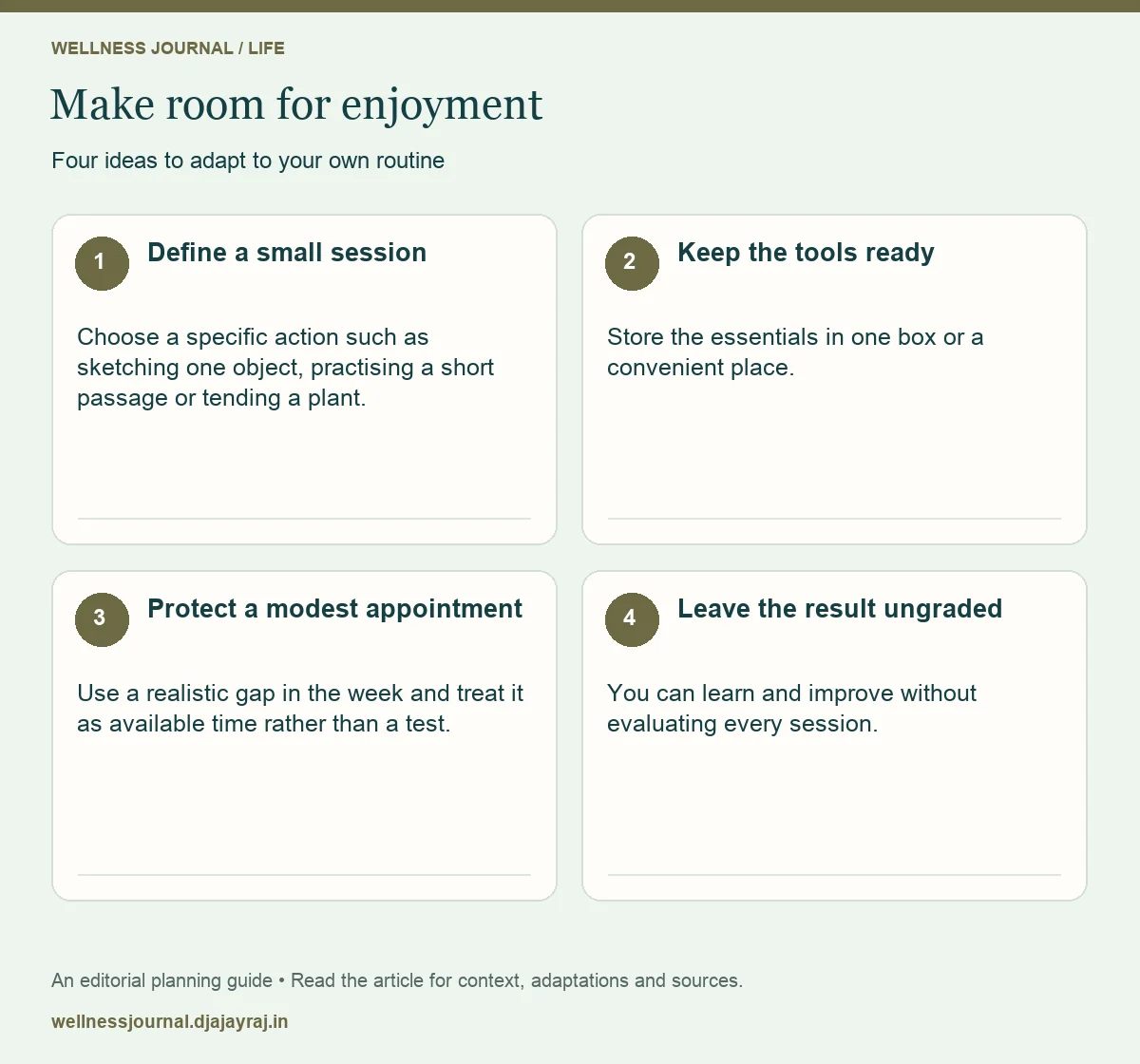
Four practical steps
Define a small session
Choose a specific action such as sketching one object, practising a short passage or tending a plant. A clear starting action is easier than the broad instruction to be creative. Stop when the session has served its purpose.
Keep the tools ready
Store the essentials in one box or a convenient place. Reduce the number of steps between wanting to begin and actually beginning. If cleanup is a barrier, choose a smaller setup that can be put away easily.
Protect a modest appointment
Use a realistic gap in the week and treat it as available time rather than a test. If the appointment is missed, move it or use a smaller version. Avoid turning the hobby into a streak you are afraid to break.
Leave the result ungraded
You can learn and improve without evaluating every session. Keep some work private if sharing changes the experience. The hobby does not need to become a side business or a public performance to justify the time.
Lower the barrier to starting
| Hobby direction | Small first session | Simple setup |
|---|---|---|
| Drawing | Sketch one household object | Pencil and paper |
| Music | Practise a short familiar section | Instrument ready safely |
| Reading | Read a few pages | Book near a comfortable seat |
| Gardening | Care for one suitable plant | Basic tools together |
Make it work for you
Choose company or solitude deliberately
Some hobbies are more enjoyable with a group, while others provide welcome quiet. Try the format that fits what you need. If you want connection, look for a group with practical times and an accessible location. If you want solitude, explain that the time matters without treating it as something you must earn by completing every chore first.
Keep a next-session note
Write one thing you would like to try next time. This preserves curiosity and reduces the effort of restarting. It does not need to become a formal progress plan.
Quick checklist
- Start with available tools.
- Keep sessions small enough to fit.
- Let enjoyment matter without a productivity target.
Common questions
What if I am not talented?
A hobby does not require professional ability. Choose an activity you enjoy exploring and allow yourself to be a beginner.
Should I monetise the hobby?
Only if you want that change. Earning money can alter the demands and experience; enjoyment alone is a valid reason to continue.