
A medication list is useful when it reflects what you actually take, not an old prescription history. Keep the information accurate and accessible for appointments or emergencies while protecting your privacy. This guide is about organisation. It does not tell you to start, stop or change a medicine, and it should not replace instructions from your clinician or pharmacist.
Use the current packaging and instructions
Check the medicine name, strength and directions against the label or current professional advice. Include over-the-counter products and supplements when relevant. If two instructions conflict or you are unsure what to take, ask the prescriber or pharmacist rather than resolving the difference by guesswork.
FDA recommends keeping an up-to-date medication list, including medicines and other products you use, to support safer conversations with healthcare professionals.
Background guidance: FDA: Create and keep a medication list; FDA: Medicine expiry and storage.
Four practical steps
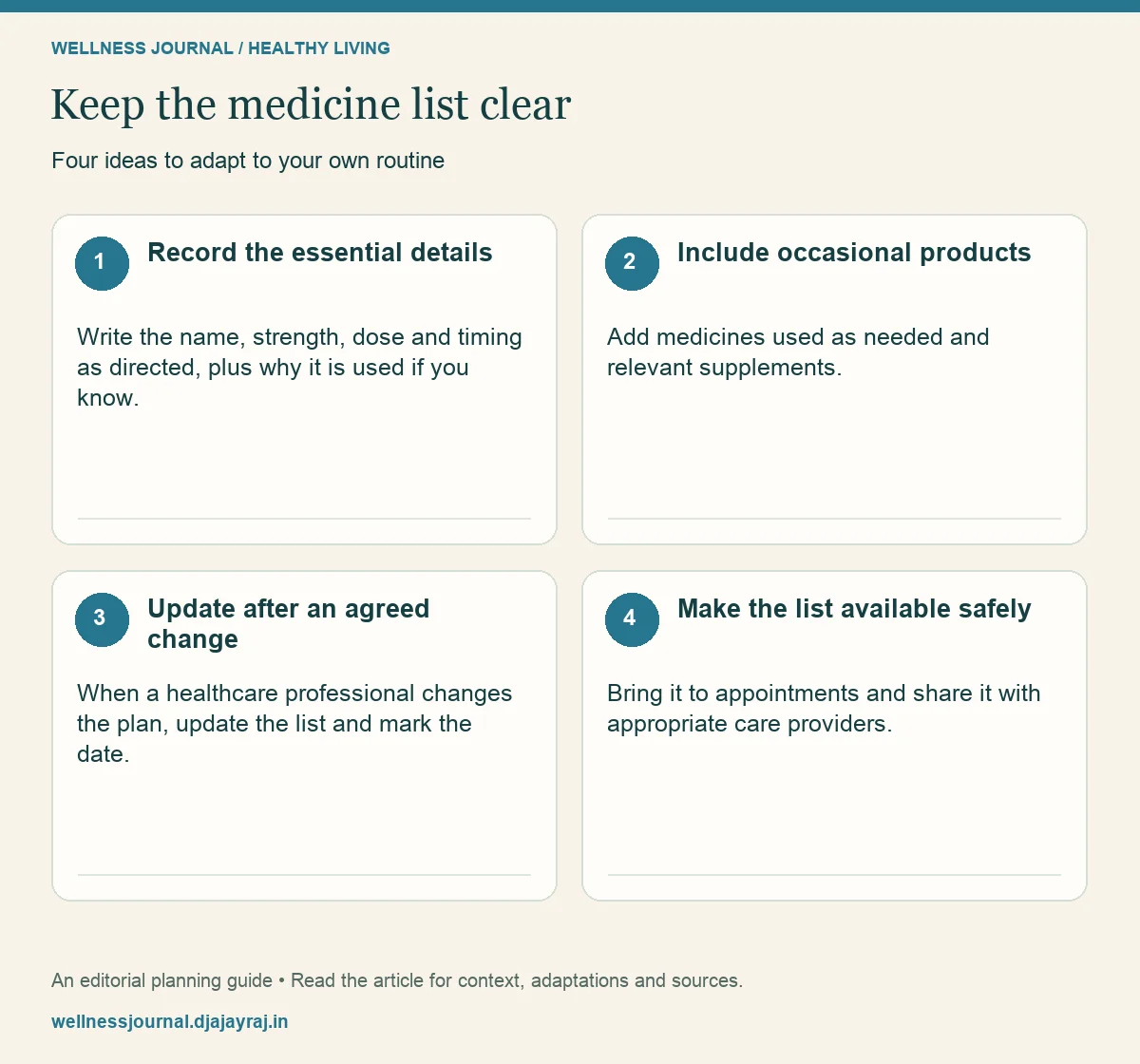
Record the essential details
Write the name, strength, dose and timing as directed, plus why it is used if you know. Keep allergies and important reactions clearly distinguished from ordinary side effects.
Include occasional products
Add medicines used as needed and relevant supplements. Note how you actually use them. A clinician needs the full picture to discuss possible interactions or duplicated ingredients.
Update after an agreed change
When a healthcare professional changes the plan, update the list and mark the date. Avoid leaving several contradictory versions in different bags or apps.
Make the list available safely
Bring it to appointments and share it with appropriate care providers. Choose a secure storage method and tell a trusted person where it is if that fits your needs.
Useful fields for a medication record
| Field | What belongs there | Check with |
|---|---|---|
| Name and strength | Current label information | Pharmacist if unclear |
| Dose and timing | Current directions | Prescriber or pharmacist |
| As-needed use | When and how it is used | Care team |
| Last updated | Date of the latest confirmed change | Your current plan |
Make it work for you
Keep storage separate from scheduling
Follow each medicine's storage instructions. Do not assume every product can be moved into a pill organiser or kept in the bathroom. Ask a pharmacist whether a storage aid is suitable. Keep medicines secure from children and others who should not access them, and use recommended disposal routes for unwanted products.
Check the list before the next appointment
A short review can catch an old dose or missing supplement. Bring uncertainties as questions rather than editing them into an assumed answer.
Quick checklist
- Do not change treatment from this checklist.
- Keep one clearly current version.
- Ask about conflicting instructions.
Common questions
Should I include vitamins and herbal products?
Yes, relevant supplements can matter when discussing interactions and care. Tell your healthcare professional what you use.
Can I stop an old medicine if it is not on the list?
Do not use an incomplete list to make that decision. Confirm the current plan with a clinician or pharmacist.