Jet lag travel tips are most useful when they shape the trip before you leave. Consider how many time zones you cross, when you arrive and what you must do soon afterward. A demanding first-day schedule can be difficult after poor travel sleep. Leave room for adjustment and ask for individual advice when medicines, health conditions or safety-critical work complicate the plan.
Protect the arrival day from unnecessary demands
Check transport, food access and the first realistic rest opportunity. Avoid planning important driving or demanding decisions immediately after a long, tiring journey if you can change them. Sleep loss and time-zone changes can affect alertness, so the schedule should acknowledge more than the flight's arrival time.
CDC describes jet lag as a temporary mismatch between the body clock and local time after rapid travel across time zones.
Background guidance: CDC: Jet lag; NHLBI: How sleep works.
Four practical steps
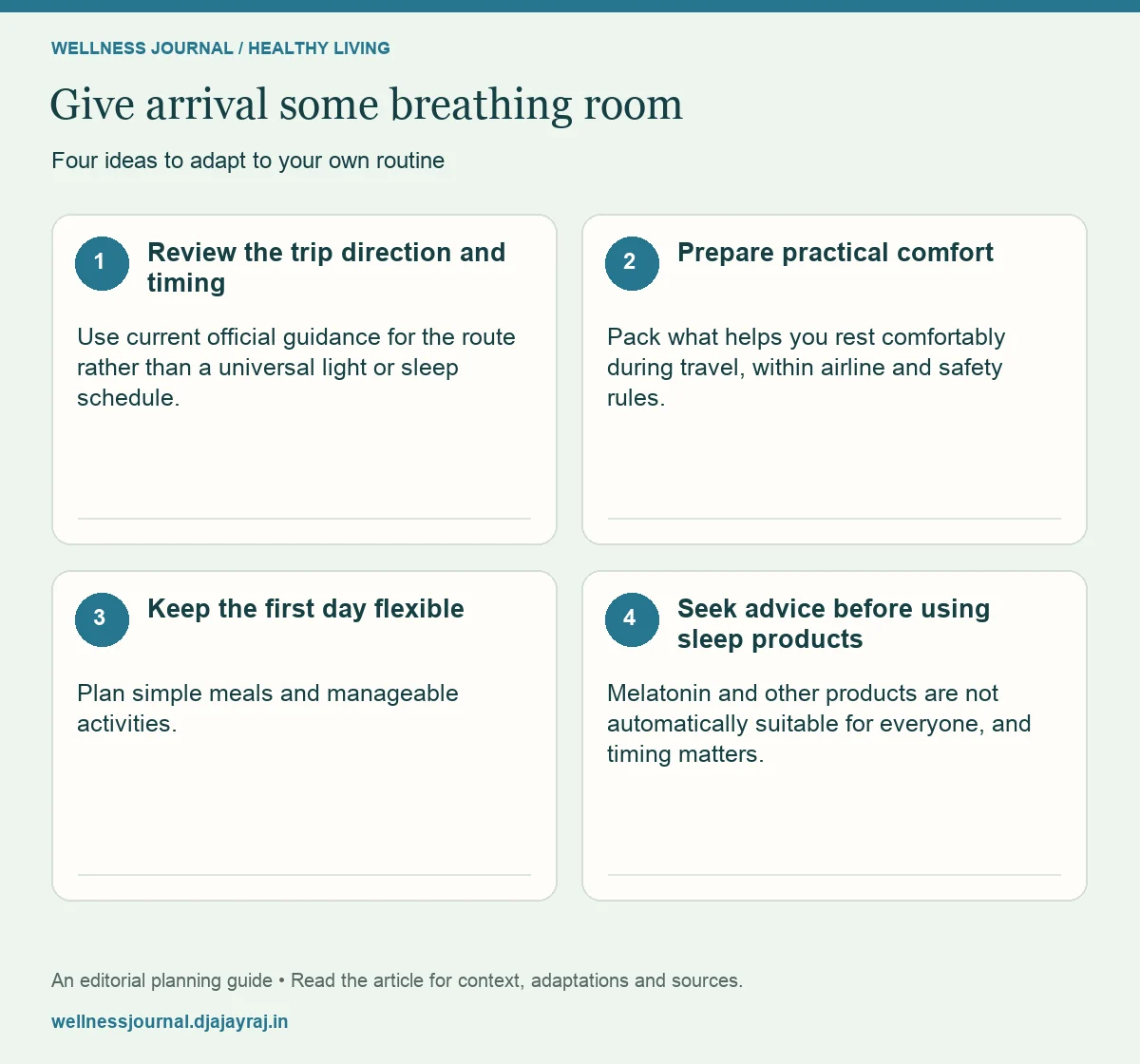
Review the trip direction and timing
Use current official guidance for the route rather than a universal light or sleep schedule. Timing strategies can depend on the direction and number of time zones crossed.
Prepare practical comfort
Pack what helps you rest comfortably during travel, within airline and safety rules. Keep essential medicines accessible and ask a professional about timing changes rather than improvising doses.
Keep the first day flexible
Plan simple meals and manageable activities. Use local timing thoughtfully, but do not force a demanding schedule when dangerously sleepy. Arrange safe transport if alertness is impaired.
Seek advice before using sleep products
Melatonin and other products are not automatically suitable for everyone, and timing matters. Ask a clinician or pharmacist about benefits, risks, interactions and local rules.
A practical pre-trip review
| Area | Question | Useful preparation |
|---|---|---|
| Arrival | What must happen immediately? | Reduce unnecessary demands |
| Transport | Will I be safe to drive? | Arrange an alternative |
| Medicines | Does timing need adjustment? | Ask a professional |
| Sleep strategy | Does advice fit the route? | Use current official guidance |
Make it work for you
Distinguish jet lag from being unwell
Not every symptom after travel is jet lag. Fever, significant illness or other concerning changes may need medical attention. Tell the clinician about your travel when seeking care. A general article cannot assess destination-specific risks or determine whether symptoms are caused by the body-clock change.
Leave one recovery window unbooked
A flexible block after arrival can accommodate rest, a delayed journey or an unexpectedly difficult night. It is easier to add an optional activity than to undo an overloaded schedule.
Quick checklist
- Plan for impaired alertness.
- Get advice on medicine and sleep-product timing.
- Seek care for concerning illness after travel.
Common questions
Does everyone need melatonin?
No. Suitability and timing vary, and professional advice may be needed. Do not treat it as a universal travel requirement.
Can I force adjustment by staying awake at any cost?
Avoid dangerous sleep deprivation. Use an appropriate plan and prioritise safety, particularly around driving or demanding tasks.