A healthy travel routine can be small enough to fit in a carry-on bag. You do not need to reproduce your entire home schedule in a hotel or a relative's house. Choose a few anchors that make the trip easier: access to food, time to rest, comfortable movement and a plan for medicines used as prescribed. Destination-specific health requirements need separate checking.
Choose the essentials for this particular trip
A short family visit and a long international journey have different demands. Consider travel duration, time zones, accessibility, climate and the facilities at your destination. Check official travel-health advice where relevant, especially for vaccines, medicines or local risks. A general routine article cannot cover destination-specific medical requirements.
Sleep timing can be affected by changes in schedule and light. Accurate medication information is useful when discussing care away from home.
Background guidance: NHLBI: How sleep works; NIA: Preparing for a medical appointment.
Four practical steps
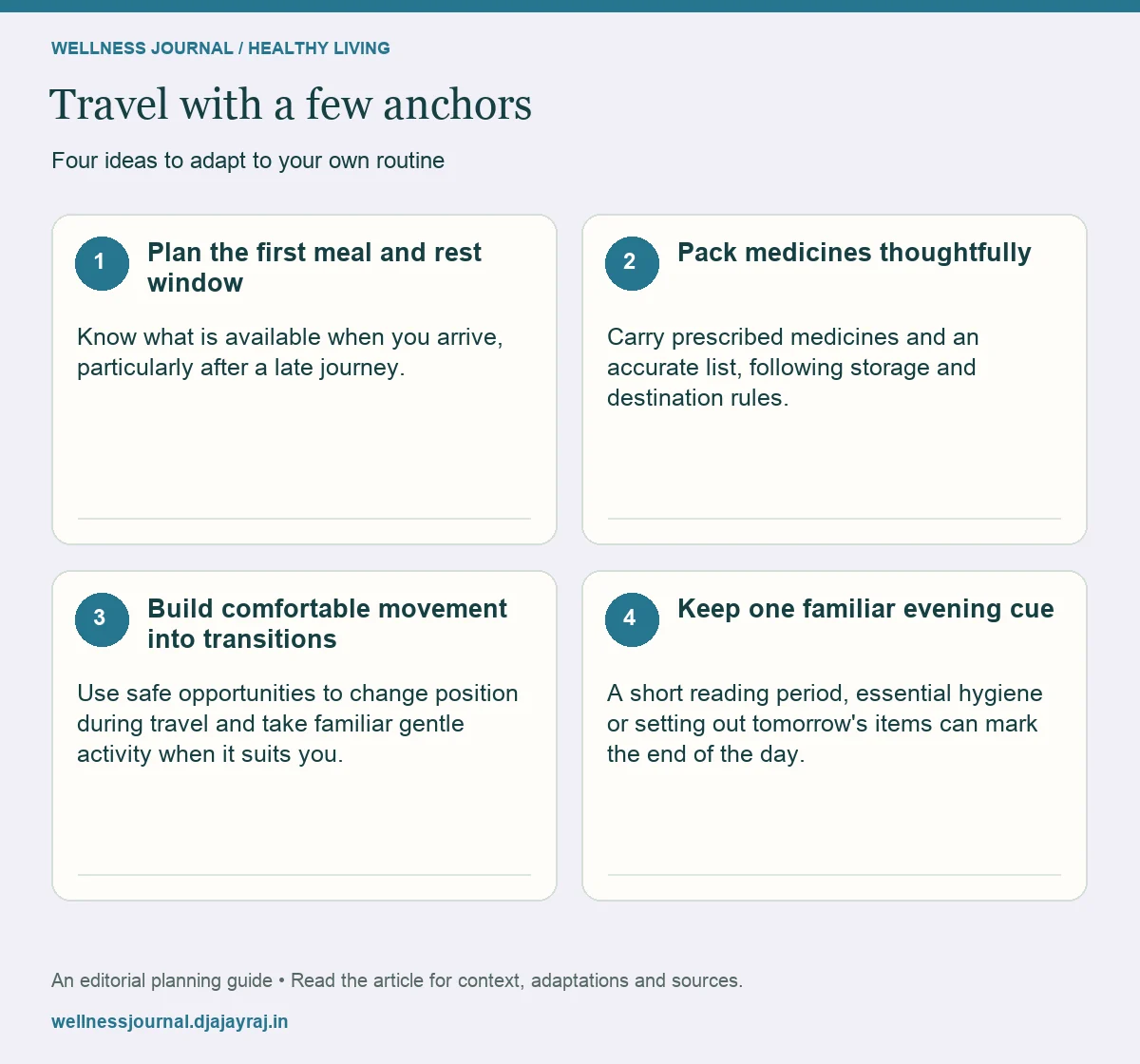
Plan the first meal and rest window
Know what is available when you arrive, particularly after a late journey. Keep a suitable food option in mind and avoid scheduling an ambitious activity immediately after difficult travel. A calmer arrival can make the rest of the trip easier.
Pack medicines thoughtfully
Carry prescribed medicines and an accurate list, following storage and destination rules. Ask a pharmacist or clinician about timing across time zones when necessary. Do not improvise dose changes based on a general online schedule.
Build comfortable movement into transitions
Use safe opportunities to change position during travel and take familiar gentle activity when it suits you. Follow specific advice if you have a medical reason to manage travel-related risks. Do not assume a short stretch is sufficient for every situation.
Keep one familiar evening cue
A short reading period, essential hygiene or setting out tomorrow's items can mark the end of the day. The cue should travel easily. Let local activities and practical constraints shape the rest of the schedule.
A small portable routine
| Need | Before departure | At the destination |
|---|---|---|
| Food | Check arrival options | Find one dependable meal source |
| Rest | Leave recovery time | Use a simple evening cue |
| Medicines | Confirm supply, rules and storage | Follow the agreed schedule |
| Movement | Plan accessible transitions | Choose familiar comfortable activity |
Make it work for you
Allow the trip to be different
Travel often changes appetite, sleep timing and available food. Avoid judging every variation as a failed routine. Focus on what helps you function and enjoy the trip. If you become unwell, seek appropriate local care rather than trying to solve symptoms with a stricter schedule. Keep necessary contact and insurance information accessible.
Make a one-screen essentials note
List the accommodation address, relevant care contacts and your key practical reminders. Keep private medical details secure and share them only when needed for care. The note should be usable when you are tired.
Quick checklist
- Check destination-specific official advice.
- Keep medication instructions accurate.
- Leave room for rest and changed plans.
Common questions
Should I keep my home timetable exactly?
Not necessarily. Time zones, travel demands and local schedules may require adaptation. Medication timing needs individual professional advice when uncertain.
Can a routine prevent travel illness?
No. It can support practical organisation, but it does not replace vaccines, hygiene, appropriate precautions or medical care.