A home first aid kit is useful when the supplies are suitable, in date and easy to find. It should reflect the household and the situations you are preparing for. Start with a recognised first aid checklist and learn how to use the items appropriately. Buying a large kit is not the same as knowing what to do when someone is injured.
Choose an accessible but secure location
Adults who may need the kit should know where it is, while medicines and hazardous items remain secure from children or others at risk. Keep the kit protected from moisture and excessive heat according to product instructions. Avoid scattering essential supplies across several rooms without a clear plan.
The American Red Cross recommends maintaining a first aid kit and checking supplies. A kit does not replace training or emergency medical care.
Background guidance: American Red Cross: Preparing a first aid kit; FDA: Medicine expiry and storage.
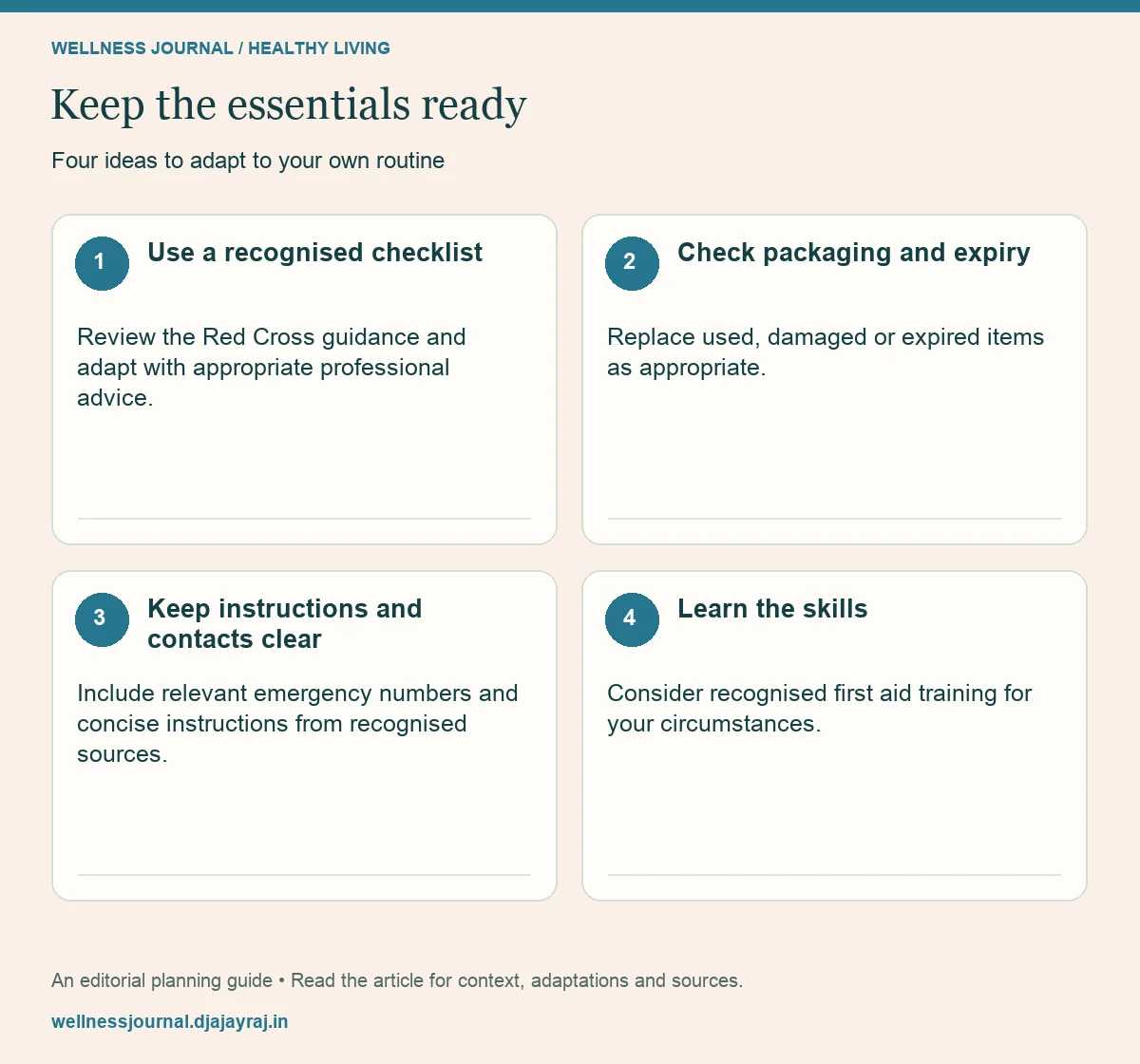
Four practical steps
Use a recognised checklist
Review the Red Cross guidance and adapt with appropriate professional advice. Include suitable wound-care supplies and necessary household-specific items without adding unfamiliar equipment you are not trained to use.
Check packaging and expiry
Replace used, damaged or expired items as appropriate. Sterile supplies need intact packaging. Follow medicine storage instructions and do not assume the kit's outer box protects every product from unsuitable conditions.
Keep instructions and contacts clear
Include relevant emergency numbers and concise instructions from recognised sources. Make sure the information fits your location. A person under stress should not need to search through a long folder.
Learn the skills
Consider recognised first aid training for your circumstances. In an emergency, call the appropriate service and follow professional instructions. Do not delay urgent care while trying to use every item in the kit.
A useful kit review
| Area | What to check | Action |
|---|---|---|
| Supplies | Suitable items are present | Restock what was used |
| Condition | Packaging and expiry | Replace as appropriate |
| Access | Adults know the location | Keep hazardous items secure |
| Knowledge | Instructions and training | Use recognised guidance |
Make it work for you
Review after use and life changes
A new household member, travel plan or medical need may change what is useful. Ask a healthcare professional about individual requirements, especially prescribed emergency medicines. Keep those instructions distinct from general first aid advice. Review the kit periodically and after using it, rather than waiting until the next urgent moment.
Attach a simple restock note
Write down what was used immediately, then replace it through the normal shopping or pharmacy process. The note prevents an apparently complete box from hiding an empty compartment.
Quick checklist
- Use recognised guidance and training.
- Keep supplies suitable and in date.
- Call emergency services when needed.
Common questions
Does a large kit mean I am prepared?
Not by itself. Suitability, condition, access and knowledge are all important.
Should I keep every possible medicine in the kit?
No. Choose appropriate products with professional advice when needed, and follow storage and safety instructions.