Balanced eating out can include the food you came to enjoy. You do not need to find the single healthiest item or compensate for the meal before and after it. Think about appetite, preferences, budget and any dietary requirements. A flexible plan can make ordering easier while leaving room for an occasion to feel different from an ordinary meal at home.
Decide what matters for this meal
You might be meeting friends, trying a particular dish or fitting lunch between appointments. Those purposes affect the choice. If the menu is large, identify one or two options that appeal rather than comparing every item. Nutrition information, when available, can answer specific questions, but it does not have to become the centre of the occasion.
Balanced eating is considered across the overall pattern. Individual meals can vary, while allergies and medical needs still require specific attention.
Background guidance: NHS: Eating a balanced diet; FDA: Understanding the Nutrition Facts label.
Four practical steps
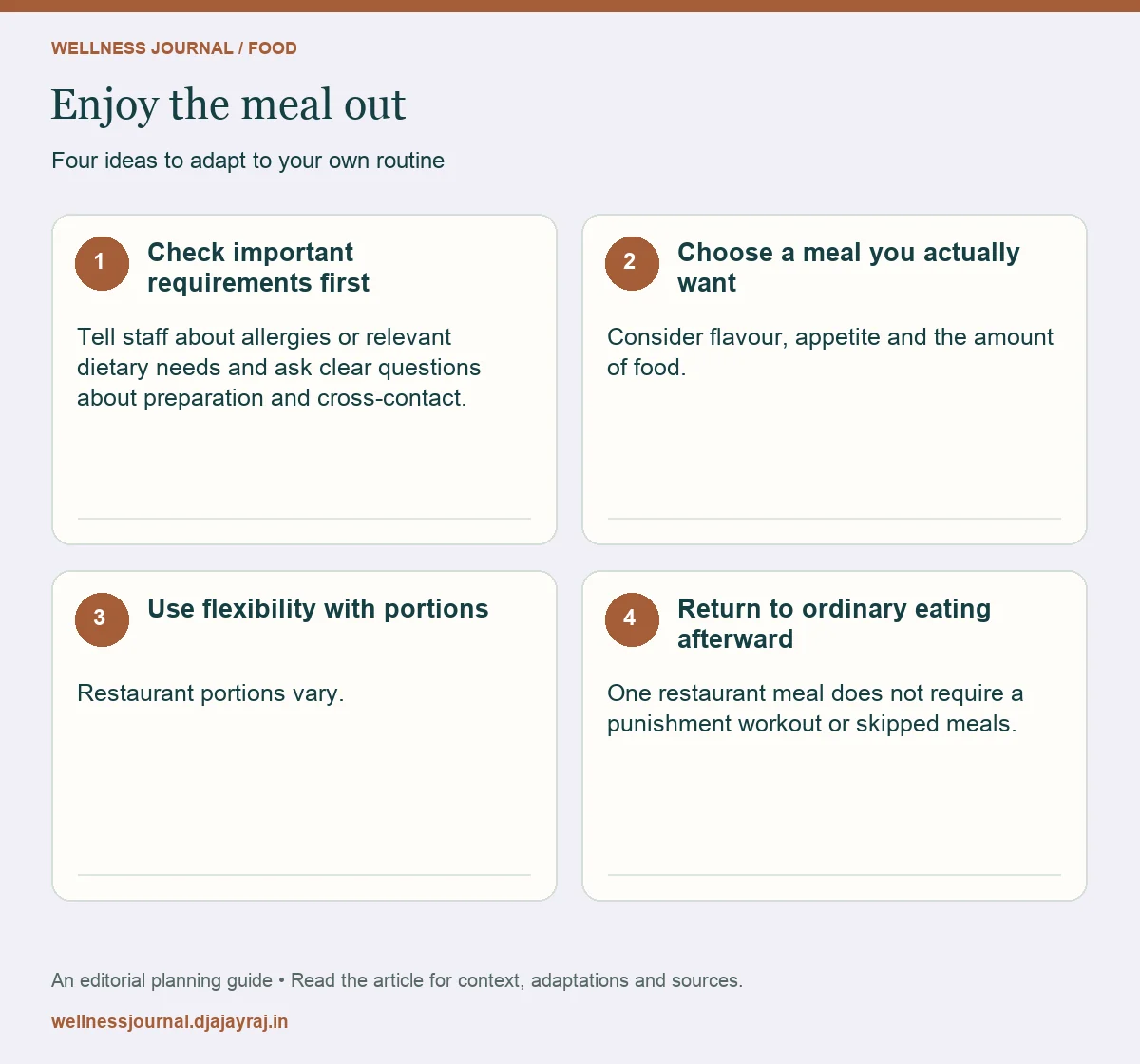
Check important requirements first
Tell staff about allergies or relevant dietary needs and ask clear questions about preparation and cross-contact. Do not assume a menu label covers every concern. If the restaurant cannot provide the information you need, choose a safer alternative.
Choose a meal you actually want
Consider flavour, appetite and the amount of food. You can add a side, share an item or choose a different format if that suits the group. Avoid ordering something unsatisfying only because its name sounds virtuous.
Use flexibility with portions
Restaurant portions vary. Eat according to your needs and preferences rather than a rule to finish everything or always leave half. If taking food home, consider safe travel and storage before deciding to keep it.
Return to ordinary eating afterward
One restaurant meal does not require a punishment workout or skipped meals. Continue with your usual pattern and any individual medical advice. The overall routine is more useful than treating an occasion as a nutritional debt.
A simple ordering sequence
| Question | What to consider | Useful response |
|---|---|---|
| Is it safe for my needs? | Allergens and preparation | Ask staff directly |
| What do I want? | Taste and purpose of the meal | Choose an appealing option |
| How much suits me? | Appetite and portion size | Adjust sides or sharing |
| Can leftovers travel safely? | Time and refrigeration | Keep only when practical |
Make it work for you
Keep social pressure out of your plate
People may comment on portions or choices, but you do not need to justify every food decision. A simple statement that the choice works for you can be enough. If eating out causes significant anxiety or rigid compensatory behaviour, consider support from a qualified professional. A meal plan should make social eating easier, not more restrictive.
Preview the menu only if it helps
A quick look can reduce uncertainty, especially for allergies or budget. If repeated checking increases anxiety, keep the review focused on the practical information you need.
Quick checklist
- Communicate allergies clearly.
- Choose for appetite and enjoyment.
- Handle leftovers safely.
Common questions
Must I choose a salad to eat well at a restaurant?
No. Many meal types can fit a varied pattern. Ingredients, portions and your needs matter more than the dish category.
Should I skip food earlier to save room?
Avoid a rigid compensation rule. Eat in a way that supports your needs and follow individual advice when relevant.