To cook with less salt, start with the meals you repeat and the ingredients that already bring salt into the pan. Stock, sauces, cheese and packaged components can change the result before you add anything from a shaker. A gradual adjustment may be easier to enjoy than abruptly making every dish bland. Keep flavour in the plan rather than treating less salt as less care.
Taste the complete flavour before adding more
Use safe tasting practices at an appropriate stage of cooking. Notice whether the dish needs salt specifically or whether it needs acidity, aroma or texture. Lemon, vinegar, herbs and spices can change the balance in different ways. They are not interchangeable in every recipe, so add small amounts and taste again.
NHS guidance offers ways to reduce salt, including comparing foods and using other flavourings. Medical dietary plans may require more specific advice.
Background guidance: NHS: Salt in your diet; FDA: Understanding the Nutrition Facts label.
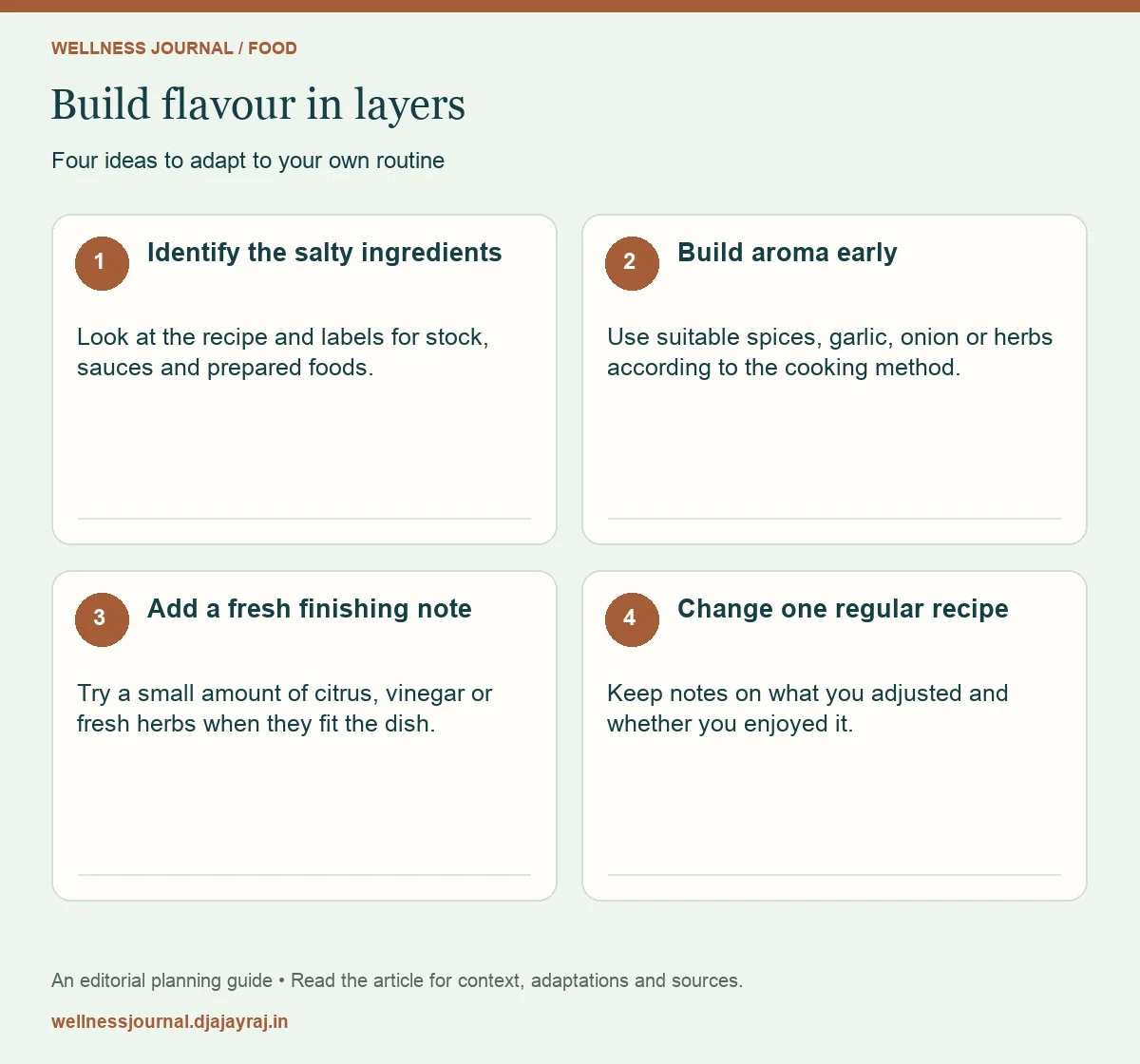
Four practical steps
Identify the salty ingredients
Look at the recipe and labels for stock, sauces and prepared foods. You may be able to use a different version or a smaller amount without changing the whole meal. Compare equivalent quantities on labels.
Build aroma early
Use suitable spices, garlic, onion or herbs according to the cooking method. Avoid burning them, which can create bitterness. A familiar seasoning combination is a good starting point while you adjust the salt.
Add a fresh finishing note
Try a small amount of citrus, vinegar or fresh herbs when they fit the dish. Add gradually rather than trying to rescue the meal with a large splash. The aim is a balanced flavour you want to repeat.
Change one regular recipe
Keep notes on what you adjusted and whether you enjoyed it. Once the version works, use it again. You do not need to redesign every meal in the same week.
Different ways to add flavour
| Flavour need | Possible ingredient | Use thoughtfully |
|---|---|---|
| Aroma | Herbs, garlic or suitable spices | Avoid burning |
| Brightness | Lemon or vinegar | Add a little at a time |
| Warmth | Preferred spice mixture | Check added salt |
| Texture | Suitable seeds or crisp vegetables | Consider allergens |
Make it work for you
Be careful with salt substitutes
Some substitutes contain potassium and are not suitable for everyone, including some people with kidney problems or certain medicines. Ask a clinician or pharmacist before using them when relevant. A general cooking article cannot replace a prescribed sodium or potassium plan. Follow individual advice and use labels to support it.
Compare one cupboard staple
Choose a product you use often, such as stock or a sauce, and compare suitable versions. One repeated purchase can be easier to adjust than every meal separately.
Quick checklist
- Count salt already present in ingredients.
- Use flavourings gradually.
- Check suitability before using salt substitutes.
Common questions
Is sea salt automatically better for reducing sodium?
Do not assume the name makes it a low-sodium choice. Check composition and the amount used.
Should food taste bland when reducing salt?
It does not have to. Gradual changes and appropriate herbs, spices or acidity can help keep meals enjoyable.