Easy no-cook meals can help on hot days, during a busy week or when you simply do not want to turn on the stove. The idea is to assemble a real meal from foods that are already safe to eat. No-cook does not mean no preparation, and it does not mean raw ingredients are automatically suitable. Check package instructions before adding anything to the bowl.
Build around a ready-to-eat centre
Choose an ingredient such as canned beans, a suitable prepared protein food or another ready-to-eat option you enjoy. Add a staple, produce and flavour. A meal can be as ordinary as a filled wrap with fruit on the side. The point is to reduce work while keeping enough food and variety for your appetite.
Balanced eating can include a variety of ready-to-eat foods. Refrigerated ingredients still need food-specific storage limits.
Background guidance: NHS: Eating a balanced diet; FoodSafety.gov: Cold food storage chart.
Four practical steps
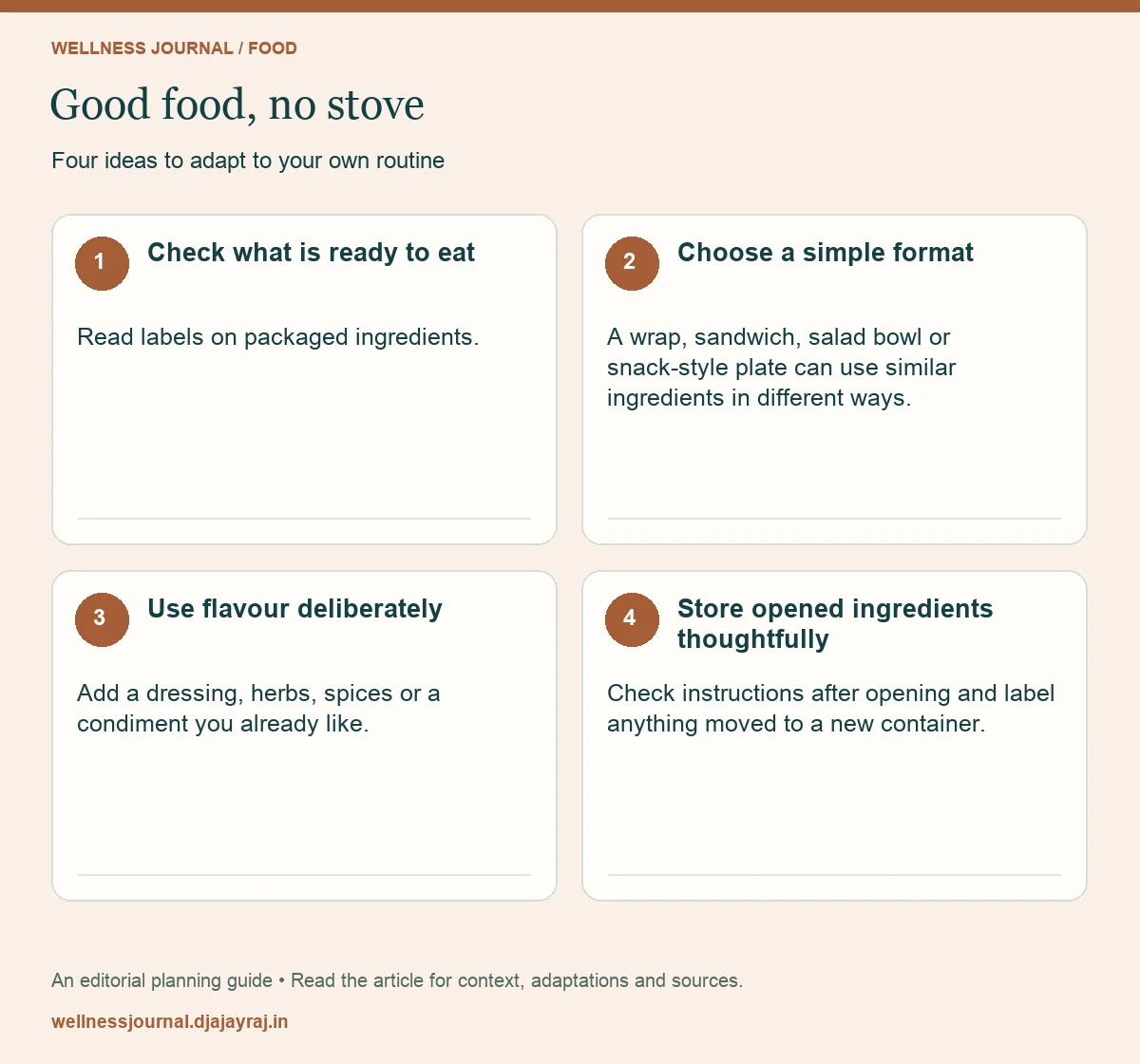
Check what is ready to eat
Read labels on packaged ingredients. Some frozen foods and flour-based products require cooking even if they look convenient. Wash produce as appropriate and use clean utensils and surfaces. Keep raw ingredients that need cooking out of the assembly area.
Choose a simple format
A wrap, sandwich, salad bowl or snack-style plate can use similar ingredients in different ways. Pick the format that suits where you will eat. A bowl may be easier at home, while a securely wrapped sandwich may travel better.
Use flavour deliberately
Add a dressing, herbs, spices or a condiment you already like. Taste before adding more salt. A small amount of acidity or crunch can make a meal feel finished without introducing another cooking step.
Store opened ingredients thoughtfully
Check instructions after opening and label anything moved to a new container. Keep perishable food chilled and put unused portions away promptly. An uncooked meal still needs safe handling.
Four assembly-only combinations
| Format | Main components | Flavour finish |
|---|---|---|
| Bean bowl | Ready-to-eat beans, vegetables, bread | Lemon and herbs |
| Filled wrap | Suitable protein food and salad | Yogurt-style dressing or chutney |
| Toast plate | Ready-to-eat topping and produce | Pepper or spices |
| Cold meal plate | Hummus, vegetables, suitable crackers | Herbs and a preferred dip |
Make it work for you
Keep an honest emergency shelf
Store a few foods you would willingly combine when energy is low. Choose items with compatible flavours rather than collecting unrelated healthy-looking products. Check dates periodically and rotate them into ordinary meals. If you lack refrigeration, focus on safe shelf-stable options and buy perishable portions you can use promptly.
Make one decision before you are hungry
Write a favourite three-component meal on a cupboard note. A clear combination reduces the chance of opening every door and deciding there is nothing to eat despite having ingredients.
Quick checklist
- Use only ingredients safe to eat without cooking.
- Keep chilled foods at safe temperatures.
- Adjust portions to make the meal satisfying.
Common questions
Can I use frozen vegetables without cooking?
Follow the package directions. Some frozen vegetables need cooking before eating, even when they will be used in a cold dish.
Are no-cook meals less nutritious?
Not inherently. Their value depends on the ingredients and your overall diet, not on whether you used a stove.