Plant-based protein meals do not have to revolve around expensive substitutes. Beans, lentils, tofu and other familiar foods can form the centre of an enjoyable meal. Start with a dish you already know, then choose an ingredient that works with its texture and seasoning. This is a meal-planning guide, not a personalised protein target or a complete guide to vegan nutrition.
Give the main ingredient a clear role
A lentil soup, a tofu stir-fry and a chickpea wrap ask different things of their ingredients. Soft lentils can thicken a sauce, firm tofu can hold its shape and whole beans can add bite. Choose the texture first, then the seasoning. This avoids the disappointment of replacing one ingredient with another that behaves very differently in the pan.
Beans and pulses are among the protein foods in NHS balanced-diet guidance. Nutrition labels help compare packaged alternatives.
Background guidance: NHS: Eating a balanced diet; FDA: Understanding the Nutrition Facts label.
Four practical steps
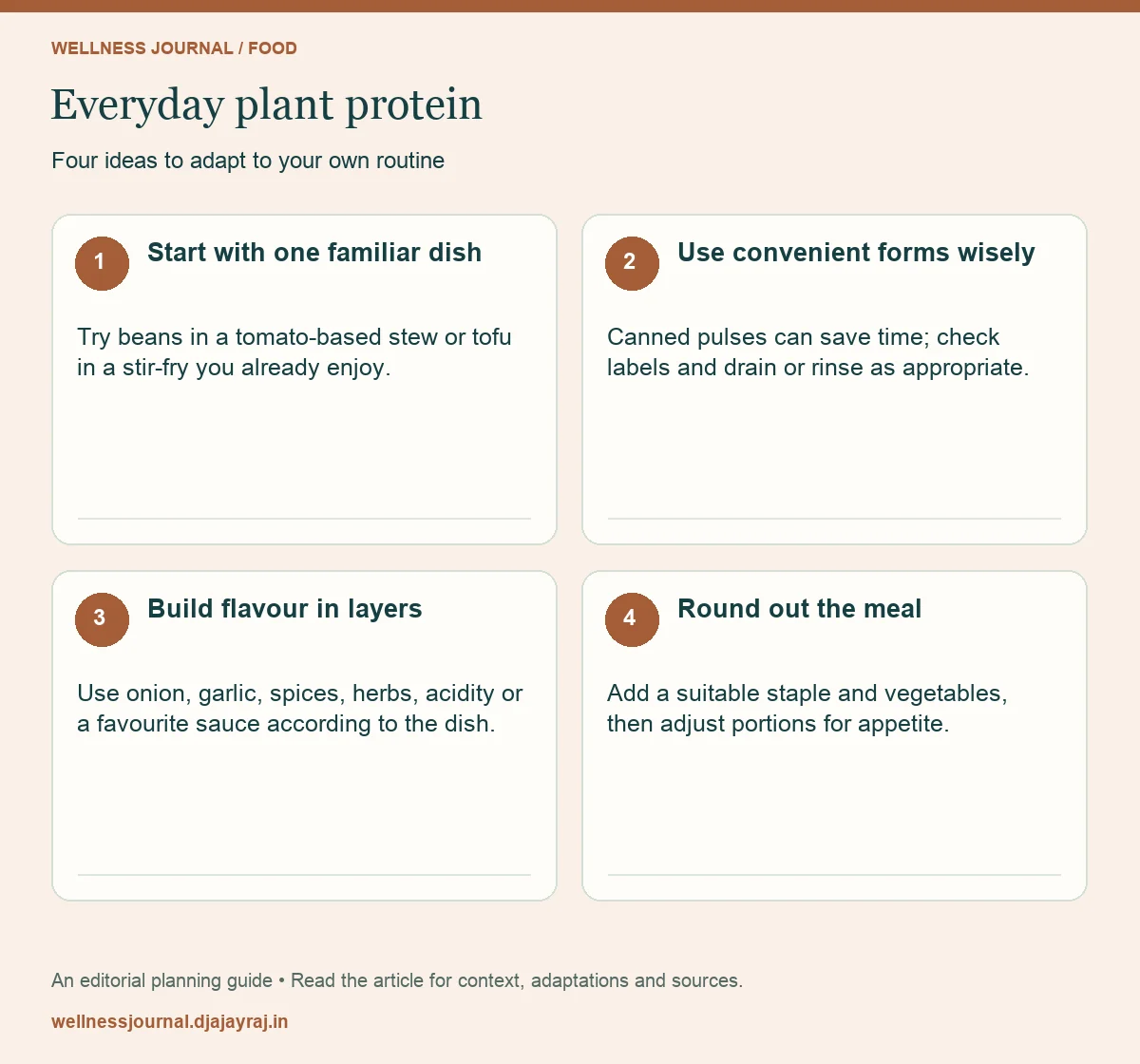
Start with one familiar dish
Try beans in a tomato-based stew or tofu in a stir-fry you already enjoy. Keep the rest of the meal familiar while you learn the new ingredient. You can change more elements after you know what works.
Use convenient forms wisely
Canned pulses can save time; check labels and drain or rinse as appropriate. Follow cooking instructions for dried beans and packaged products. Do not assume every pulse can be cooked in the same way.
Build flavour in layers
Use onion, garlic, spices, herbs, acidity or a favourite sauce according to the dish. Taste before adding more salt. A squeeze of lemon or a fresh herb can change the finish without requiring another main ingredient.
Round out the meal
Add a suitable staple and vegetables, then adjust portions for appetite. You do not need every bowl to resemble a nutrition diagram. Variety across the week is more practical than trying to maximise every nutrient at one sitting.
Choose a texture that fits the dish
| Ingredient | Useful meal format | Texture idea |
|---|---|---|
| Lentils | Soup, dal or sauce | Soft and spoonable |
| Chickpeas | Wrap, curry or bowl | Whole or lightly mashed |
| Firm tofu | Stir-fry or baked pieces | Drain and cook as directed |
| Beans | Stew or taco-style filling | Whole with a thick sauce |
Make it work for you
Look beyond the word plant-based
A packaged product can be plant-based and still differ greatly from another in protein, salt, fat or fortification. Read the label instead of treating the front-of-pack phrase as a guarantee. People following a fully vegan diet need to plan nutrients such as vitamin B12; speak with a registered dietitian if you are unsure how to meet your needs.
Keep one pantry fallback
Store a pulse you like, a suitable sauce base and a familiar staple. Write a simple combination on your shopping list so the ingredients have a purpose before they enter the cupboard.
Quick checklist
- Check soy, nut and other relevant allergens.
- Follow safe preparation instructions for dried beans.
- Use a varied diet rather than one favourite protein food.
Common questions
Do I need protein powder?
Many people can plan meals using ordinary foods. Whether you need a supplement depends on your overall intake and circumstances, not simply on choosing plant-based meals.
Are all plant-based milks high in protein?
No. Their composition varies. Compare labels and fortification, especially when replacing a food that contributes important nutrients to your diet.