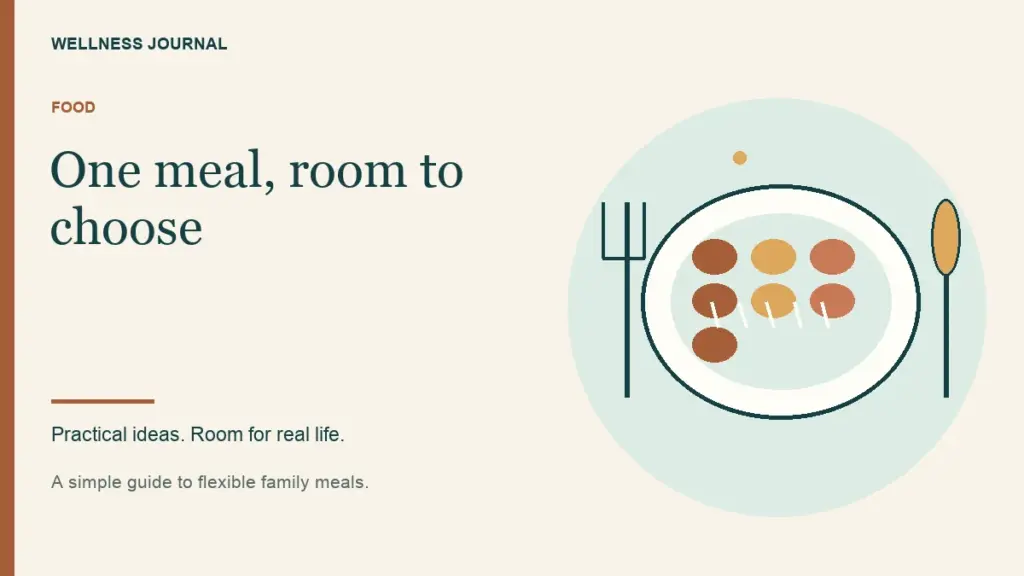
Flexible family meals can make dinner easier when people prefer different textures, flavours or portions. Start with shared components and let suitable toppings or sides vary. The goal is less duplicated work, not forcing everyone to eat identically. Children, adults and people with medical dietary needs may require different approaches, and allergy safety must be planned carefully.
Choose a meal that separates easily
Bowls, wraps, baked potatoes and component-style plates can allow choice without several entirely different recipes. Keep a familiar food available where appropriate and avoid turning the meal into a negotiation over every bite. A shared meal works best when the practical setup respects the people eating it.
General balanced-diet guidance does not replace individual needs. Food allergies and age-specific safety requirements must shape shared meals.
Background guidance: NHS: Eating a balanced diet; FoodSafety.gov: Cooking and storage guidance.
Four practical steps
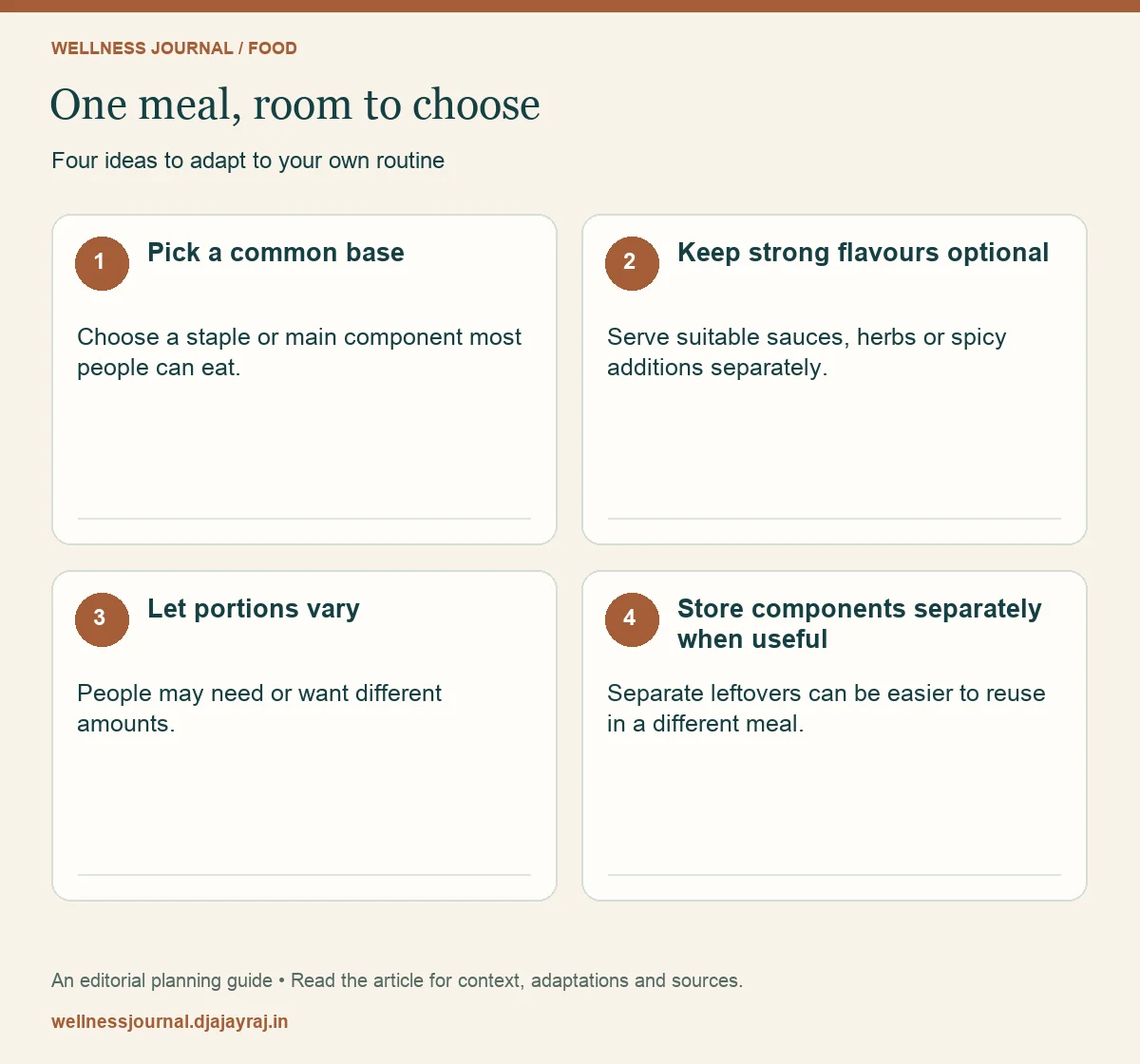
Pick a common base
Choose a staple or main component most people can eat. Check allergies and dietary requirements first. If a safe common base is not possible, separate preparation may be necessary; convenience should not override safety.
Keep strong flavours optional
Serve suitable sauces, herbs or spicy additions separately. This can make one preparation work for different preferences. Use separate utensils where cross-contact is a concern and follow the needs of the person with an allergy.
Let portions vary
People may need or want different amounts. Avoid using an adult plate or another person's appetite as the standard for everyone. Seek appropriate professional advice for feeding concerns or specific nutritional needs.
Store components separately when useful
Separate leftovers can be easier to reuse in a different meal. Label and refrigerate or freeze them safely. Keep track of the oldest component when combining foods later.
Shared meal formats with room for choice
| Format | Shared component | Optional addition |
|---|---|---|
| Wrap meal | Suitable wraps and filling | Sauce and vegetables |
| Bowl meal | Staple and safe protein option | Different toppings |
| Baked potato meal | Prepared potatoes | Suitable fillings |
| Component plate | A few familiar foods | Extra side or flavour |
Make it work for you
Keep the atmosphere separate from nutrition debates
A meal does not need to become a discussion of bodies, calories or whether someone has earned a food. Focus on serving safe, suitable options and making the setting workable. Persistent feeding difficulties, growth concerns or severe restriction deserve qualified guidance rather than escalating pressure at the table.
Choose one optional topping, not ten
Too many choices can recreate the workload you hoped to reduce. Start with one flexible addition and expand only if it makes the meal easier.
Quick checklist
- Plan for allergies and cross-contact.
- Allow different portions and preferences.
- Use safe storage for each component.
Common questions
Must everyone eat the same thing?
No. Shared components are a convenience, not a rule. Individual needs may require different food.
Will this solve selective eating?
Not necessarily. It may make meal organisation easier, but persistent or concerning feeding difficulties need appropriate support.