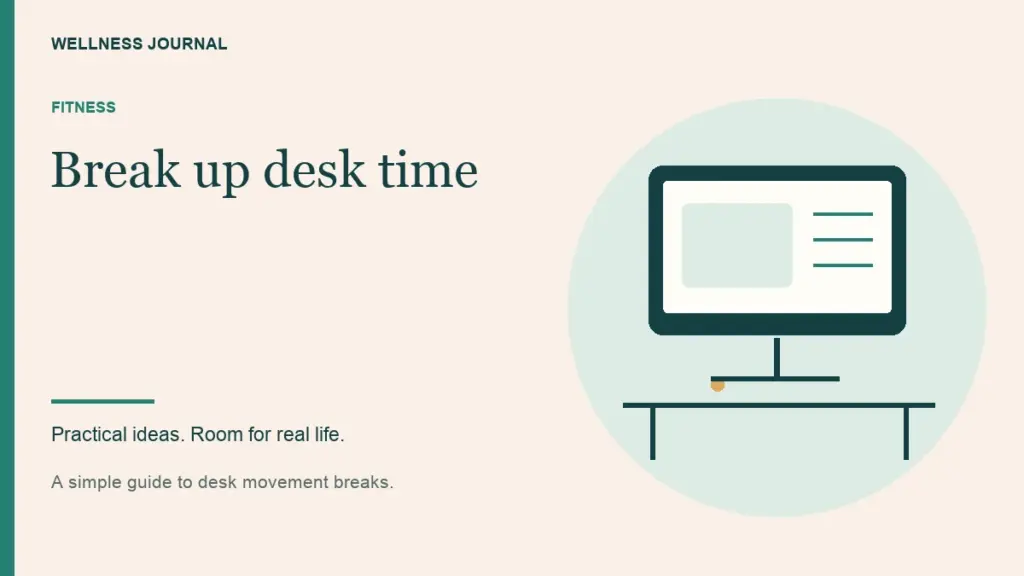
You do not need a workout outfit to interrupt a long stretch at your desk. A desk movement break can be as simple as standing for a phone call, moving to refill your water or changing position between tasks. The useful question is not whether a break is impressive. It is whether you can repeat it without disrupting your work or aggravating discomfort.
Attach movement to a real transition
Look at your existing day before adding alarms. The end of a video call, sending a document or finishing a chapter may already create a natural pause. Choose one of those moments as your cue. A cue connected to your work is often easier to remember than an unrelated reminder that you dismiss while busy.
CDC guidance encourages adults to move more and sit less. Short activity periods can contribute to an active day.
Background guidance: CDC: Adult activity guidelines; NHS: Exercise guidance and routines.
Four practical steps
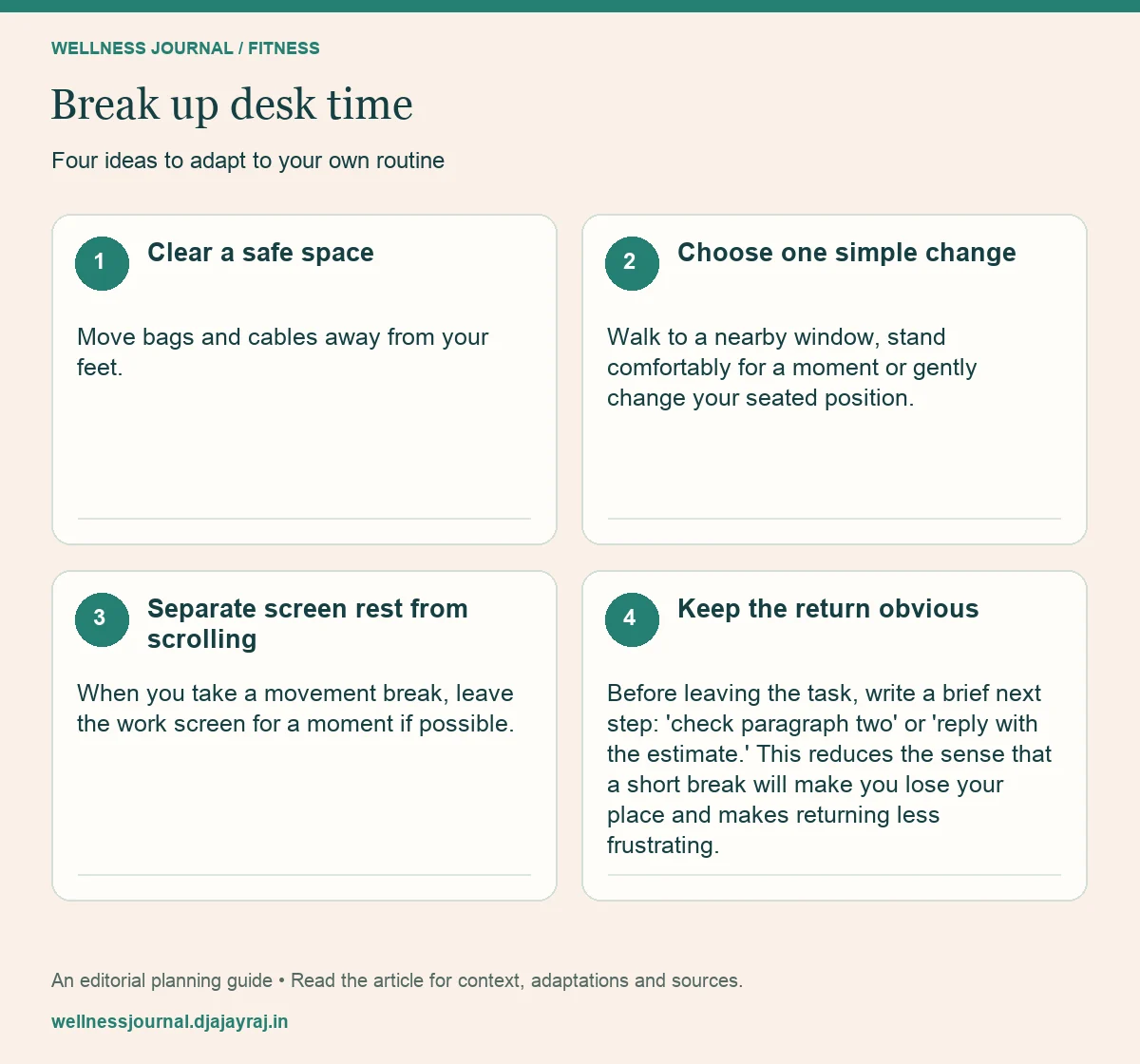
Clear a safe space
Move bags and cables away from your feet. If you stand, check that your chair will not roll into your path. Keep movements small enough for your surroundings, especially in a shared office or while wearing restrictive clothing.
Choose one simple change
Walk to a nearby window, stand comfortably for a moment or gently change your seated position. If standing is not suitable, try comfortable shoulder movements or ankle motion. Avoid pushing through pain or trying an unfamiliar balance exercise beside your desk.
Separate screen rest from scrolling
When you take a movement break, leave the work screen for a moment if possible. Switching immediately to your phone may keep you in the same position. Use the pause to look around the room or prepare the next physical item you need.
Keep the return obvious
Before leaving the task, write a brief next step: 'check paragraph two' or 'reply with the estimate.' This reduces the sense that a short break will make you lose your place and makes returning less frustrating.
Break ideas for different workdays
| Situation | Movement option | Easy return cue |
|---|---|---|
| Back-to-back calls | Change position between calls | Open next meeting notes |
| Long writing task | Short comfortable walk | Mark the next sentence |
| Shared workspace | Seated shoulder or ankle movement | Keep a task bookmark |
| Working from home | Refill water in another room | Leave one next action |
Make it work for you
Make breaks accessible
The right break depends on your mobility, pain, fatigue and workspace. Standing is not automatically better for everyone, and staying still while standing can also become uncomfortable. If a particular movement repeatedly causes symptoms, ask a qualified professional about suitable alternatives. You can also change the task or position without turning the pause into exercise.
Use a minimum version on busy days
Choose a single comfortable position change after one meeting. A tiny version keeps the idea usable when the schedule is crowded. Expand only if it helps; a complicated routine is easy to abandon.
Quick checklist
- Keep cables and floors clear.
- Choose comfortable movement rather than forceful stretching.
- Do not treat breaks as a replacement for broader physical activity.
Common questions
How often should I take a break?
There is no single interval that fits every task or person. Use natural transitions and any occupational-health guidance that applies to your work.
Will this fix back pain?
Movement breaks are not a diagnosis or treatment. Persistent, worsening or unexplained pain deserves assessment rather than repeated self-experimentation.