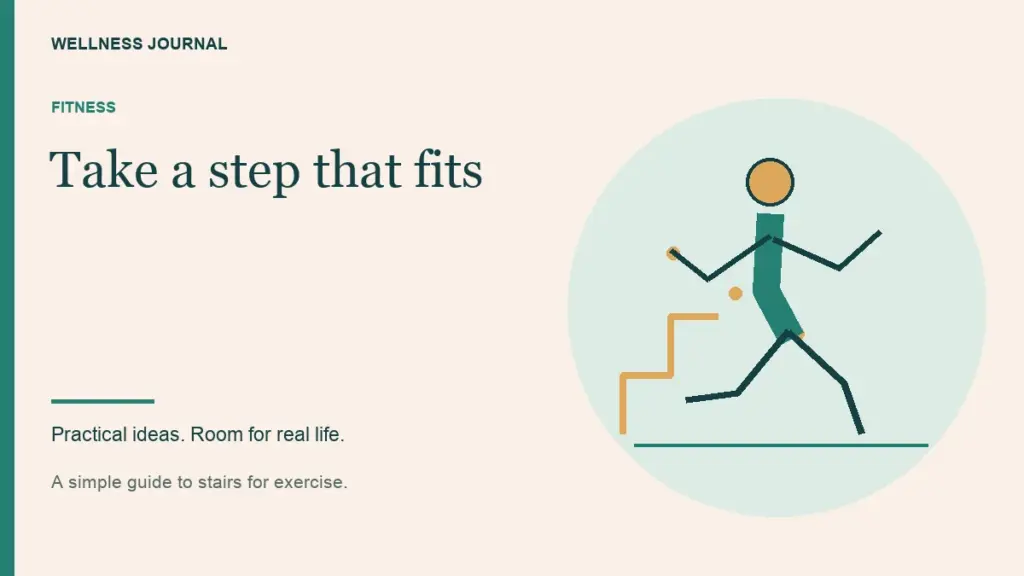
Using stairs for exercise can sound simple because the equipment is already there. But stairs add effort and a fall risk that a flat route may not have. Consider your balance, joints, symptoms and the actual staircase before making it a habit. Taking the lift or ramp is a sensible choice whenever stairs are unsuitable; convenience does not make an activity right for everyone.
Check the staircase before the challenge
Look for secure handrails, good lighting and clear steps. Avoid using a busy staircase as a workout circuit or moving quickly where people may enter unexpectedly. Keep your hands free enough to use support. If you are carrying a heavy or awkward load, choose the route that is safer for the task.
The NHS lists stair climbing among activities that can challenge muscles. Stairs can also be demanding, so effort and individual suitability matter.
Background guidance: NHS: Strength and flexibility; CDC: Measuring physical activity intensity.
Four practical steps
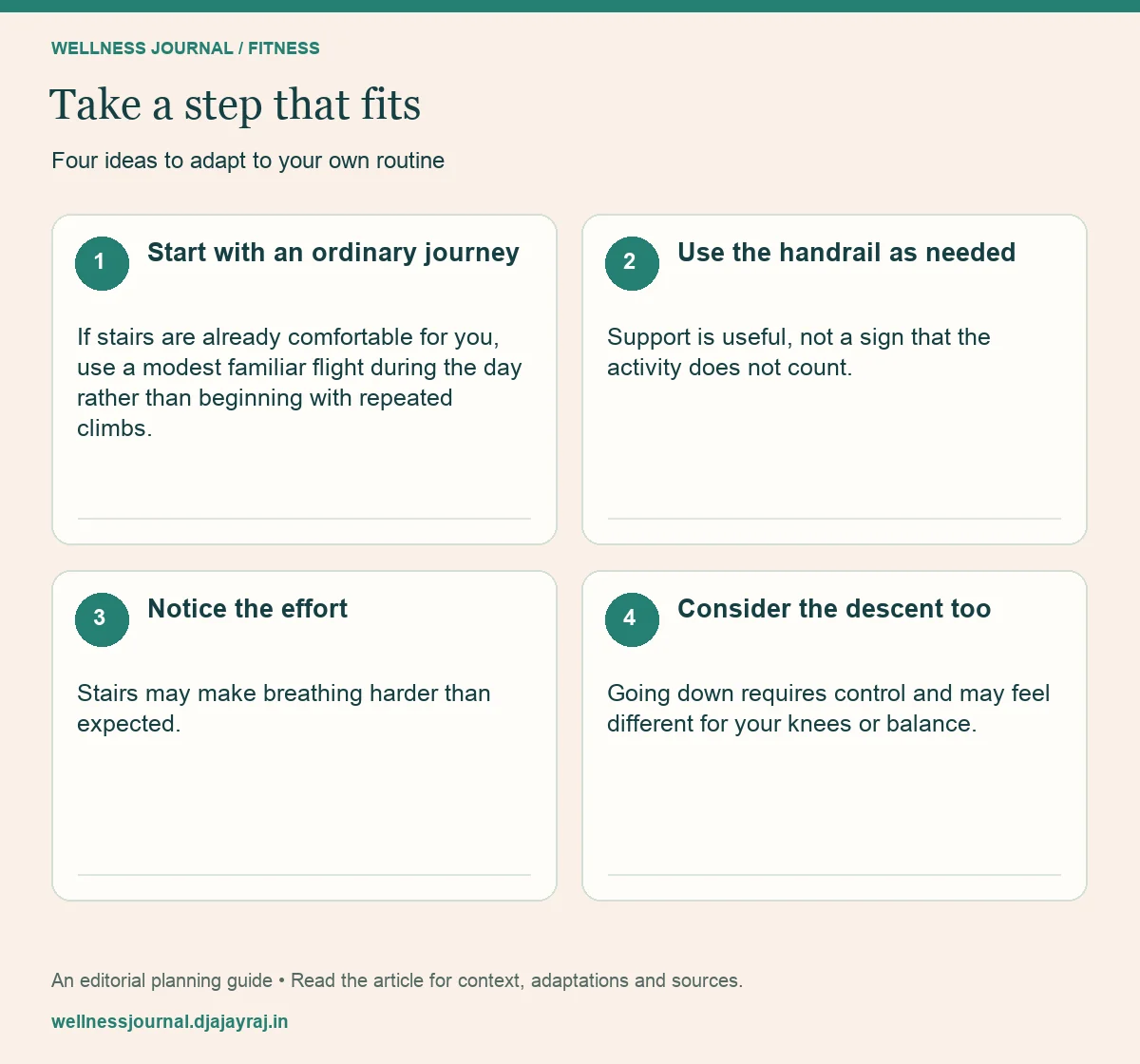
Start with an ordinary journey
If stairs are already comfortable for you, use a modest familiar flight during the day rather than beginning with repeated climbs. Move at a controlled pace and allow time. Do not race a timer.
Use the handrail as needed
Support is useful, not a sign that the activity does not count. Place your feet securely and pay attention to the steps. Avoid looking at your phone while moving.
Notice the effort
Stairs may make breathing harder than expected. Pause in a safe place if needed and choose an easier route if the effort is unsuitable. Stop for concerning symptoms rather than treating them as a fitness test.
Consider the descent too
Going down requires control and may feel different for your knees or balance. The plan must include a comfortable way back. Avoid adding repetitions simply because climbing felt manageable once.
Decide whether stairs fit today
| Question | Suitable sign | Reason to choose another route |
|---|---|---|
| Is the area safe? | Clear, lit steps with support | Clutter or poor lighting |
| Are your hands available? | You can use the rail | Awkward load |
| Does effort feel manageable? | Controlled pace | Unusual symptoms |
| Can you descend safely? | Comfortable control | Pain or instability |
Make it work for you
Do not use stairs as a universal recommendation
People with balance concerns, joint pain, dizziness or certain health conditions may need different options. Ask a qualified professional when unsure. An accessible flat route or another suitable activity can serve your goals without the same demands. The best everyday movement is the one that fits your body and environment.
Choose the route before carrying the bag
If a load makes the rail hard to use, change the transport plan. Do not let a goal to take stairs override the practical safety of the journey.
Quick checklist
- Use clear, well-lit stairs.
- Keep the handrail available.
- Plan a comfortable descent.
Common questions
Should I skip steps to make it harder?
Not as a general beginner approach. Keep footing secure and use a controlled ordinary pattern.
Is choosing the lift a failure?
No. It may be the appropriate choice for your health, balance, load or circumstances.