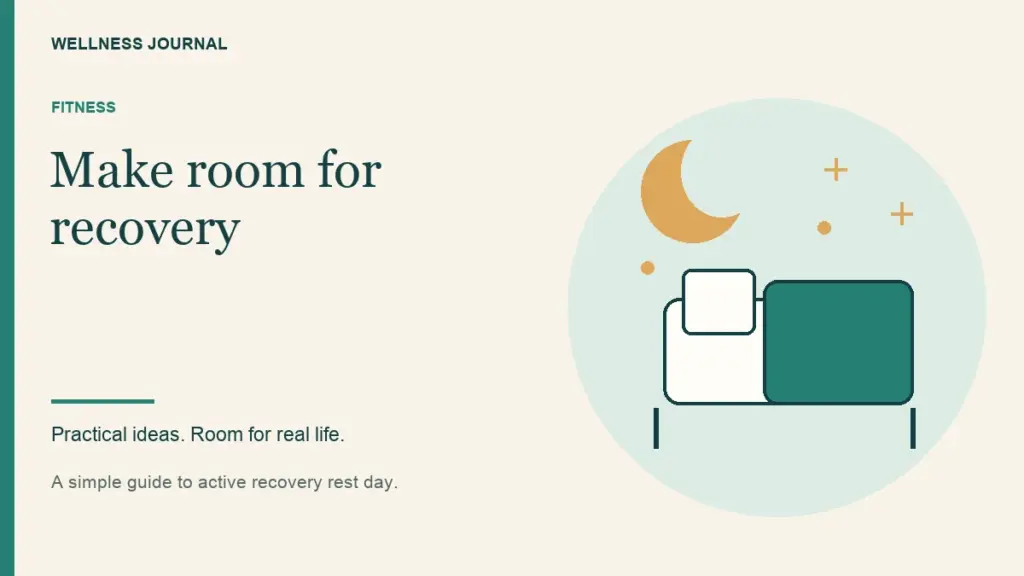
A rest day does not need a second workout disguised as recovery. You might enjoy a gentle walk, a little comfortable movement or a day with no planned exercise. An active recovery rest day is useful only when it actually leaves you feeling restored. Start by asking what you are recovering from and how you feel, rather than following a rule that every day must contain a session.
Separate ordinary tiredness from warning signs
Consider your recent workload, sleep, appetite and any pain. A demanding training session, a stressful workweek and poor sleep can all affect what feels manageable. New or severe pain, swelling, fever or unusual exhaustion deserve more attention than a recovery checklist. Do not use movement to test whether you can push through a symptom.
A balanced routine includes activity that suits your circumstances. NHLBI guidance also emphasises protecting time for sleep.
Background guidance: NHS: Exercise guidance and routines; NHLBI: Healthy sleep habits.
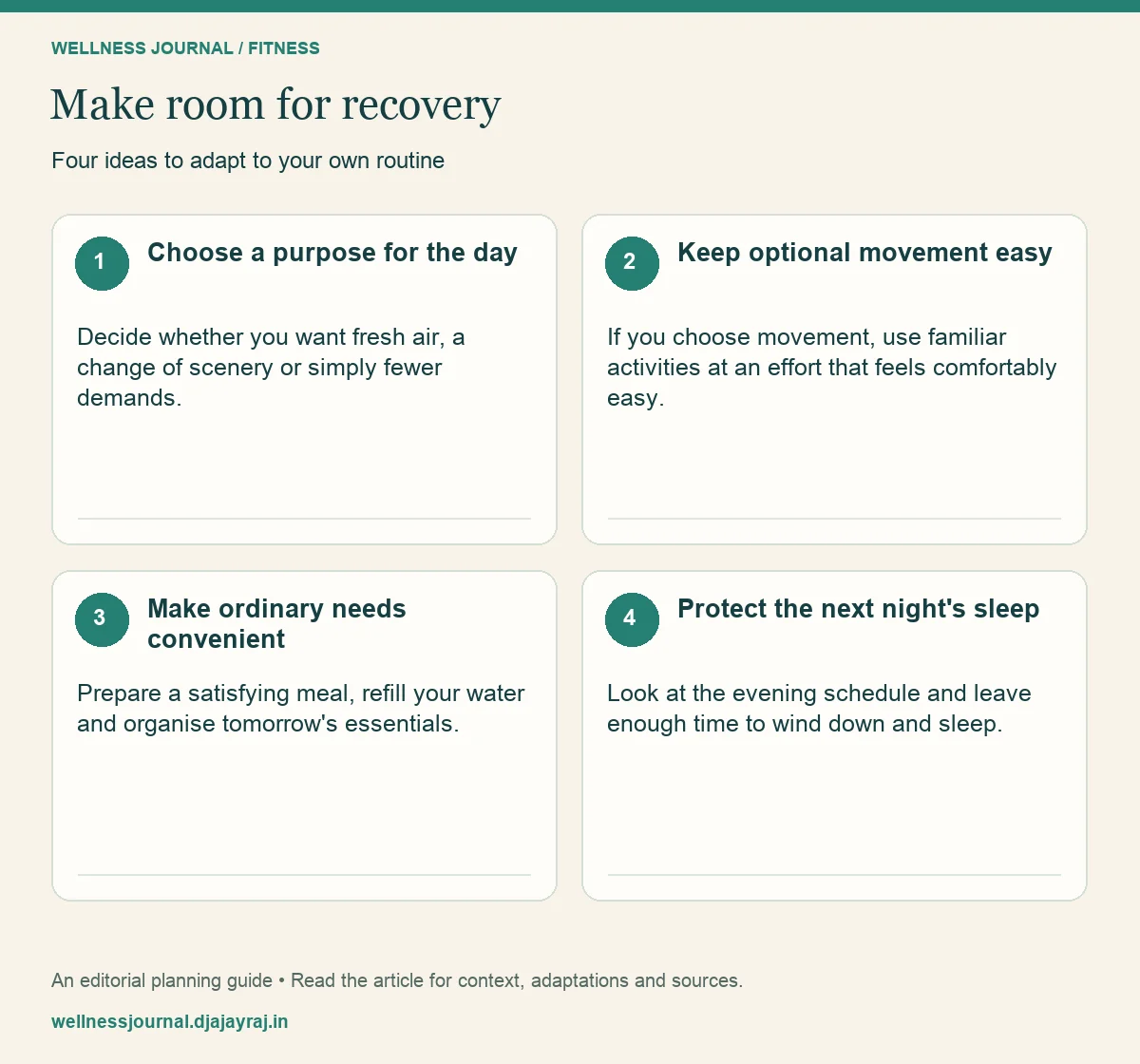
Four practical steps
Choose a purpose for the day
Decide whether you want fresh air, a change of scenery or simply fewer demands. Naming the purpose prevents a short easy walk from turning into an unplanned challenge. Leave pace and performance targets out of the decision.
Keep optional movement easy
If you choose movement, use familiar activities at an effort that feels comfortably easy. You should be able to stop without feeling that the session is unfinished. Skip movements that make sore or painful areas feel worse.
Make ordinary needs convenient
Prepare a satisfying meal, refill your water and organise tomorrow's essentials. These practical tasks can reduce friction without turning recovery into a shopping list of supplements, devices or elaborate rituals.
Protect the next night's sleep
Look at the evening schedule and leave enough time to wind down and sleep. Avoid staying up late to fit in a recovery routine. The routine should support rest, not compete with it.
Choose the kind of rest you need
| Situation | Possible choice | Reason to change course |
|---|---|---|
| You feel generally well | Easy enjoyable movement | It starts feeling demanding |
| You are short on sleep | Reduce optional commitments | Persistent severe fatigue |
| A movement causes pain | Avoid that movement | Pain persists or worsens |
| You feel unwell | Rest and appropriate care | Concerning symptoms |
Make it work for you
Drop the idea of earning rest
Rest is part of planning your week, not a reward you unlock after enough exercise. If you are anxious about missing movement or feel compelled to exercise through injury, it may help to discuss that pattern with a qualified professional. A sustainable routine should leave room for changes in health, work, family demands and enjoyment.
Try a no-score day
Put away workout targets for one day. If you walk, notice the surroundings rather than counting the outing as a performance. If you rest, let that be a complete choice.
Quick checklist
- Keep recovery movement optional.
- Eat and drink normally for your needs.
- Seek advice for unexplained or persistent fatigue and pain.
Common questions
Does a rest day mean lying still all day?
Not necessarily. Ordinary comfortable daily movement may be fine. The right amount depends on how you feel and any medical guidance.
Do I need special recovery products?
A general rest day does not automatically require products. Start with manageable activity, food, fluids and sleep before assuming you need something extra.