A beginner exercise class can offer structure and company, but the label alone does not tell you whether it fits. Ask about the actual movements, pace and available adaptations. Consider practical details such as transport, changing facilities and cost as well as the activity itself. The best first class is one you can attend comfortably and leave feeling that your limits were respected.
Ask what a typical session contains
A useful description includes warm-up, main movements, equipment and how the instructor handles different abilities. Tell the provider about relevant access needs without feeling obliged to share unnecessary private details. If you have a medical condition or injury, ask your clinician what kind of activity and support would be suitable.
Exercise options and individual needs vary. A class labelled beginner does not automatically provide the same level of support or intensity everywhere.
Background guidance: NHS: Exercise guidance and routines; NIH: Social wellness toolkit.
Four practical steps
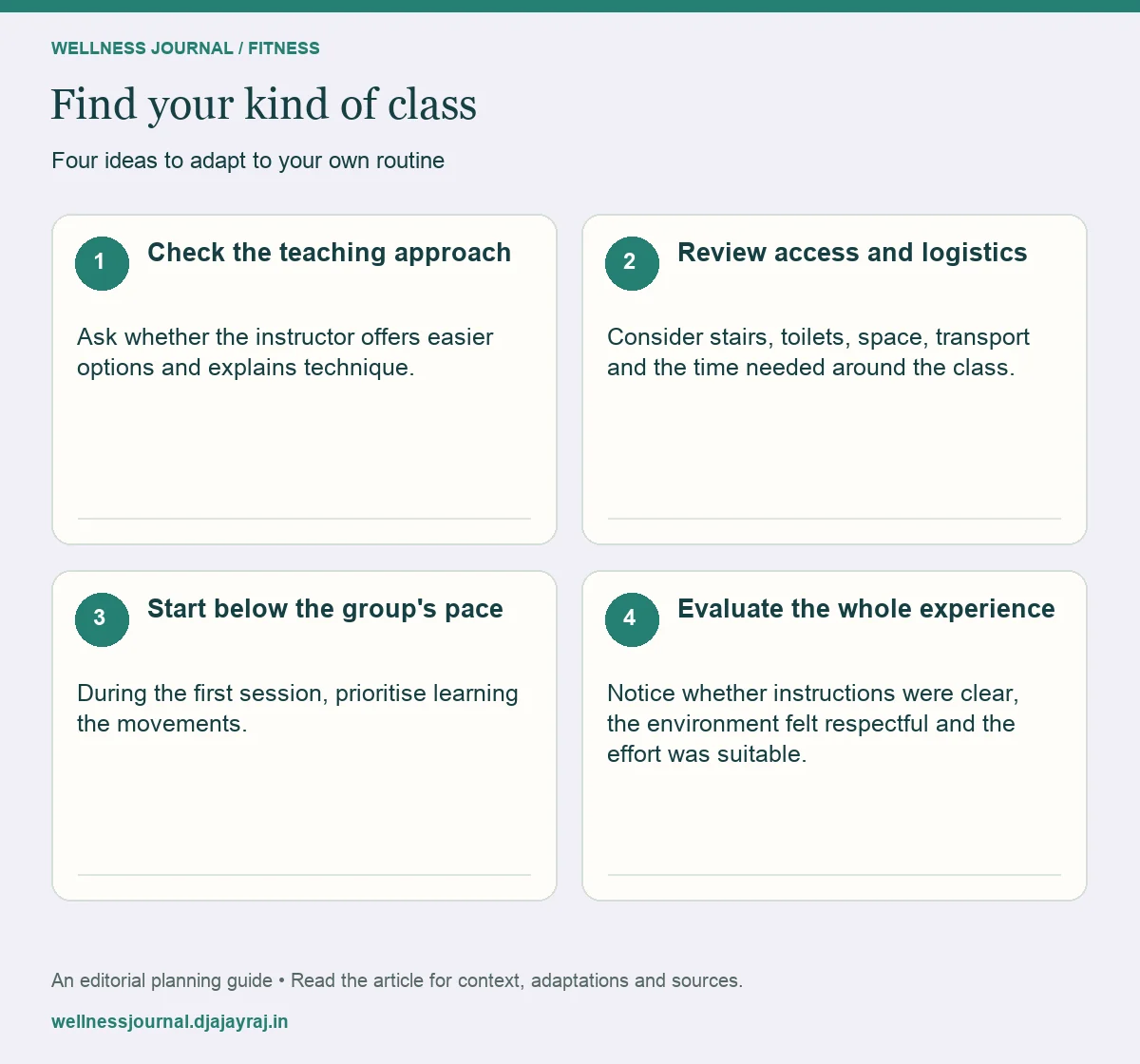
Check the teaching approach
Ask whether the instructor offers easier options and explains technique. A supportive class should allow pauses without embarrassment. Qualifications and experience relevant to the activity are worth checking, especially when you need adaptations.
Review access and logistics
Consider stairs, toilets, space, transport and the time needed around the class. A session that fits on paper may be difficult if travel makes it much longer. Ask about a trial option if available.
Start below the group's pace
During the first session, prioritise learning the movements. You do not need to match experienced participants. Stop a movement that causes pain or unusual symptoms and seek appropriate guidance.
Evaluate the whole experience
Notice whether instructions were clear, the environment felt respectful and the effort was suitable. One awkward first attempt does not mean the activity is wrong, but pressure to ignore pain is a reason to reconsider the setting.
Questions to ask before attending
| Area | Question | Why it matters |
|---|---|---|
| Movement | What does a typical session include? | Shows actual demands |
| Adaptation | Are easier options demonstrated? | Supports different starting points |
| Access | Are facilities suitable for my needs? | Makes attendance practical |
| Cost | Is there a trial or flexible booking? | Avoids a large early commitment |
Make it work for you
Give yourself permission to choose another class
A class can be well run and still not be your preference. You may enjoy a quieter setting, different music or a smaller group. Use the experience to identify what you want next. Activity is easier to sustain when the practical and social environment fits, rather than when you feel you must tolerate the first option you tried.
Prepare one question for the instructor
Choose the concern most relevant to you, such as a movement variation or where to stand to hear instructions. A clear question can make the first session less uncertain.
Quick checklist
- Ask about actual movements and adaptations.
- Check access and total time.
- Respect symptoms and your own pace.
Common questions
Do I need to get fit before joining?
A genuinely suitable beginner class should meet an appropriate starting level. Ask the provider what prerequisites apply.
Should I sign up for a long package immediately?
A trial or short commitment can help you assess fit first. Consider the terms and your actual schedule before committing.