A Sunday reset routine can be useful, but it should not turn your day off into unpaid project management. Choose a few actions that remove predictable friction from the coming week. You do not need a spotless home, a full meal-prep session or a colour-coded calendar. The best reset leaves you with a clearer Monday and some Sunday still available to enjoy.
Choose three areas that affect the week
Look at your calendar, food arrangements and one physical space. These areas often contain small obstacles you can solve quickly. If Sunday is a working day, use another transition that fits your schedule. The name of the day is less important than having a brief moment to notice what is coming and prepare the essentials.
NIH habit guidance supports practical planning. The reset below is an editorial organising exercise, not a clinically tested wellbeing programme.
Background guidance: NIH News in Health: Creating healthy habits; NIMH: Caring for your mental health.
Four practical steps
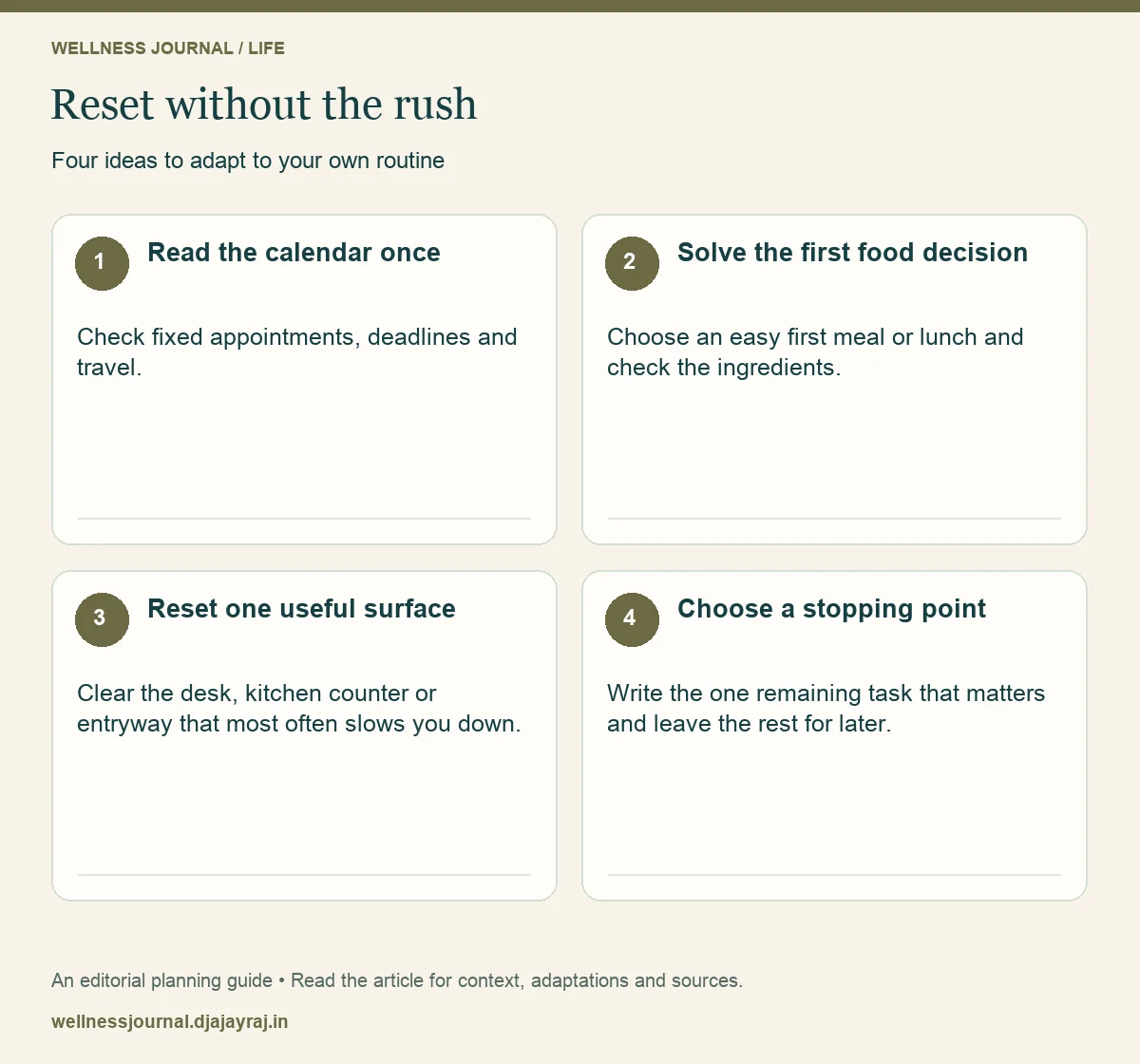
Read the calendar once
Check fixed appointments, deadlines and travel. Identify one day that looks unusually crowded and decide what can be simplified. Avoid filling every open space; the purpose is to understand the week, not to maximise its capacity.
Solve the first food decision
Choose an easy first meal or lunch and check the ingredients. You can plan more if it genuinely helps, but one reliable starting meal may be enough. Keep a flexible backup for an evening when plans change.
Reset one useful surface
Clear the desk, kitchen counter or entryway that most often slows you down. Put essential items where they belong. Do not let a small reset expand into sorting every cupboard unless that is how you want to spend the day.
Choose a stopping point
Write the one remaining task that matters and leave the rest for later. A reset needs an end. Finish with something that makes the day feel like your own, whether that is a walk, a call, a hobby or quiet time.
A reset with a clear finish
| Area | Useful action | Stop when |
|---|---|---|
| Calendar | Check the week's constraints | The crowded day has a plan |
| Food | Choose the first easy meal | Needed ingredients are clear |
| Space | Clear one functional surface | The next task is easier to start |
| Personal time | Keep something enjoyable | You have protected the time |
Make it work for you
Use a ten-minute version when necessary
If the day is busy, check tomorrow's appointment, prepare one essential item and decide the next meal. That is a valid reset. A routine that only works when you have two spare hours is unlikely to help during the weeks you most need support. Keep the scope small enough that you can stop without feeling unfinished.
When the list keeps growing
Put extra ideas on a separate later list. Do not let noticing a task automatically assign it to today. The reset is for choosing priorities, not accepting every possible chore.
Quick checklist
- Pick a few practical outcomes.
- Include actual rest or enjoyment.
- Stop before the reset consumes the day.
Common questions
Does the reset have to happen on Sunday?
No. Use whichever transition makes sense for your work and household schedule.
What if I enjoy a longer organising session?
That is fine if it is a choice and fits your day. Keep the routine flexible so a shorter version remains acceptable.