A sleep-friendly bedroom does not have to resemble a hotel or contain expensive technology. Start with the one thing that most often interrupts you: light through a curtain, a noisy device or essentials scattered around the room. Change that first and see whether the room becomes easier to use. Aesthetic perfection is not the goal, especially in a shared or multipurpose space.
Observe the room at bedtime
The room may feel different at night than it does during the day. Notice indicator lights, street noise and whether the bedding feels comfortable. Consider access and safety too: you still need a clear route to the bathroom and a way to find essentials. A darker room should not create a fall hazard or make necessary care more difficult.
NHLBI identifies a quiet, cool and dark sleep environment as helpful. Light also influences the body's sleep-wake timing.
Background guidance: NHLBI: Healthy sleep habits; NHLBI: How sleep works.
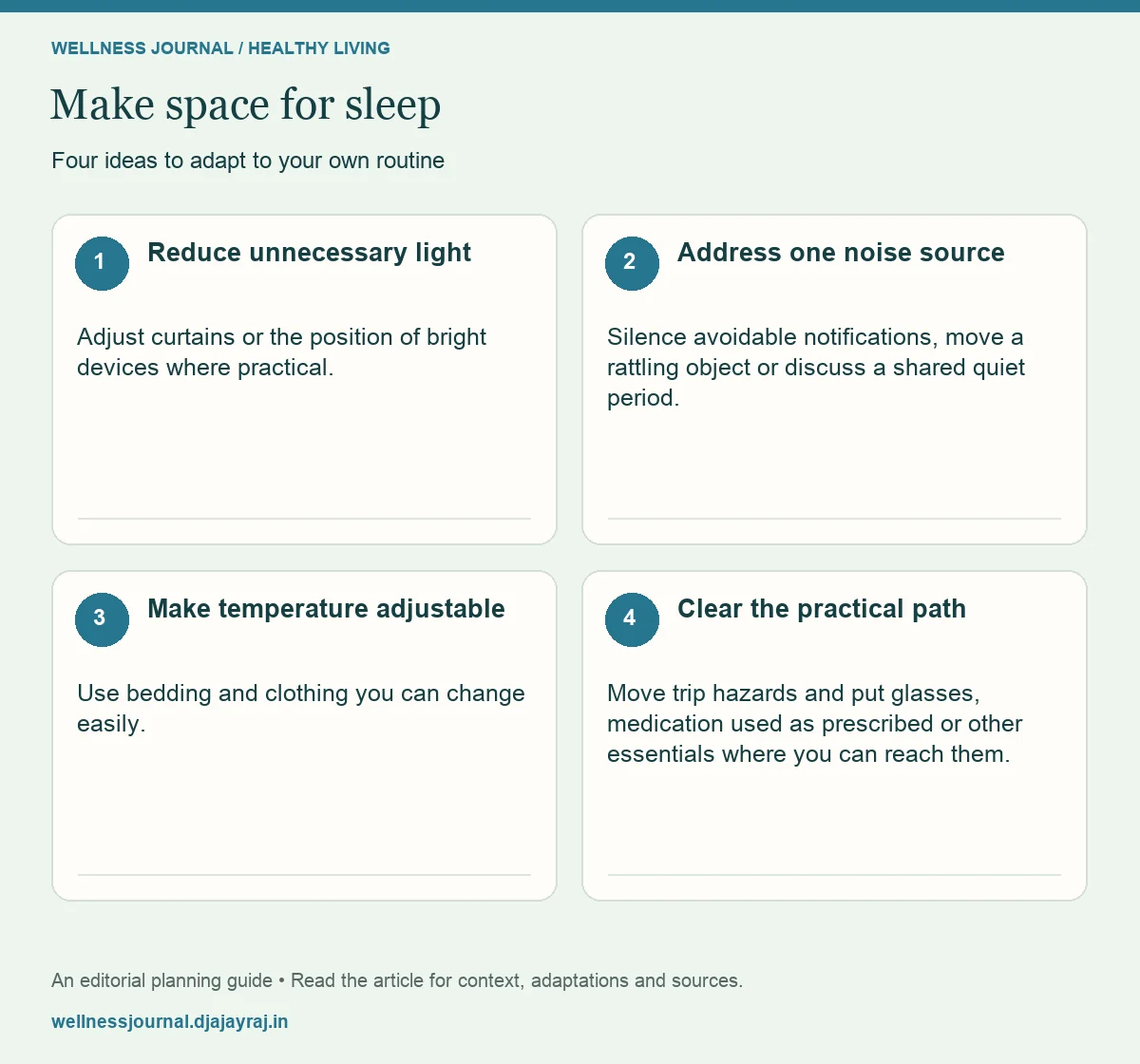
Four practical steps
Reduce unnecessary light
Adjust curtains or the position of bright devices where practical. Use safe, suitable window coverings rather than improvised materials near heat sources. If you need a night light, choose a setup that supports safe movement without lighting the whole room.
Address one noise source
Silence avoidable notifications, move a rattling object or discuss a shared quiet period. If you use earplugs or background sound, consider whether you must hear alarms, children or other important signals. Keep any audio at a comfortable level.
Make temperature adjustable
Use bedding and clothing you can change easily. The right setup depends on climate, health and personal comfort; there is no need to chase a precise number from a social-media post. Make safe adjustments within your housing conditions.
Clear the practical path
Move trip hazards and put glasses, medication used as prescribed or other essentials where you can reach them. Clearing one route and one surface can matter more than tidying every drawer before bed.
Start with the biggest disturbance
| Problem | Low-cost experiment | Safety consideration |
|---|---|---|
| Street light | Adjust suitable curtains | Keep ventilation and exits usable |
| Notifications | Set an appropriate quiet mode | Allow essential contacts if needed |
| Uncomfortable bedding | Change layers | Use safe temperature control |
| Cluttered floor | Clear the route | Keep mobility aids accessible |
Make it work for you
Work with a shared room
Agree on one change with the people who share the space, such as a lamp direction or headphone use during a quiet period. A shared solution is more likely to last than silently rearranging another person's belongings. If the room also serves as an office, close or cover work materials in a simple way that marks the end of the workday.
Try one change for several nights
Keep other variables reasonably similar and notice whether the adjustment helps. You do not need to buy several products at once. If a change makes the room less comfortable, undo it.
Quick checklist
- Keep a safe nighttime walking route.
- Preserve necessary alarms and access.
- Start with one disturbance rather than a full makeover.
Common questions
Do I need blackout curtains?
Not necessarily. They may help with light, but simpler adjustments can be enough. Choose a safe solution that fits the room and your needs.
Can a bedroom makeover fix every sleep problem?
No. Sleep difficulties can have causes beyond the environment. Persistent symptoms deserve professional advice.