A sleep diary can help organise observations when nights feel inconsistent. It is not a nightly exam or a way to diagnose yourself. Record reasonable estimates and relevant context, then leave the diary alone until the next planned entry. If tracking makes you more anxious about sleep, tell a clinician and consider whether a different approach would be more useful.
Keep the record short and consistent
Use a simple paper or digital format that you can complete after waking. You do not need to watch the clock throughout the night to make the record accurate enough to discuss. Estimates are acceptable when labelled honestly. Follow any specific diary instructions given by your healthcare professional.
NHLBI provides a sleep diary resource, and clinicians may use sleep records when assessing insomnia or other sleep concerns.
Background guidance: NHLBI: Sleep diary; NHLBI: Understanding insomnia.
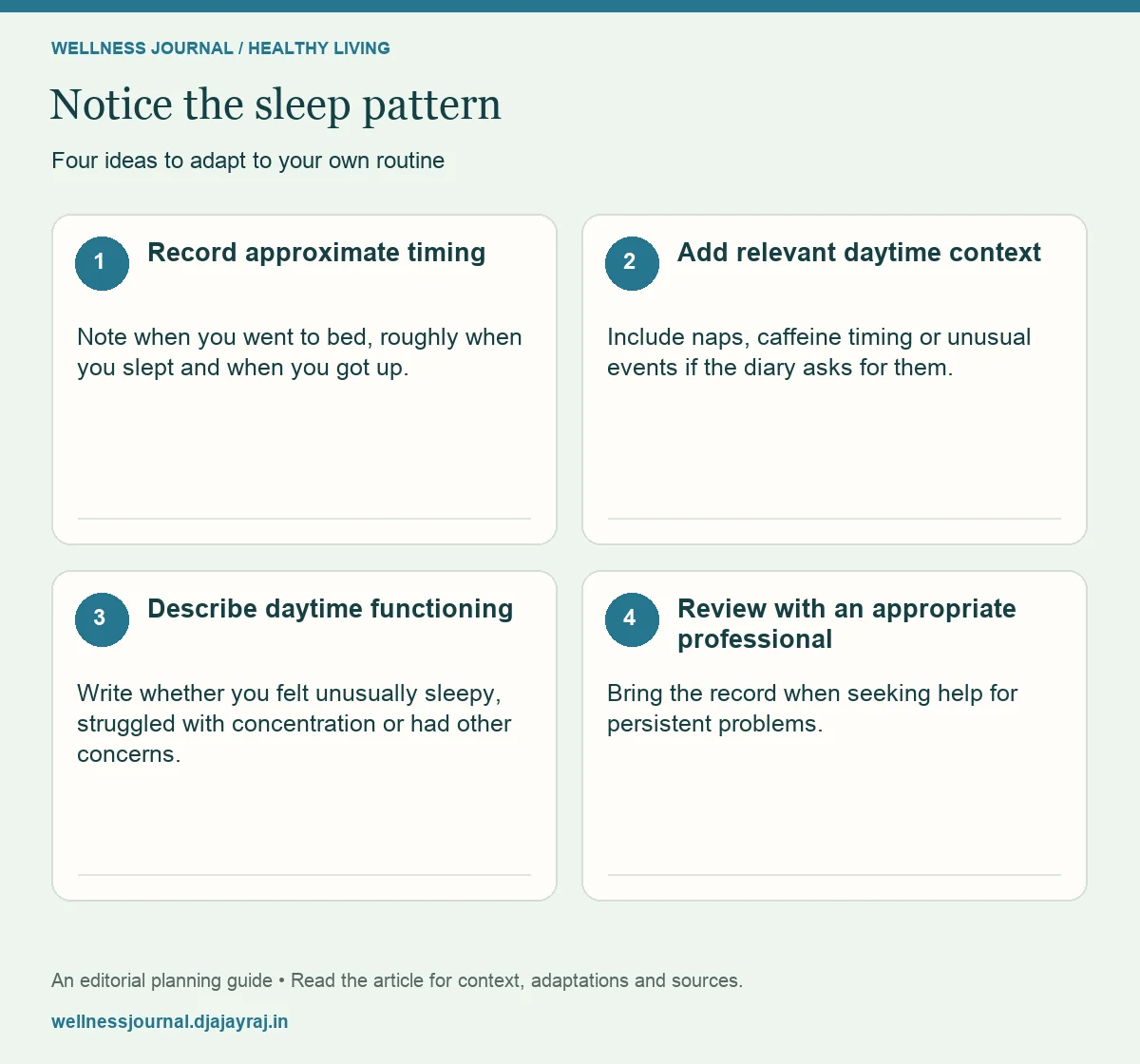
Four practical steps
Record approximate timing
Note when you went to bed, roughly when you slept and when you got up. Avoid reconstructing every minute. The broad pattern is often more useful than false precision.
Add relevant daytime context
Include naps, caffeine timing or unusual events if the diary asks for them. Keep notes brief so the record remains usable rather than becoming a complete daily journal.
Describe daytime functioning
Write whether you felt unusually sleepy, struggled with concentration or had other concerns. Sleep is not only about a nightly number; the effect on daily life matters.
Review with an appropriate professional
Bring the record when seeking help for persistent problems. Ask what patterns matter and what the next step should be. Do not turn a diary observation into a medication change on your own.
A simple record to discuss
| Area | What to note | Avoid |
|---|---|---|
| Night timing | Reasonable estimates | Clock-watching all night |
| Context | Naps or unusual events | Recording every detail |
| Daytime effect | Sleepiness and functioning | Judging yourself by a score |
| Questions | Patterns you want explained | Self-diagnosis |
Make it work for you
Know when a diary is not enough
Persistent insomnia, loud snoring with breathing concerns, sudden sleep episodes or dangerous daytime sleepiness need professional assessment. Do not drive when sleepy. A diary can support care, but it should not delay help while you wait to collect a perfect amount of data.
Use one planned recording time
Complete the entry after waking, then put it away. Repeatedly checking and recalculating can make tracking more intrusive without adding useful information.
Quick checklist
- Use honest estimates.
- Keep the record brief.
- Seek care for persistent or concerning symptoms.
Common questions
Do I need a wearable?
No. A simple diary can be useful. Consumer devices do not replace clinical assessment.
How long should I keep it?
Follow your clinician's instructions when provided. For a personal trial, keep the purpose clear and stop if tracking becomes distressing.