An emotional check in can be brief enough to fit between tasks. Instead of deciding that the whole day is fine or bad, notice a more specific feeling and what is happening around it. You might be disappointed about one event and pleased about another. The aim is to understand what needs attention, not to produce the correct mood or explain every emotion immediately.
Use ordinary words before searching for labels
Start with language you recognise: tired, worried, relieved, irritated, lonely or uncertain. You can use more than one word. A feeling is information about your experience, not automatic proof that a particular interpretation is true. Keep the difference between what you feel and what you know about the situation in view.
NIH describes emotional wellness in terms of responding to stress and change. A personal check-in can organise observations, but it is not a diagnostic assessment.
Background guidance: NIH: Emotional wellness toolkit; NIMH: Caring for your mental health.
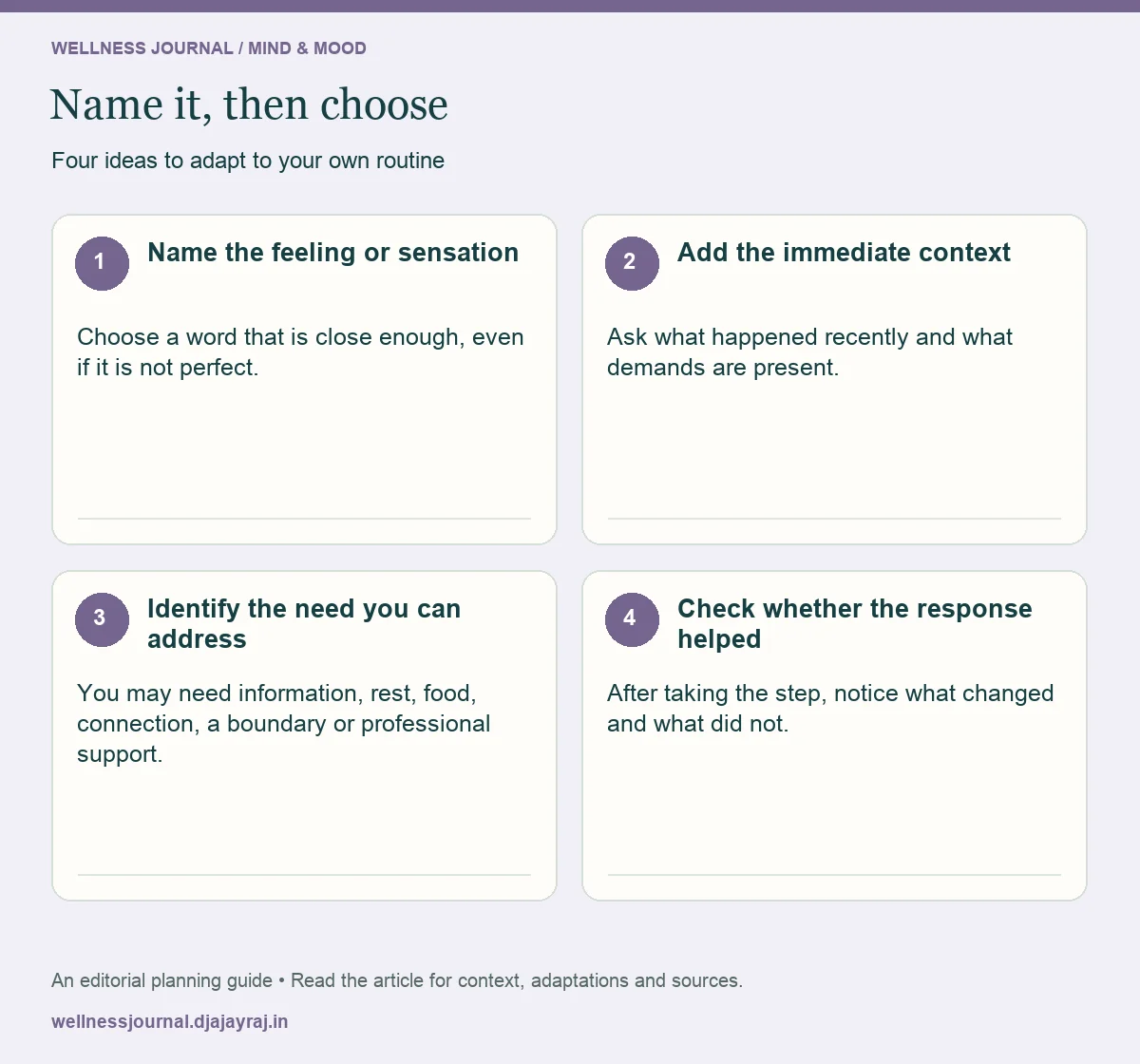
Four practical steps
Name the feeling or sensation
Choose a word that is close enough, even if it is not perfect. You can also notice physical comfort, tension or energy without assuming a medical cause. New or concerning physical symptoms deserve appropriate care.
Add the immediate context
Ask what happened recently and what demands are present. Include practical factors such as a rushed meal, a difficult conversation or a long day. Context can help you choose a response without reducing every emotion to one simple cause.
Identify the need you can address
You may need information, rest, food, connection, a boundary or professional support. Choose a plausible next step rather than trying to solve your whole emotional life. It is acceptable to be unsure.
Check whether the response helped
After taking the step, notice what changed and what did not. The action does not have to remove the feeling completely to be useful. If distress persists or worsens, consider a different form of support.
A four-part check-in
| Prompt | Example | Purpose |
|---|---|---|
| What am I noticing? | I feel tense and uncertain | Name the experience |
| What is happening? | I am waiting for an answer | Add context |
| What might help? | Clarify the next update time | Choose a response |
| What changed? | I know when to check again | Review without judging |
Make it work for you
Keep checking from becoming constant monitoring
A brief check-in can be useful; repeatedly scanning your mood all day may become tiring. Choose a natural transition or use it when something feels unclear. If you find yourself interpreting every change as a sign of illness, discuss that concern with a qualified professional. You do not need to diagnose yourself to ask for help.
Use three words and one action
Write a few words about the feeling, then one practical response. The whole check-in can fit on a small note. More detail is optional, not a measure of how well you understand yourself.
Quick checklist
- Use specific but ordinary language.
- Include context and mixed feelings.
- Seek support for persistent, severe or safety-related distress.
Common questions
What if I cannot name the feeling?
Use a broad word or describe the experience in your own language. Uncertainty is allowed; you do not need a perfect label.
Should I try to change every uncomfortable emotion?
Not necessarily. Some feelings need acknowledgment, time or practical action rather than immediate removal.