A first therapy appointment does not require a perfect life story or a clear diagnosis. You can begin with what has been difficult and what you hope might change. The conversation is also a chance to ask about the professional's approach, qualifications and practical arrangements. If you need urgent help, use an appropriate crisis or emergency service rather than waiting for a routine appointment.
Bring a short description of the concern
Write a few observations about symptoms, situations or daily effects you want help with. Include how long they have been present if you can. You can mention previous support and what did or did not fit. The note is a starting point, not a script you must follow in order.
NIMH explains that a preliminary conversation can help you understand a therapist's approach and whether you feel comfortable with them.
Background guidance: NIMH: Psychotherapies; NIMH: Talking with a healthcare provider about mental health.
Four practical steps
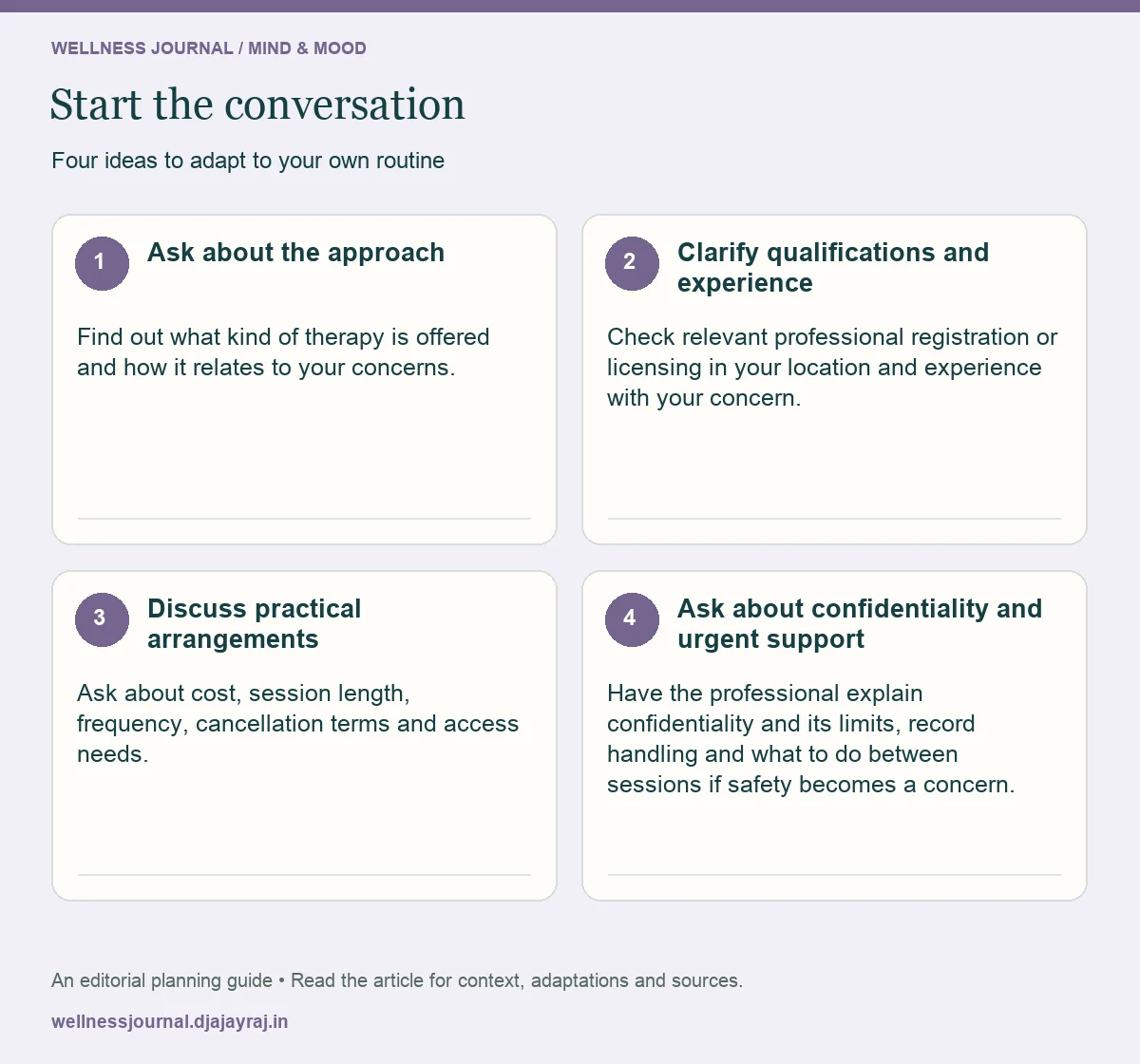
Ask about the approach
Find out what kind of therapy is offered and how it relates to your concerns. Ask what sessions may involve and how progress is discussed. You are allowed to request plain-language explanations.
Clarify qualifications and experience
Check relevant professional registration or licensing in your location and experience with your concern. Do not rely only on a social profile or a persuasive title. Use official registration information where applicable.
Discuss practical arrangements
Ask about cost, session length, frequency, cancellation terms and access needs. For online care, clarify privacy and what happens if the connection fails. Understanding logistics helps you decide whether the arrangement is workable.
Ask about confidentiality and urgent support
Have the professional explain confidentiality and its limits, record handling and what to do between sessions if safety becomes a concern. Do not assume every service provides around-the-clock support.
Questions for the first conversation
| Area | Question | Why it matters |
|---|---|---|
| Approach | How would we work on this concern? | Understand the process |
| Experience | What relevant training do you have? | Check suitability |
| Practicalities | What are the costs and arrangements? | Assess access |
| Safety and privacy | What are the limits of confidentiality? | Know the boundaries |
Make it work for you
Allow yourself to assess the fit
You may not know immediately whether the relationship is right. Notice whether you feel heard, whether questions are answered respectfully and whether the approach makes sense to you. Discuss concerns when possible or seek another qualified provider if needed. A difficult topic can feel uncomfortable without the professional relationship being unsafe; persistent disrespect is different.
Bring one question you most want answered
If a long list feels overwhelming, start with the concern that would help you decide the next step. You can ask more in later conversations.
Quick checklist
- Verify relevant qualifications.
- Clarify practical terms and confidentiality.
- Use urgent services when safety cannot wait.
Common questions
Do I need to know what type of therapy I want?
No. You can ask a qualified professional to explain suitable options and how they differ.
Must I share everything in the first session?
You can discuss pacing and comfort with the therapist. They will explain what information is needed for assessment and safety.