A grounding exercise can be a way to notice the room around you when thoughts feel crowded or a moment feels overwhelming. You do not need to complete a fixed number of senses or perform the exercise perfectly. Choose a few neutral details and keep your eyes open if that feels better. If the exercise increases distress, stop and use another source of support.
Begin with what feels neutral
Look for an ordinary object such as a chair, a cup or a window frame. Describe its colour or shape without searching for meaning. The aim is to orient to the present setting, not to convince yourself that every concern is imaginary. If you are in an unsafe situation, practical safety and help take priority over an attention exercise.
Present-moment attention appears in mindfulness guidance. A grounding exercise is a coping option, not a diagnosis or a substitute for care.
Background guidance: NHS: Mindfulness; NIMH: Caring for your mental health.
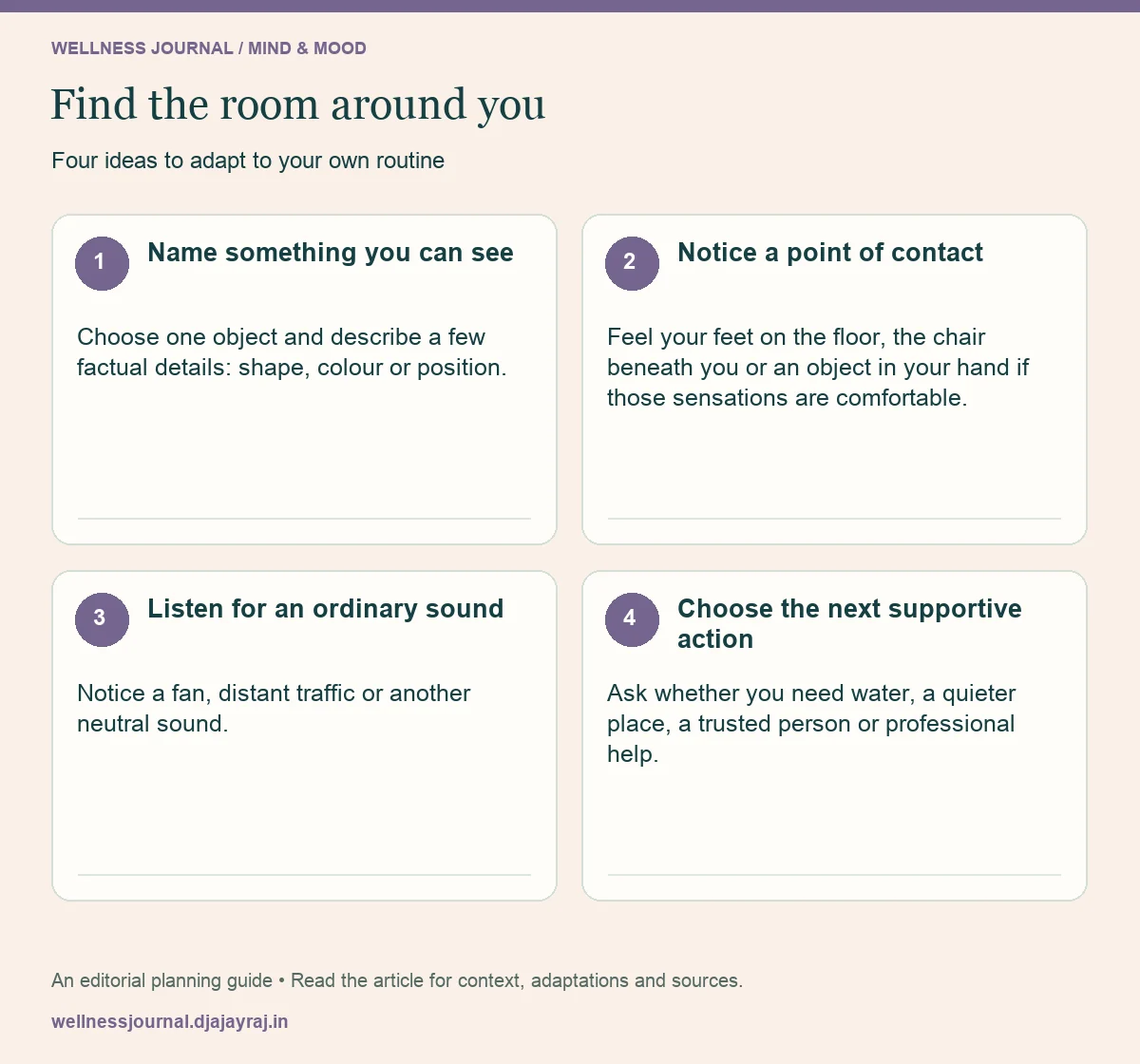
Four practical steps
Name something you can see
Choose one object and describe a few factual details: shape, colour or position. You can say them silently or aloud. Avoid scanning the room in a way that makes you more alert to threats; keep the focus gentle.
Notice a point of contact
Feel your feet on the floor, the chair beneath you or an object in your hand if those sensations are comfortable. Do not force attention into an area that feels painful or distressing. External details are also valid.
Listen for an ordinary sound
Notice a fan, distant traffic or another neutral sound. You do not have to find silence. If sound is uncomfortable, return to a visual detail or skip this part of the exercise.
Choose the next supportive action
Ask whether you need water, a quieter place, a trusted person or professional help. The exercise is a pause before a decision, not a requirement to calm yourself completely before asking for support.
Choose a comfortable point of attention
| Option | Example | Alternative |
|---|---|---|
| Sight | Colour of a nearby object | A simple shape |
| Touch | Chair or floor contact | Hold a neutral object |
| Sound | An ordinary background sound | Return to sight |
| Next action | Move to support | Contact someone appropriate |
Make it work for you
Do not make the exercise a test
Some people prefer structured counting, while others find it frustrating. Use the amount of detail that helps you orient without becoming another demand. If episodes are frequent, intense or affect daily life, speak with a qualified professional. Sudden severe physical symptoms or an immediate safety risk need appropriate urgent help.
Use a one-object version
Name the object, its colour and where it is. Then decide what you need next. A brief version can be enough; you do not need to work through a long checklist.
Quick checklist
- Choose neutral, comfortable details.
- Keep safety needs first.
- Stop if distress increases.
Common questions
Does grounding stop every panic feeling?
No. Responses vary, and a simple exercise cannot promise relief. Persistent or severe symptoms deserve professional support.
Must I use all five senses?
No. Choose the senses that are comfortable and accessible to you. A smaller version is valid.