To restart your routine after a chaotic week, resist the urge to repair everything in one day. A full reset can become another demanding project when you are already tired. Choose the one action that would make tomorrow easier and begin there. The goal is a workable rhythm, not a dramatic comeback or a punishment for the week that happened.
Identify what disrupted the routine
Was the problem a temporary event, an unrealistic plan or a change that will continue? Those situations need different responses. A short illness may call for recovery, while a new work schedule may require redesigning the routine. Avoid trying to restore an old timetable that no longer matches your life simply because it once worked.
Habit-change guidance recognises setbacks and changing circumstances. A disrupted week does not erase the routines you have already learned.
Background guidance: NIDDK: Changing habits for better health; NIH News in Health: Creating healthy habits.
Four practical steps
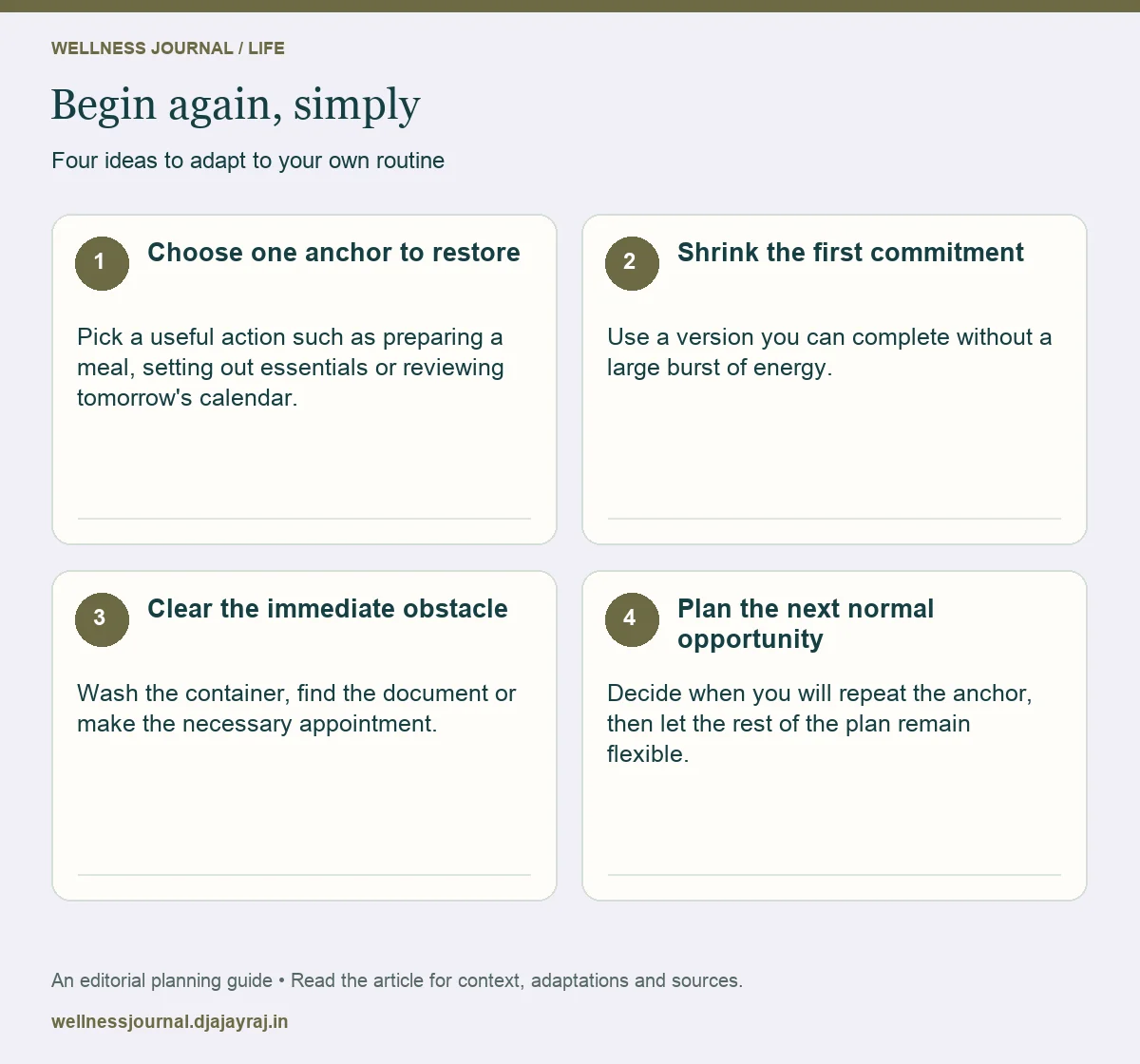
Choose one anchor to restore
Pick a useful action such as preparing a meal, setting out essentials or reviewing tomorrow's calendar. Choose something within your current capacity. A small dependable anchor can make the rest of the day easier to organise.
Shrink the first commitment
Use a version you can complete without a large burst of energy. If the old routine took an hour, begin with the part that matters most. You can add more later, but the first step should not require a perfect day.
Clear the immediate obstacle
Wash the container, find the document or make the necessary appointment. Addressing the practical blocker may be more useful than writing a new motivational statement. Keep the action specific enough that you know when it is finished.
Plan the next normal opportunity
Decide when you will repeat the anchor, then let the rest of the plan remain flexible. Do not schedule compensatory work for every missed day. The routine should move forward from the present.
Choose a restart that matches the disruption
| What happened | Useful response | Avoid |
|---|---|---|
| Temporary busy period | Restore one familiar anchor | Rebuilding everything at once |
| New ongoing schedule | Redesign timing | Forcing the old timetable |
| Illness or exhaustion | Prioritise recovery and care | Using productivity as a test |
| Plan was too ambitious | Reduce the commitment | Adding stricter rules |
Make it work for you
Keep the useful parts of the old routine
You do not need to start from zero. Keep the tools, cues and activities that still fit, and change the parts that do not. If the routine repeatedly collapses under ordinary demands, it may be too large or too inflexible. A smaller plan that survives real life is more useful than an impressive plan that only works during quiet weeks.
Write a next-day promise you can keep
Make it concrete and modest: 'After breakfast, I will check tomorrow's appointment.' Avoid promises about becoming a different person. The action is enough.
Quick checklist
- Understand whether the disruption is temporary.
- Restore one manageable anchor.
- Do not repay missed days with overload.
Common questions
Should I wait until Monday?
You can begin at the next suitable opportunity. A small practical action does not need a symbolic starting date.
What if I keep restarting?
Review the size and fit of the routine. Repeated interruptions may signal a design problem or a need for broader support, not a lack of character.