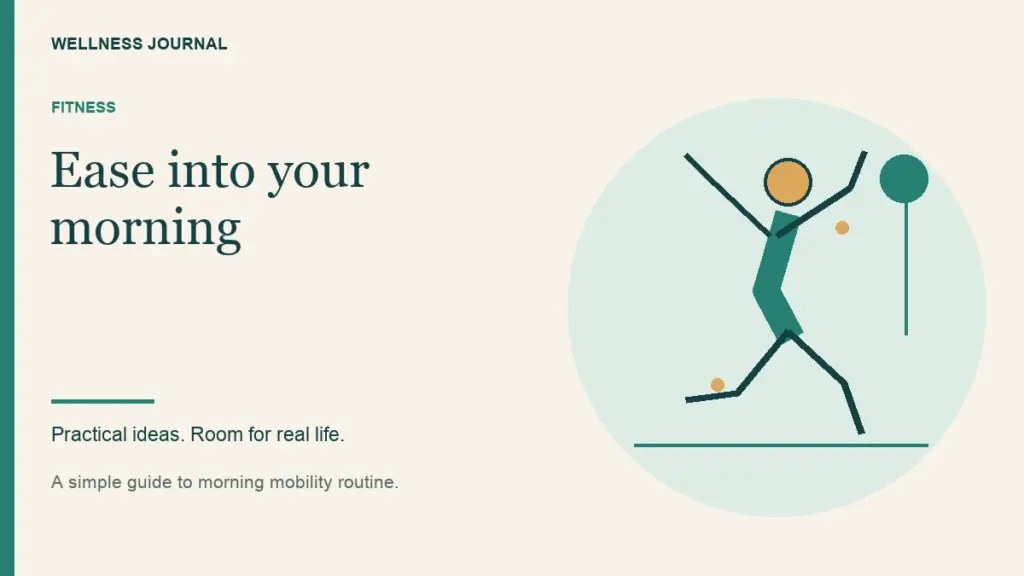
A morning mobility routine can be a gentle way to explore how your body feels before the day becomes busy. It does not need dramatic poses or a promise to correct your posture. Start with a few movements you can do comfortably, and give yourself permission to skip any that feel wrong. The aim is an easier transition into everyday movement, not maximum range.
Move within the range you have today
Morning stiffness can have many causes. Avoid treating a general routine as a solution to unexplained symptoms. If stiffness is persistent, worsening, associated with swelling or follows an injury, seek medical advice. For an ordinary gentle start, use a stable chair or nearby support and move slowly enough to notice the difference between mild tension and pain.
The NHS distinguishes flexibility work from strengthening. Comfortable movement practice is not a substitute for assessment of persistent stiffness or pain.
Background guidance: NHS: Strength and flexibility; NHS: Exercise guidance and routines.
Four practical steps
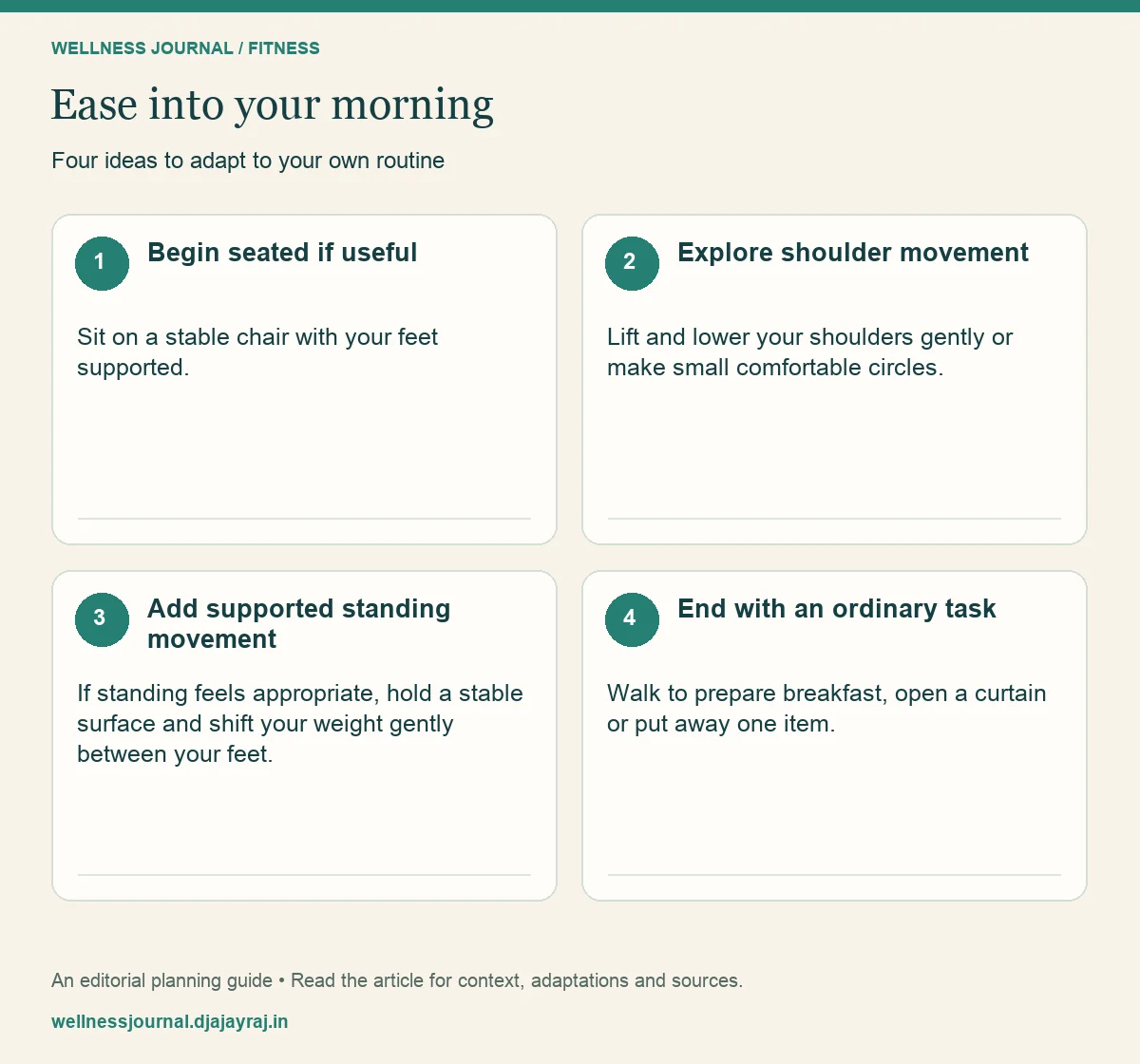
Begin seated if useful
Sit on a stable chair with your feet supported. Gently move your ankles through a comfortable range and relax your shoulders. You do not need to sit rigidly upright; choose a position that lets you move without bracing.
Explore shoulder movement
Lift and lower your shoulders gently or make small comfortable circles. Keep your neck relaxed and avoid large neck circles or forceful pulling. If a direction causes tingling, dizziness or pain, stop that movement.
Add supported standing movement
If standing feels appropriate, hold a stable surface and shift your weight gently between your feet. You can take a few small steps or rise onto your toes within your comfort. Skip balance challenges when you are sleepy or unsteady.
End with an ordinary task
Walk to prepare breakfast, open a curtain or put away one item. Connecting the routine to a normal task keeps it from becoming another elaborate morning obligation. Notice whether the sequence feels useful enough to repeat.
Choose a starting position
| How you feel | Option to explore | Adjustment |
|---|---|---|
| Sleepy or unsteady | Seated ankle movement | Keep feet supported |
| Shoulders feel tense | Small shoulder circles | Reduce the circle |
| Comfortable standing | Supported weight shifts | Keep both feet close to ground |
| Movement increases pain | Stop the routine | Seek appropriate advice |
Make it work for you
Keep the sequence short and familiar
Use two or three movements for a short trial rather than assembling a long stretching list. A smaller routine makes it easier to identify which movement helps and which does not. Never bounce into a stretch or ask another person to push your range. If you need rehabilitation, follow the plan given by your physiotherapist instead of combining unrelated online routines.
A minimum morning version
Choose one comfortable seated movement and then stand or transfer as you normally would. There is no need to finish a sequence simply because you started it. Your symptoms and balance take priority.
Quick checklist
- Use a stable chair or support.
- Keep breathing normally.
- Stop movements that cause sharp pain, tingling or dizziness.
Common questions
Should I stretch until it hurts?
No. Pain is not a useful target. Reduce the range or stop, and get guidance if discomfort persists.
Does mobility work replace strength exercise?
No. They address different aspects of movement. Choose a balanced activity plan that suits your abilities and any professional advice you receive.