A doctor appointment checklist can help you remember what you wanted to say once the consultation begins. It does not need to be a full medical diary. A short note with your main concern, relevant changes and current medicines is often easier to use than several pages of unstructured detail. If symptoms are urgent, seek timely care rather than waiting to perfect the note.
Put your main concern at the top
Write what brought you to the appointment and what you hope to understand. Describe the symptom or problem in ordinary words. Include when it began, how often it happens and how it affects daily life. Avoid deciding on a diagnosis before the conversation; observations are useful even when you do not know what they mean.
NIA provides appointment worksheets for questions, medical history and changes since the previous visit. Preparation can help organise the conversation.
Background guidance: NIA: Preparing for a medical appointment; NIMH: Caring for your mental health.
Four practical steps
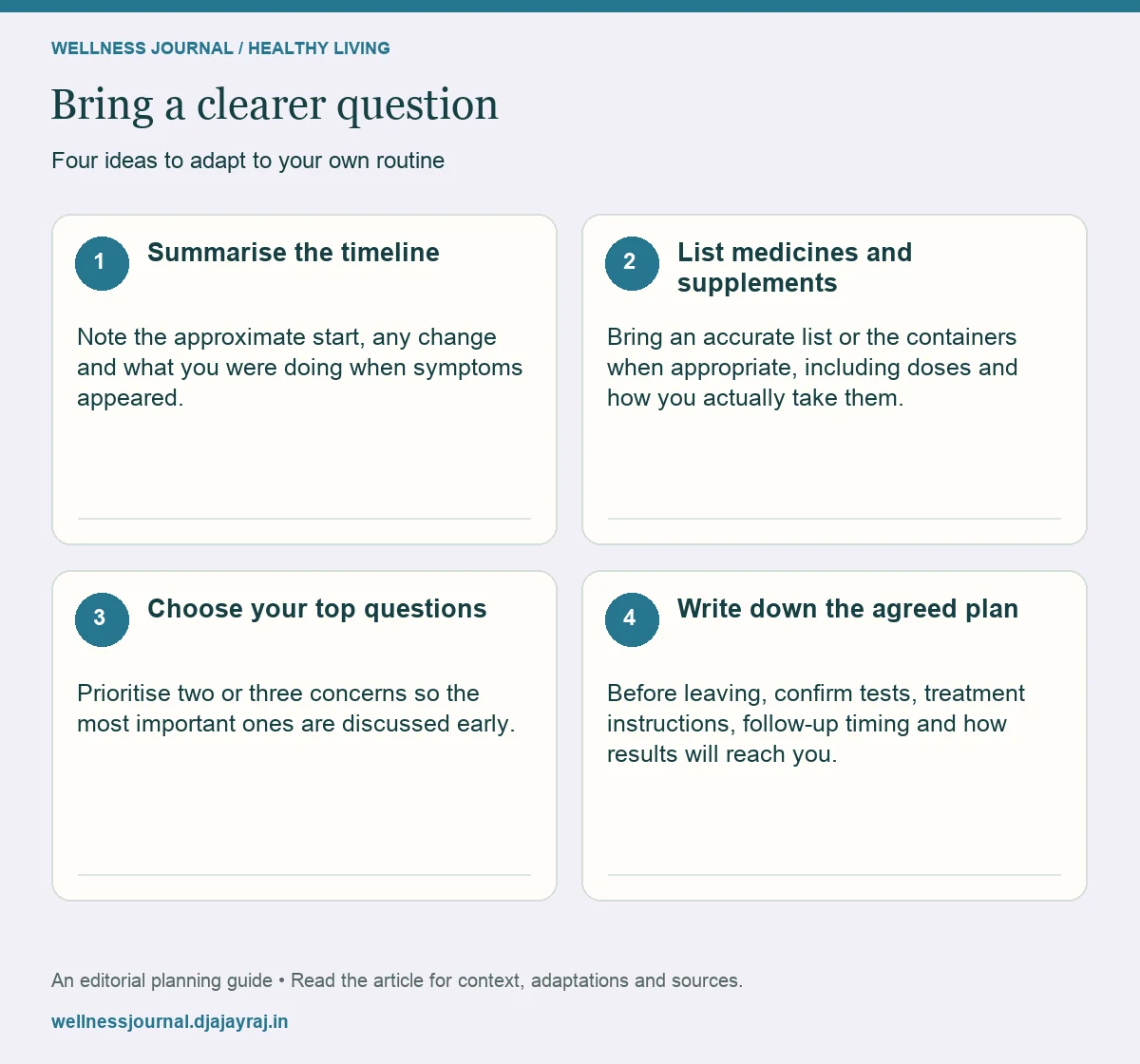
Summarise the timeline
Note the approximate start, any change and what you were doing when symptoms appeared. Include important associated symptoms and anything that seems to help or worsen the problem. Keep estimates clearly labelled as estimates.
List medicines and supplements
Bring an accurate list or the containers when appropriate, including doses and how you actually take them. Mention over-the-counter products and supplements. Do not stop or change prescribed treatment simply to prepare for the visit.
Choose your top questions
Prioritise two or three concerns so the most important ones are discussed early. Ask what the next step is, what alternatives exist and what changes should prompt further help. You can request a plain-language explanation if terminology is unclear.
Write down the agreed plan
Before leaving, confirm tests, treatment instructions, follow-up timing and how results will reach you. Repeat the plan in your own words if helpful. Ask whom to contact if the expected result or appointment does not arrive.
A one-page appointment template
| Section | What to write | Example prompt |
|---|---|---|
| Main concern | The reason for the visit | What is disrupting my day? |
| Timeline | Start, frequency and change | When did this become noticeable? |
| Current treatment | Medicines and supplements | What do I actually take? |
| Questions and next steps | Priorities and follow-up | What happens after today? |
Make it work for you
Bring support in a way that suits you
If you want someone to accompany you, decide what role would help: taking notes, remembering details or providing practical support. You can also ask about an interpreter or accessibility needs before the visit. The conversation should still reflect your concerns and preferences. Ask permission before recording an appointment and follow the clinic's rules.
Use the waiting time for one final check
Read the top line of your note and make sure it reflects your main concern. You do not need to reorganise everything. The goal is a clearer conversation, not a perfect document.
Quick checklist
- Bring an accurate medicine list.
- Mention important changes and allergies.
- Confirm follow-up and urgent warning signs with the clinician.
Common questions
Should I bring internet research?
You can bring a specific question or source, but keep observations about your own symptoms central. Ask how the information applies to your situation.
What if I forget something after leaving?
Use the clinic's normal contact route to ask how to add information or arrange follow-up. Urgent symptoms need urgent care rather than a routine message.