
Improving indoor air quality at home starts with noticing what enters the room and what happens there. Cooking, dampness, smoke, cleaning products and outdoor pollution can all matter. This checklist helps organise practical questions; it is not a way to diagnose a building problem from a smell alone. Persistent damp, combustion concerns or significant symptoms may need professional attention.
Look for the source before masking the smell
A scented product can change how a room smells without solving the underlying problem. Check for an obvious source such as damp materials, smoke or a blocked ventilation opening. Follow appliance and product instructions. Never mix cleaning chemicals, and do not run fuel-burning equipment indoors unless it is designed and safely installed for that use.
EPA identifies source control, ventilation and filtration as key approaches to indoor air quality. Outdoor conditions affect when opening windows is appropriate.
Background guidance: EPA: Improving indoor air quality at home; CDC: Heat and your health.
Four practical steps
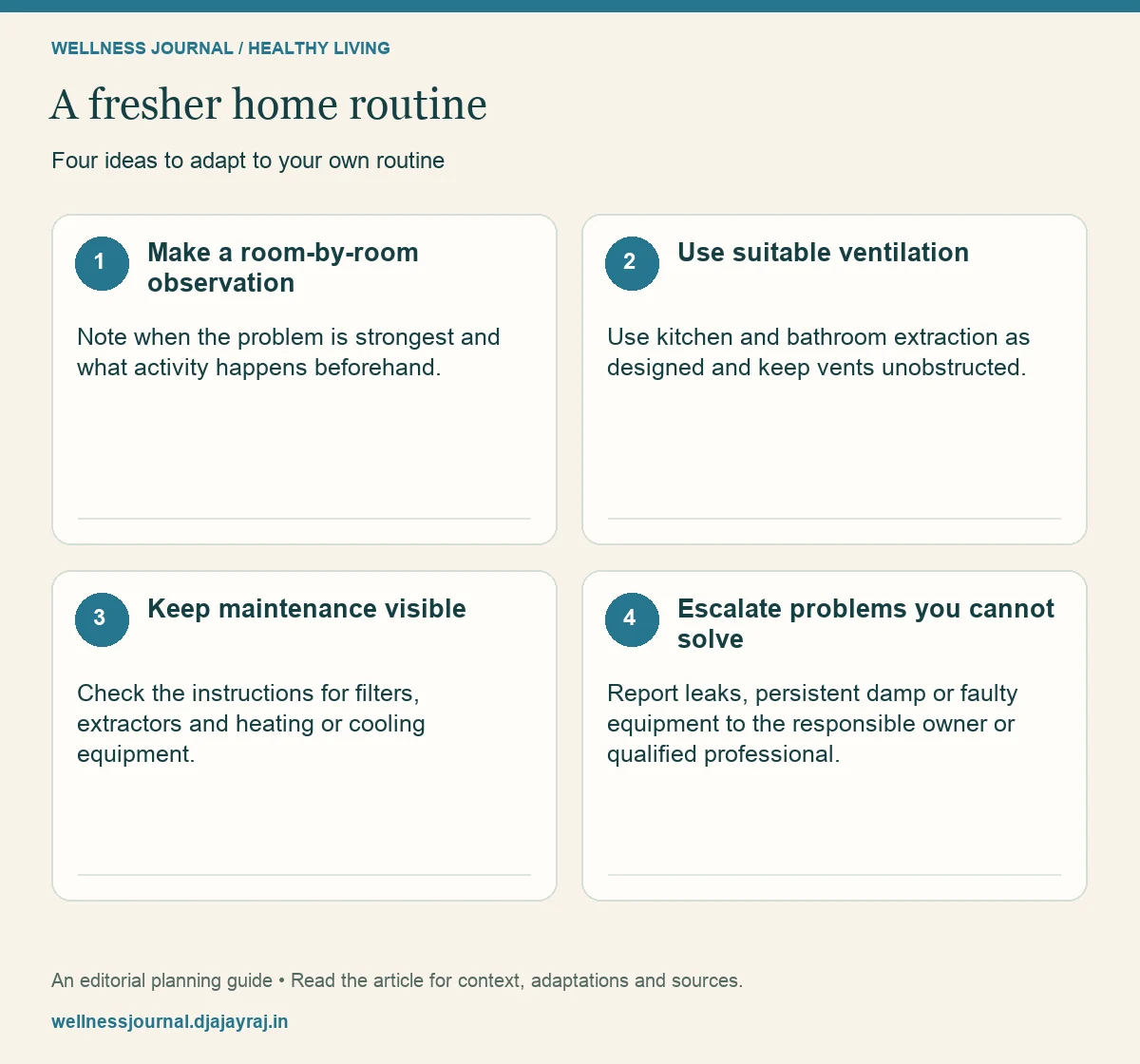
Make a room-by-room observation
Note when the problem is strongest and what activity happens beforehand. A short record can help distinguish cooking-related odours from an ongoing damp issue. Do not enter unsafe areas or disturb suspect materials while investigating.
Use suitable ventilation
Use kitchen and bathroom extraction as designed and keep vents unobstructed. Opening a window may help in suitable conditions, but consider outdoor pollution, extreme temperatures, security and allergies. Ventilation choices need to fit the actual environment.
Keep maintenance visible
Check the instructions for filters, extractors and heating or cooling equipment. Put necessary maintenance on a simple calendar. A filter that is neglected or installed incorrectly may not perform as intended.
Escalate problems you cannot solve
Report leaks, persistent damp or faulty equipment to the responsible owner or qualified professional. A portable air cleaner should not be used to ignore an unresolved source. If a carbon monoxide alarm sounds, follow emergency guidance immediately.
Start with the right question
| Observation | First question | Possible next step |
|---|---|---|
| Cooking fumes linger | Is extraction working? | Check use and maintenance |
| Room feels damp | Is there a moisture source? | Investigate safely; report leaks |
| Outdoor air is polluted | Is window ventilation suitable now? | Follow local air-quality advice |
| Filter is overdue | What does the manufacturer require? | Replace or service appropriately |
Make it work for you
Choose devices for a specific need
If you consider an air cleaner, review its suitability for the room, the pollutant of concern, filter replacement costs and maintenance. Avoid treating marketing terms as evidence that a device solves every indoor-air problem. Source control remains important. Follow official guidance and avoid equipment that introduces unwanted pollutants into the space.
Keep a short maintenance card
Write the filter type, replacement instruction and last maintenance date in one place. This is easier to use than searching for the same manual every time the equipment needs attention.
Quick checklist
- Address sources instead of only adding fragrance.
- Match ventilation to outdoor conditions.
- Use qualified help for damp, combustion or equipment concerns.
Common questions
Should windows always stay open?
No. Outdoor pollution, heat, cold, security and other conditions can make that unsuitable. Use a ventilation approach appropriate to the setting.
Will an air purifier fix mould or a leak?
It does not repair the moisture source. The underlying building or water problem needs appropriate action.