A home trip hazard checklist starts with the routes you use every day: bed to bathroom, kitchen to table and the path to the door. Look at the space while imagining carrying a bag or moving at night. The aim is a more usable home, not a spotless one. Keep mobility aids and other necessary supports accessible while removing obstacles.
Walk the route slowly and observe
Check cables, loose rugs, clutter and changes in floor level. Notice whether lighting is adequate and switches are easy to reach. If someone uses a walking aid or wheelchair, assess the route with their needs in mind. Do not rearrange another person's essential items without discussing it.
NIA home-safety guidance includes addressing obstacles, lighting and other environmental risks. Falls can also have medical causes that need assessment.
Background guidance: NIA: Preventing falls at home; NHS: Balance exercises.
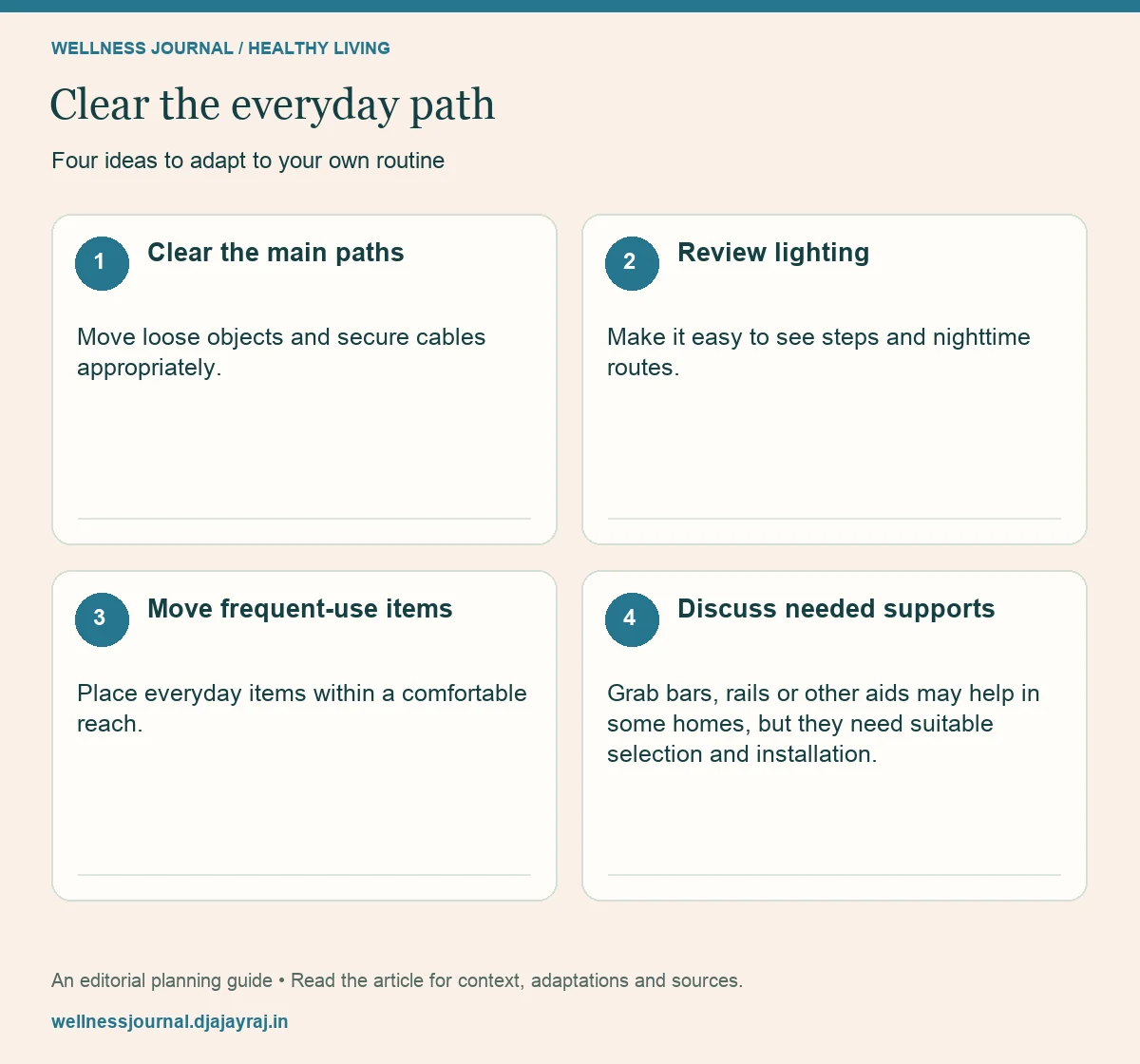
Four practical steps
Clear the main paths
Move loose objects and secure cables appropriately. Choose storage that does not create a new obstacle nearby. Keep exits and frequently used routes open.
Review lighting
Make it easy to see steps and nighttime routes. Use suitable lighting without creating glare or electrical hazards. Ask for qualified help when installation or wiring changes are needed.
Move frequent-use items
Place everyday items within a comfortable reach. Avoid making people climb on unstable chairs or stretch around obstacles to retrieve essentials. Use appropriate equipment for tasks that require height.
Discuss needed supports
Grab bars, rails or other aids may help in some homes, but they need suitable selection and installation. A towel rail or improvised handle is not automatically a safe support.
Check the busiest areas first
| Area | Look for | Useful action |
|---|---|---|
| Bedroom route | Clutter and poor light | Clear and light the path |
| Bathroom | Slippery areas and unsuitable supports | Seek appropriate safety adaptations |
| Kitchen | Hard-to-reach essentials | Rearrange frequent-use items |
| Entrance | Shoes, bags and uneven surfaces | Create a clear landing place |
Make it work for you
Treat a fall as more than a housekeeping issue
A fall may involve medicines, vision, balance, strength or another health factor as well as the environment. Seek assessment after concerning falls or new unsteadiness. Home changes can be useful, but they do not replace medical attention or an individual plan when needed.
Fix one hazard immediately if safe
Move a bag or clear a cable route, then note anything requiring professional help. Do not attempt unsafe repairs simply to complete the checklist.
Quick checklist
- Keep essential aids accessible.
- Use properly installed supports.
- Seek advice for falls or new balance problems.
Common questions
Should I remove every rug?
Assess the actual hazard and needs of the household. Loose or unsecured rugs may need removal or appropriate securing.
Can a tidy home prevent every fall?
No. Falls have multiple possible causes. Environmental changes are only one part of prevention.