The easiest ways to eat more fibre are often additions to meals you already make. A spoonful of beans in a soup or a different bread can be more practical than a completely new diet. Increase gradually and pay attention to comfort. If you have a digestive condition or have been told to limit fibre, your individual advice takes priority over a general guide.
Choose one meal to adjust first
Look at the meal you repeat most often. It gives you several chances to try a change without learning a new routine. Choose an addition that fits the flavour and preparation: lentils in a sauce, vegetables beside a sandwich or fruit with breakfast. Keep the portion manageable while you see how the change feels.
NHS guidance encourages fibre from varied foods, including wholegrains, fruit, vegetables and pulses, rather than relying on a single source.
Background guidance: NHS: Getting more fibre; NHS: Water, drinks and hydration.
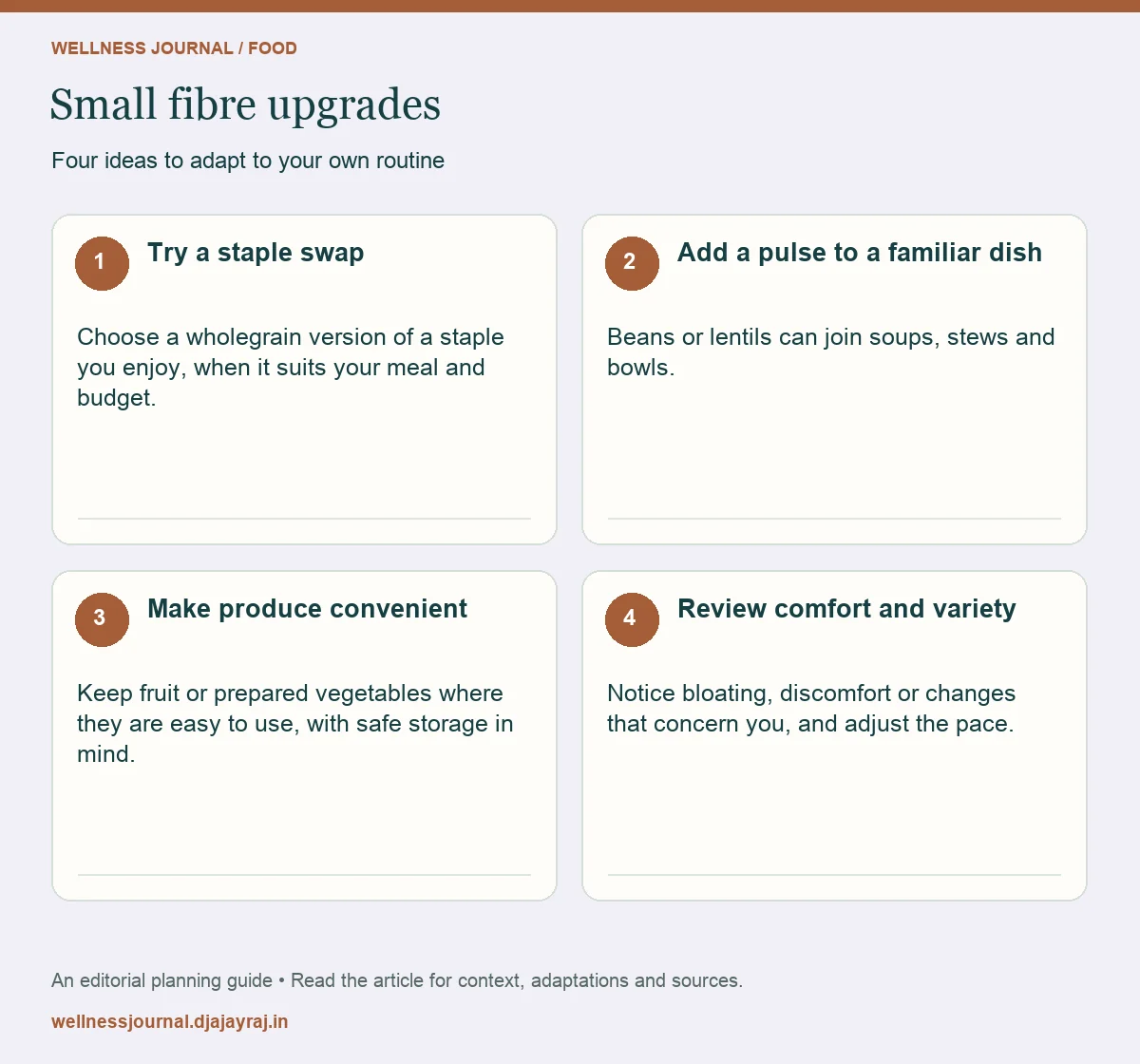
Four practical steps
Try a staple swap
Choose a wholegrain version of a staple you enjoy, when it suits your meal and budget. If the texture feels unfamiliar, use it in a dish with a sauce or topping you already like. You do not need to replace every staple at once.
Add a pulse to a familiar dish
Beans or lentils can join soups, stews and bowls. Begin with a modest amount, especially if pulses are new to your diet. Follow preparation instructions and use a type you find pleasant rather than buying several varieties immediately.
Make produce convenient
Keep fruit or prepared vegetables where they are easy to use, with safe storage in mind. Frozen and canned options can be practical. Choose forms that fit your cooking habits so they do not remain untouched in the freezer.
Review comfort and variety
Notice bloating, discomfort or changes that concern you, and adjust the pace. Drink appropriately for your needs. A large sudden increase is not required, and persistent digestive symptoms should not be dismissed as proof that the change is working.
Small additions to familiar meals
| Usual meal | Possible adjustment | Keep it manageable |
|---|---|---|
| Toast breakfast | Try wholegrain bread | Change one component |
| Tomato sauce | Add some cooked lentils | Start with a small amount |
| Sandwich lunch | Add vegetables or fruit | Choose easy preparation |
| Soup dinner | Include beans or vegetables | Use a familiar flavour |
Make it work for you
Use labels without making meals a maths test
Nutrition labels can help compare similar products, but serving sizes and recipes vary. Look at comparable amounts rather than assuming a larger number always means a better choice. Enjoyment, cost, allergies and your overall diet also matter. You can make a useful change without calculating every gram in every meal.
For a sensitive stomach
Change one food at a time and keep a short note of what you tried. If symptoms are persistent, painful or accompanied by other changes, seek medical advice rather than repeatedly restricting foods on your own.
Quick checklist
- Increase gradually if appropriate.
- Choose several food sources over time.
- Follow individual guidance for digestive conditions.
Common questions
Should I start with a fibre supplement?
A general food-first approach may be enough for many people. Supplements can have specific uses, but discuss them with a clinician or pharmacist when relevant.
Is more always better?
No. Needs and tolerance vary. Sudden large increases can be uncomfortable, and some medical situations require different advice.