Fitness progress without weight measurements can be surprisingly concrete. You may walk a familiar route more comfortably, need fewer pauses during an everyday task or find it easier to begin a session. These observations are not a medical assessment, but they can help you see whether your routine is becoming useful. Choose measures that encourage sensible decisions rather than constant comparison.
Measure something your routine can influence
If your goal is to walk more regularly, record outings rather than an unrelated appearance target. If you want to learn strength movements, note the version you can perform with control. A useful measure is specific enough to review but simple enough to record. Avoid collecting so much information that the tracking becomes harder than the activity.
NIDDK includes tracking progress and reviewing obstacles in its habit-change guidance. A useful record can focus on behaviour, not only body weight.
Background guidance: NIDDK: Changing habits for better health; NHS: Exercise guidance and routines.
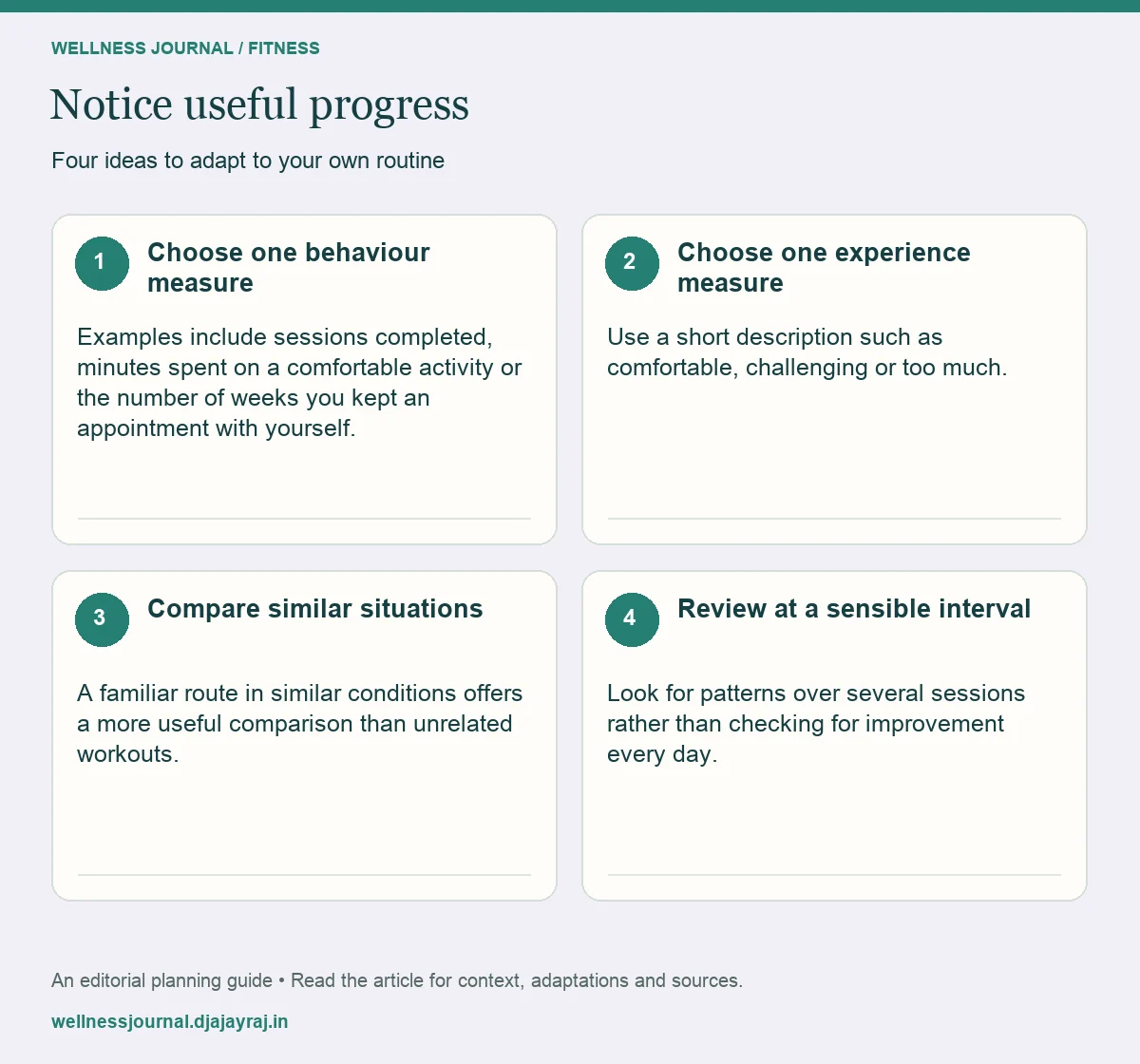
Four practical steps
Choose one behaviour measure
Examples include sessions completed, minutes spent on a comfortable activity or the number of weeks you kept an appointment with yourself. Record what happened without turning a missed session into a negative score.
Choose one experience measure
Use a short description such as comfortable, challenging or too much. Add a note about pain, sleep or unusual conditions when relevant. The context can explain a difficult day better than a number on its own.
Compare similar situations
A familiar route in similar conditions offers a more useful comparison than unrelated workouts. Do not assume a slower session means lost fitness if the weather was hotter or you were carrying a heavier bag.
Review at a sensible interval
Look for patterns over several sessions rather than checking for improvement every day. Keep what is working and adjust one obstacle. If tracking makes you anxious or compulsive, simplify it or take a break from recording.
A small progress log
| Measure | Example entry | What it helps you decide |
|---|---|---|
| Consistency | Two planned walks happened | Is the schedule realistic? |
| Comfort | Less rushed on the same route | Is the pace suitable? |
| Technique | Controlled chair stands | Is this version manageable? |
| Recovery | Usual energy next morning | Was the session appropriate? |
Make it work for you
Keep performance separate from self-worth
Your record is a tool for changing the plan, not a judgement about discipline. Health, disability, work demands and caring responsibilities affect what is possible. A week with fewer sessions can still include a smart adjustment. If your goal involves managing a health condition, ask your clinician which measures are meaningful and which changes need medical review.
Write one useful sentence
Try 'The lunchtime slot worked because I had my shoes ready.' This turns the record into a practical instruction for next week. A page of unexplained numbers may tell you less.
Quick checklist
- Choose measures connected to your goal.
- Record context, not just results.
- Stop or simplify tracking if it increases distress.
Common questions
Can I ignore the scale completely?
For a general activity goal, you can choose other measures. If a clinician is monitoring weight for a specific health reason, discuss how it fits your care.
How soon should I see progress?
There is no fixed timetable. Consistency and comfort may change before other measures, and fluctuations are normal. Persistent symptoms need assessment rather than more tracking.