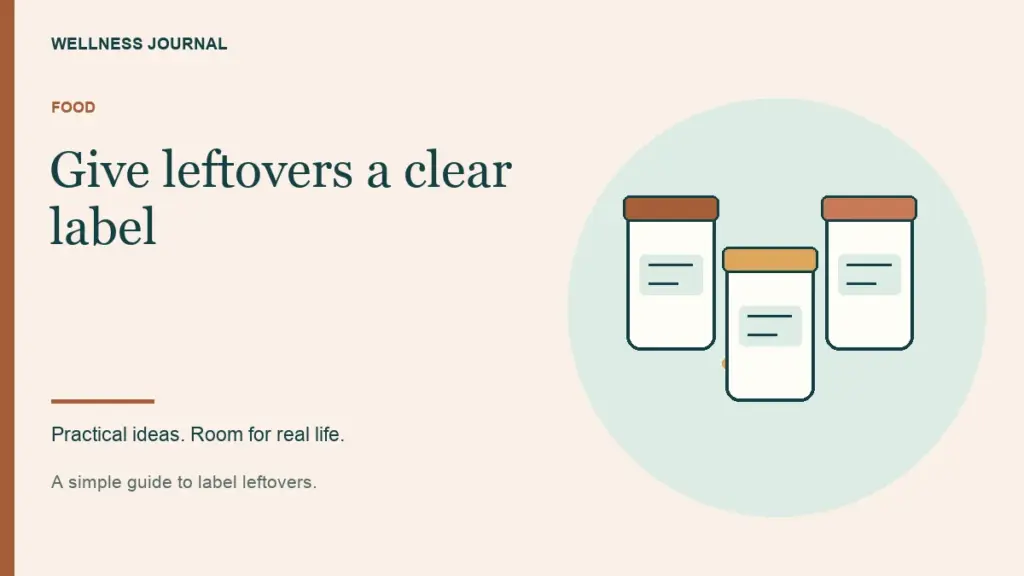
To label leftovers well, record enough information that a tired person can understand the container tomorrow. A food name and preparation date are a useful start. Add storage or reheating details when needed. The system should be simple enough to use while putting dinner away, because a perfect label template is not helpful if it stays in a drawer.
Label at the point of storage
Keep a suitable marker and labels near the containers. Write the date before the food disappears into the back of the fridge. Do not rely on recognising the container or remembering which evening you cooked. Similar-looking sauces and soups can become difficult to distinguish quickly.
FoodSafety.gov gives food-specific refrigerator and freezer guidance. A label helps track storage, but it cannot make improperly handled food safe.
Background guidance: FoodSafety.gov: Cold food storage chart; FoodSafety.gov: Cooking and storage guidance.
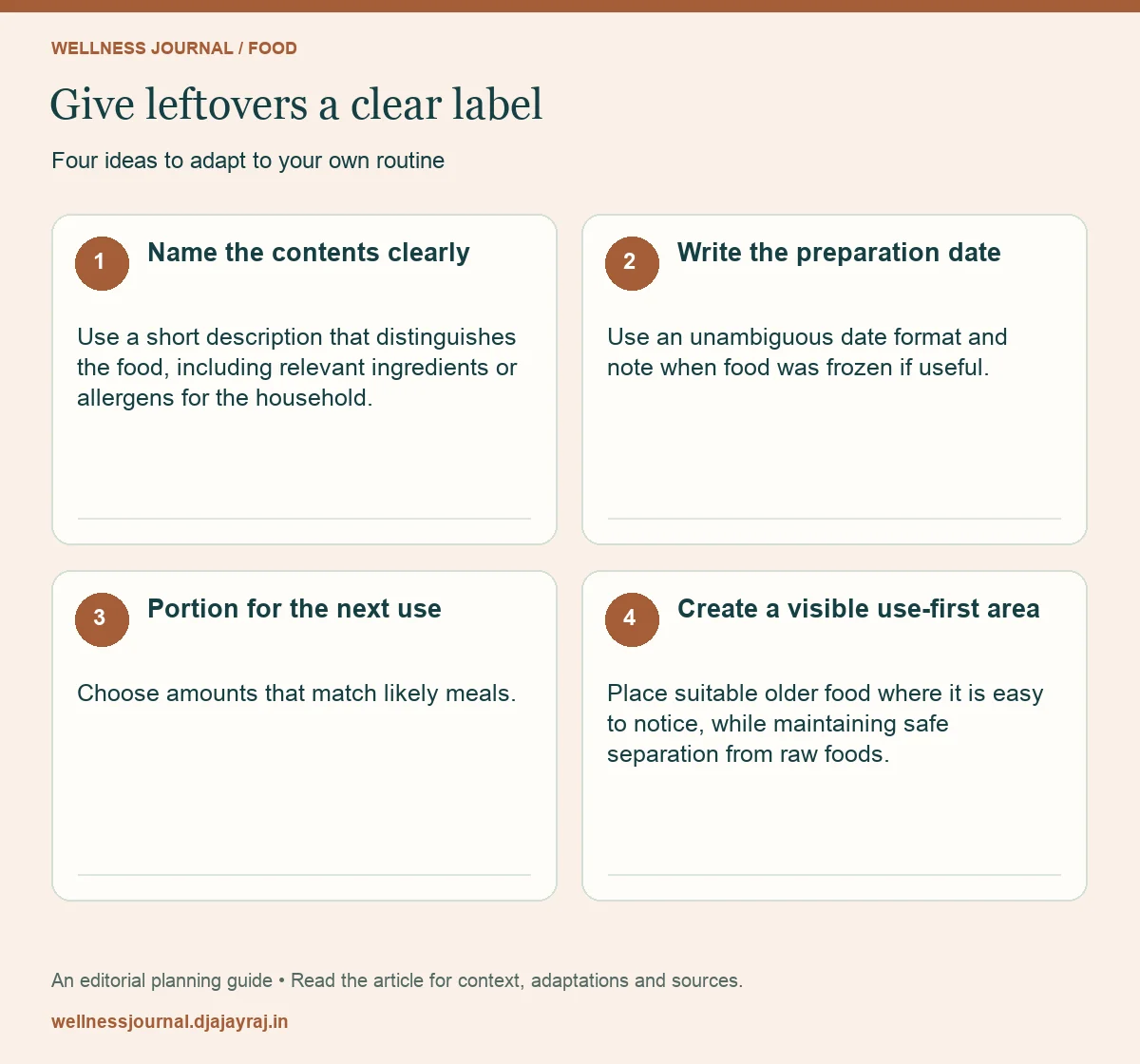
Four practical steps
Name the contents clearly
Use a short description that distinguishes the food, including relevant ingredients or allergens for the household. Avoid vague labels such as dinner. The label should help someone choose the right container without opening every lid.
Write the preparation date
Use an unambiguous date format and note when food was frozen if useful. Follow food-specific guidance for how long it can be stored. A generic label cannot give every food the same safe life.
Portion for the next use
Choose amounts that match likely meals. Smaller appropriate portions can make storage and reheating more convenient. Use suitable containers and follow safe cooling practices rather than leaving food out while you organise an elaborate system.
Create a visible use-first area
Place suitable older food where it is easy to notice, while maintaining safe separation from raw foods. Check the area before planning another meal or grocery shop. Discard food when safety is uncertain rather than relying on a pleasant smell.
What a useful label contains
| Information | Example format | Purpose |
|---|---|---|
| Contents | Lentil and vegetable soup | Identify the food |
| Preparation date | 16 Oct 2026 | Track age clearly |
| Freezing date if relevant | Frozen 16 Oct 2026 | Support freezer rotation |
| Relevant note | Contains milk | Help household decisions |
Make it work for you
Do not reset the clock by combining food
If you mix an older component into a new dish, the older food's history still matters. Fresh ingredients do not erase earlier storage time or unsafe handling. Follow the relevant guidance and avoid using a new label to create a false sense of freshness. When in doubt about safety, do not eat the food.
Make the label readable at a glance
Use large enough writing and place it where you can see it in the fridge or freezer. A label on the hidden underside does little to help the next meal decision.
Quick checklist
- Record contents and date.
- Follow food-specific storage limits.
- Do not rely on smell alone.
Common questions
Does freezing make old food fresh again?
No. Freezing does not reverse unsafe handling or make questionable food safe. Freeze suitable food while it is still safe.
Can one storage deadline cover every leftover?
No. Different foods and preparation histories require different guidance. Use a reliable food-specific reference.