Satisfying soup ideas do not need a long simmer or a complicated recipe. Begin with a soup you like and consider what would make it enough for the meal you want. You might add beans, a suitable cooked protein food or a side of bread. The goal is to make the meal useful for your appetite, rather than assuming a thin bowl must be enough.
Choose the kind of soup you want to eat
A smooth vegetable soup, a chunky broth and a bean-based stew have different textures. Decide which direction appeals before adding ingredients. If you are using a packaged base, read the label and preparation instructions. Taste as appropriate before adding salt, since stock and prepared sauces may already contribute plenty of flavour.
A varied meal can include pulses, vegetables and starchy foods. FoodSafety.gov provides storage limits for cooked soups and other leftovers.
Background guidance: NHS: Eating a balanced diet; FoodSafety.gov: Cold food storage chart.
Four practical steps
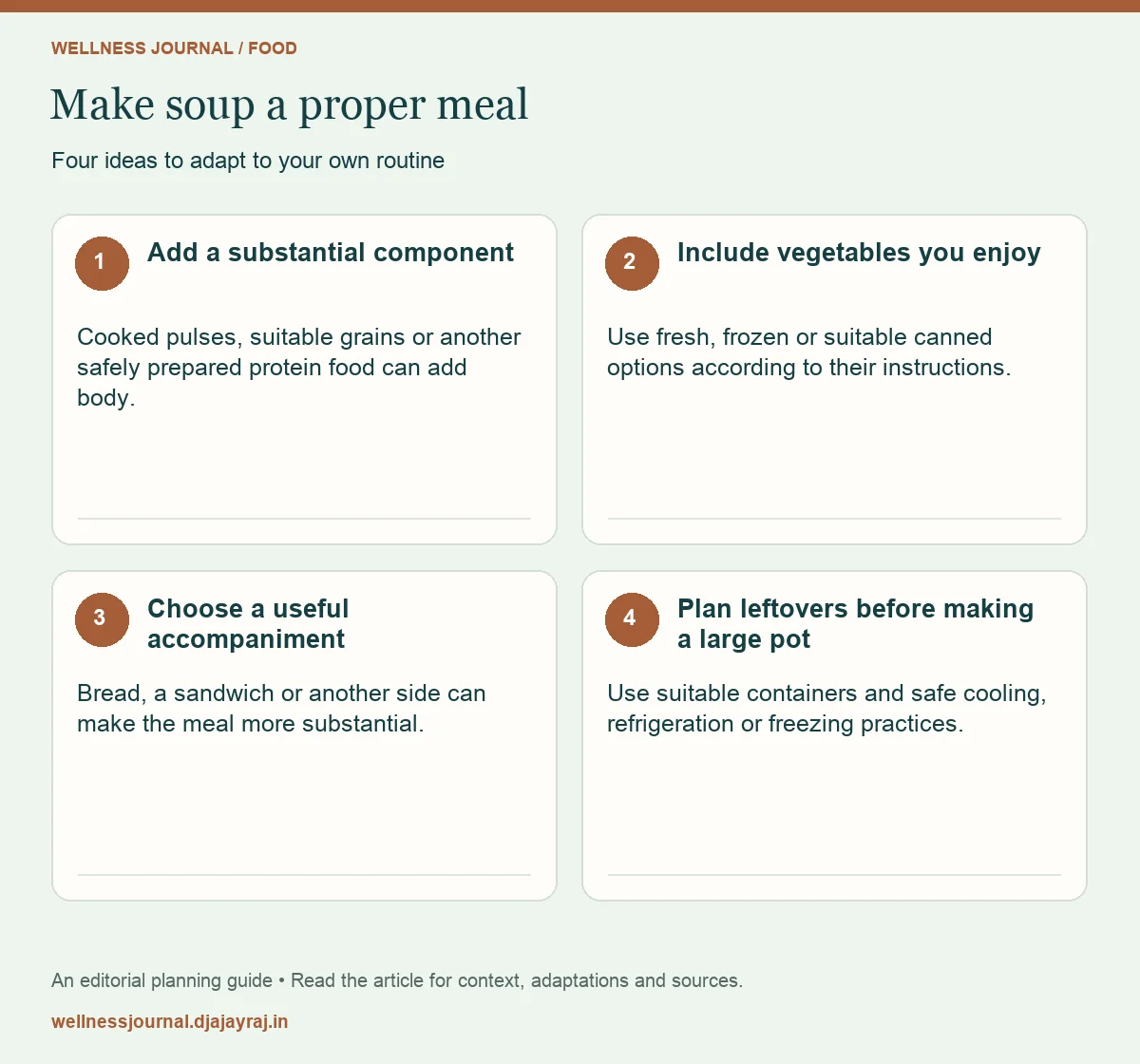
Add a substantial component
Cooked pulses, suitable grains or another safely prepared protein food can add body. Choose an ingredient that fits the soup's texture. Follow cooking directions if the addition is raw or dried rather than assuming it will cook quickly in the pot.
Include vegetables you enjoy
Use fresh, frozen or suitable canned options according to their instructions. Cut pieces to a size that cooks evenly. Add delicate ingredients later when the method calls for it so they do not lose the texture you want.
Choose a useful accompaniment
Bread, a sandwich or another side can make the meal more substantial. You do not have to fit every component inside the soup. Choose the amount based on hunger and the rest of your day.
Plan leftovers before making a large pot
Use suitable containers and safe cooling, refrigeration or freezing practices. Label portions with the date. A large batch is convenient only if you can store and use it safely.
Ways to make a simple soup more complete
| Soup style | Possible addition | Useful side |
|---|---|---|
| Smooth vegetable | Cooked lentils or suitable topping | Bread or toast |
| Chunky broth | Beans or suitable cooked protein | A familiar staple |
| Tomato-based | Vegetables and pulses | Sandwich or flatbread |
| Packaged soup | Compatible safely prepared addition | A side that suits appetite |
Make it work for you
Keep the flavour coherent
Choose one main seasoning direction and build around it. Herbs and lemon can brighten some soups; spices may suit others. Add strong flavours gradually. If the soup is already salty, do not assume more seasoning is the answer. A different side or a less salty base next time may be more useful.
Freeze a labelled portion early
If you know the pot is larger than you will eat within safe refrigerator limits, freeze suitable portions promptly. Do not wait until the food is already questionable.
Quick checklist
- Cook additions safely.
- Use sides when the soup is not enough.
- Label and store leftovers appropriately.
Common questions
Is soup always a light meal?
No. Ingredients and portions vary widely. It can be a starter or a substantial meal depending on what you include.
Can I keep reheating the whole pot?
Portioning can make safe storage and reheating easier. Follow food-safety guidance and avoid repeated unsafe cooling cycles.