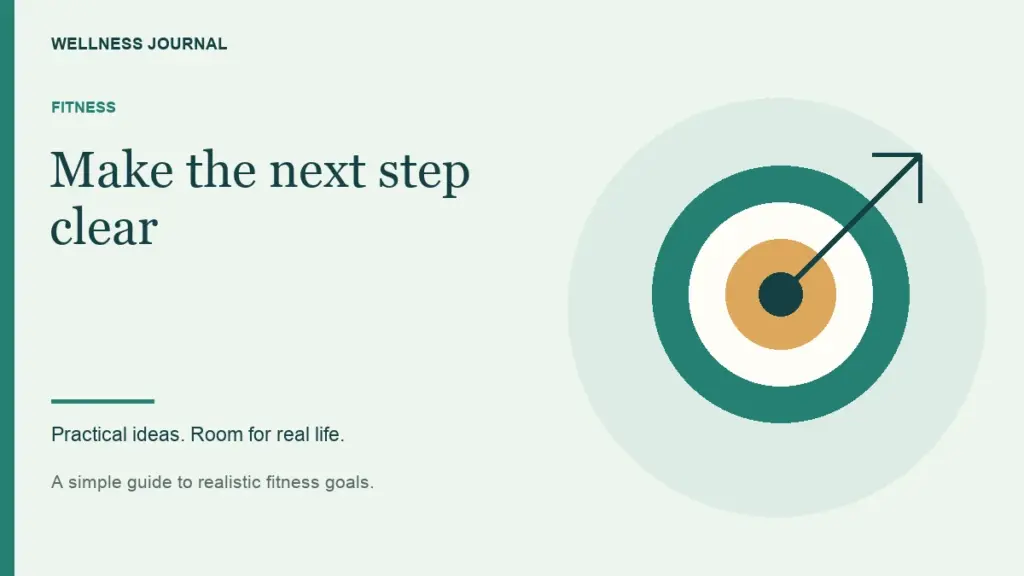
Realistic fitness goals begin with a behaviour, not a promise to become a different person. You might want to walk more, learn a strength movement or make time for activity with a friend. Choose a first action that fits this week. The goal can still matter without being dramatic, and it can change as you learn what is manageable.
Turn the wish into an observable action
Be fitter is a direction, but it does not tell you what to do on Tuesday. A short familiar walk at a particular time is clearer. Keep the action under your control and separate it from outcomes that vary for many reasons. Avoid using weight, appearance or another person's performance as the only definition of success.
Habit-change guidance supports specific planning and reviewing obstacles. A goal is more useful when it describes an action you can actually take.
Background guidance: NIDDK: Changing habits for better health; NIH News in Health: Creating healthy habits.
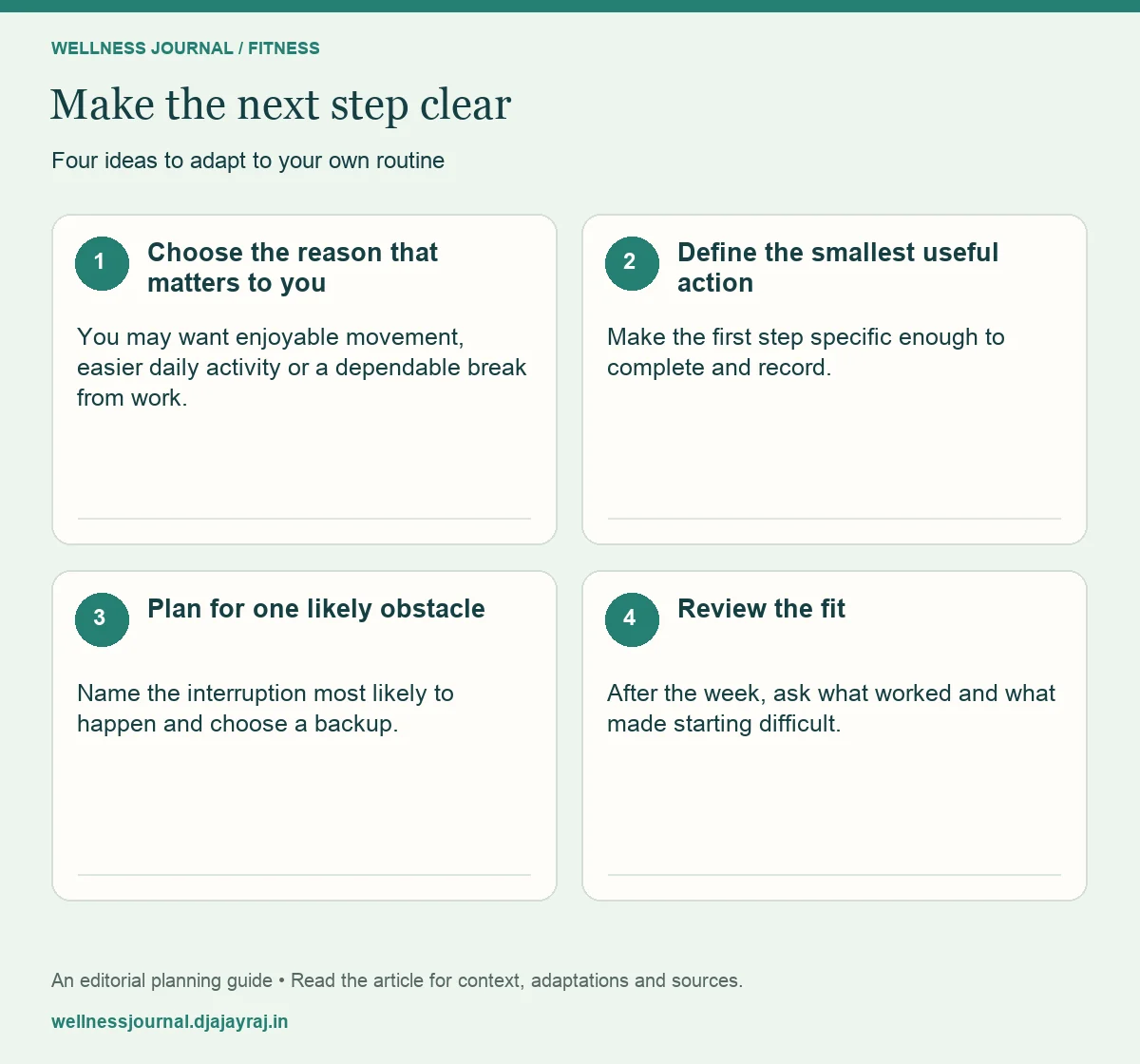
Four practical steps
Choose the reason that matters to you
You may want enjoyable movement, easier daily activity or a dependable break from work. Write the reason in ordinary language. A personal reason can help you choose an activity you actually want to repeat.
Define the smallest useful action
Make the first step specific enough to complete and record. Choose a suitable activity, location and time. If the action feels intimidating, reduce it before adding motivational pressure.
Plan for one likely obstacle
Name the interruption most likely to happen and choose a backup. Rain may call for an indoor option; a late meeting may call for a shorter session. The backup should preserve safety and feasibility.
Review the fit
After the week, ask what worked and what made starting difficult. Adjust the plan rather than simply raising the target. A successful review produces information you can use next week.
Make a broad goal actionable
| Broad wish | Possible first action | Review question |
|---|---|---|
| Walk more | Try a short familiar route | Did the time and route fit? |
| Build strength | Learn a suitable beginner movement | Was technique comfortable? |
| Be consistent | Keep two realistic appointments | What interrupted them? |
| Enjoy activity | Try a preferred format | Would I choose it again? |
Make it work for you
Separate ambition from the first step
A long-term goal can be ambitious while the next action remains small. Starting below your maximum capacity can help you learn the routine and recover appropriately. If you have health limitations or symptoms, work with a qualified professional to choose suitable targets. A generic goal framework should not override personal care.
Write a backup beside the goal
Use 'If the main plan does not fit, I will…' and name a smaller suitable option. Decide this before the busy day arrives.
Quick checklist
- Choose an action you control.
- Make the first step manageable.
- Use the review to improve the plan.
Common questions
Should every goal have a number?
A number can help, but not every useful goal needs one. Comfort, technique or enjoyment may be better described in words.
What if I miss the goal?
Review the reason and adjust. Missing a target is information, not a reason to punish yourself with extra exercise.