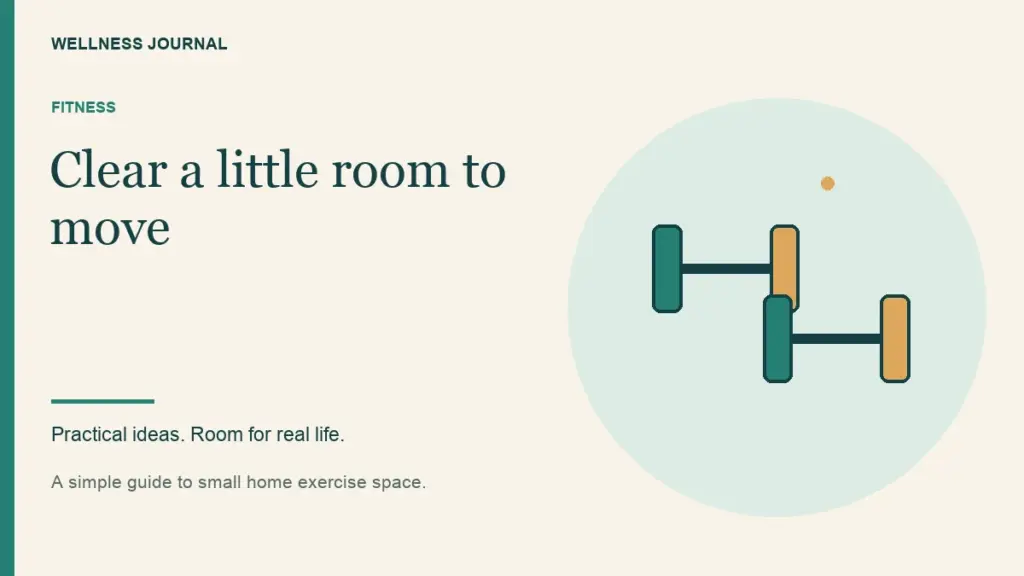
A small home exercise space can be a temporary clear area rather than a dedicated room. Start with the movement you intend to do and the space it needs. You may need less equipment than a shopping list suggests. The useful outcome is a place where you can move comfortably, stop safely and put things away without creating obstacles for the rest of the household.
Measure the movement, not just the floor
Consider arm reach, ceiling height, furniture edges and the direction you will move. A mat may fit while the exercise does not. Try the basic movement slowly without added resistance to check the area. Keep the space away from open flames, hot surfaces and unstable furniture.
A clear environment supports safer movement. NIA home-safety guidance highlights obstacles and trip hazards that can be addressed in the living space.
Background guidance: NHS: Exercise guidance and routines; NIA: Preventing falls at home.
Four practical steps
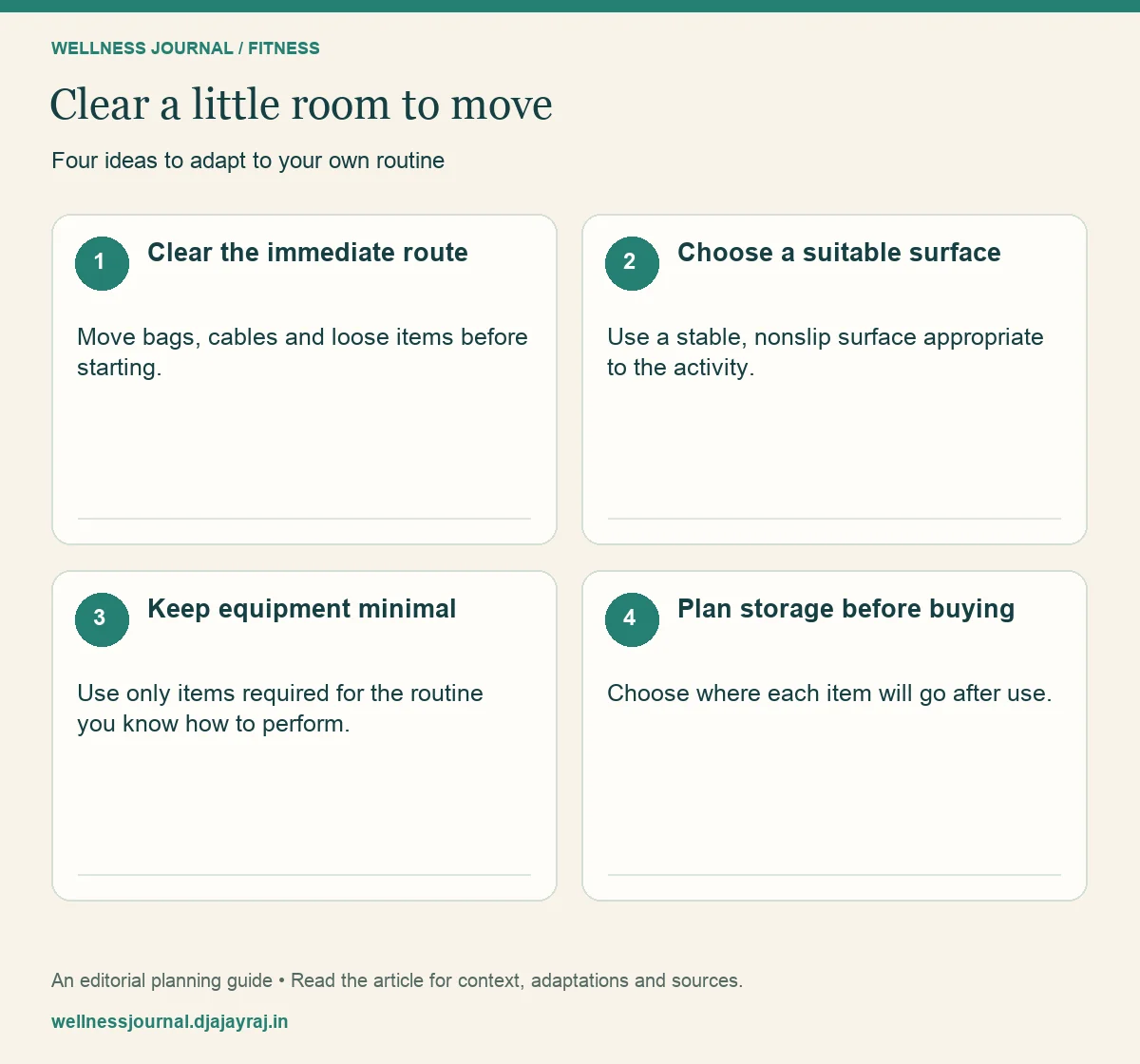
Clear the immediate route
Move bags, cables and loose items before starting. Check that a door cannot swing into you and that other people know the area is in use. Pets and children may need a separate safe space during the session.
Choose a suitable surface
Use a stable, nonslip surface appropriate to the activity. A mat should lie flat and not slide. Avoid assuming a soft surface is safer for every movement; it can make standing balance more difficult.
Keep equipment minimal
Use only items required for the routine you know how to perform. Check equipment condition and instructions. Do not substitute household objects for specialised anchors or supports when their strength is uncertain.
Plan storage before buying
Choose where each item will go after use. Keep heavy or rolling objects secure and out of walking routes. Equipment that creates daily trip hazards is not a useful addition to the home.
Check the space before the session
| Area | What to check | Simple solution |
|---|---|---|
| Floor | Cables, rugs and loose objects | Clear the route |
| Reach | Walls, ceiling and furniture | Choose smaller movements |
| Surface | Grip and stability | Use a suitable stable area |
| Storage | Items left underfoot | Assign a secure place |
Make it work for you
Make a temporary setup easy to repeat
Keep a small box of essentials and a short setup checklist. If moving furniture takes longer than the session, choose an activity that needs less rearranging. A simple space that you use regularly is more valuable than a complete home gym that remains inconvenient. Seek guidance if you need accessible or rehabilitation-specific equipment.
Do a slow practice movement first
Check the full range before adding speed or resistance. If the area does not fit, change the exercise or location instead of trying to avoid furniture mid-movement.
Quick checklist
- Clear trip hazards.
- Check full movement space.
- Store equipment securely after use.
Common questions
Do I need a large mat?
Only if it suits the activity and surface. A mat is not a substitute for adequate space or safe technique.
Can I use a door as a resistance-band anchor?
Use only an anchor system designed for that purpose and follow its instructions. Do not improvise with an uncertain attachment.