To warm up before walking, begin with the simplest version of the activity: an easy walk. You do not need an elaborate sequence of deep stretches before an ordinary outing. Use the opening part of the route to settle into movement, notice comfort and decide whether a faster pace feels appropriate. This approach is for general activity, not rehabilitation after an injury.
Let the first part of the route be easy
Choose a level starting section if possible and avoid rushing immediately into a hill or crossing. Check that shoes feel secure and clothing allows comfortable movement. The opening minutes are an opportunity to notice how today feels, rather than a test you must pass before the real walk begins.
NHS exercise resources include gradual warm-up routines. The preparation should fit the activity and your individual abilities.
Background guidance: NHS: Warming up before exercise; NHS: Walking for health.
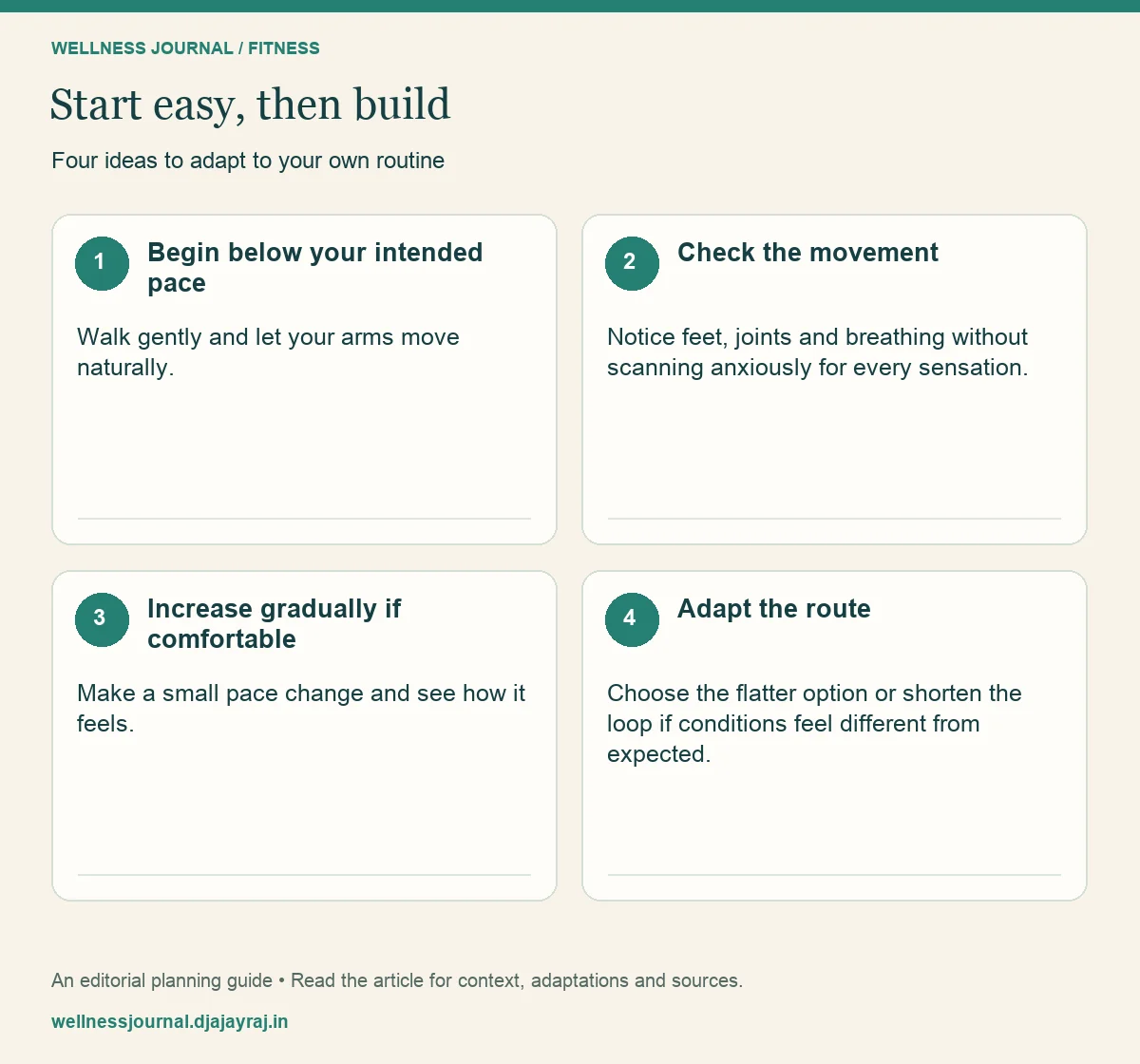
Four practical steps
Begin below your intended pace
Walk gently and let your arms move naturally. If you feel stiff, keep steps comfortable rather than deliberately lengthening them. You can stay at the easier pace for the whole outing if that is what suits you.
Check the movement
Notice feet, joints and breathing without scanning anxiously for every sensation. Stop if you have pain, dizziness or unexpected symptoms. A warm-up should not be used to push through a problem that needs assessment.
Increase gradually if comfortable
Make a small pace change and see how it feels. Use conversation as a practical check. There is no need to jump from standing still to a demanding pace because a timer or companion is moving faster.
Adapt the route
Choose the flatter option or shorten the loop if conditions feel different from expected. Heat, fatigue and an unfamiliar surface can change the experience. A useful warm-up informs the plan rather than obliging you to complete it.
An easy start in different situations
| Starting situation | Useful approach | Avoid |
|---|---|---|
| Flat neighbourhood route | Begin slowly | Rushing immediately |
| Route starts uphill | Find an easier opening if possible | Chasing pace on the hill |
| You feel unusually tired | Keep the outing shorter | Treating fatigue as a challenge |
| Pain appears | Stop and reassess | Forcing the planned distance |
Make it work for you
Keep stretches optional and appropriate
If you include stretches, use familiar movements in a comfortable range and avoid bouncing or forcing. Follow a clinician's specific advice if you have a condition or injury. The warm-up should match your needs; a routine designed for a vigorous sport may be unnecessary or unsuitable before an easy walk.
For a very short walk
Simply use the beginning as a gentle start and avoid rushing. You do not need a separate long preparation period for every ordinary journey on foot.
Quick checklist
- Start comfortably.
- Increase pace only if suitable.
- Stop for concerning symptoms.
Common questions
Must I stretch before every walk?
Not necessarily. The appropriate preparation depends on your activity and needs. Gentle walking itself can be a practical start.
Can I skip the easy beginning to save time?
Choose a shorter comfortable outing rather than rushing into an effort that does not feel suitable.