Useful hot weather safety tips begin with permission to change the day. An errand, workout or outdoor visit may need a different time or an indoor alternative. Heat can affect people differently, and familiar activities may feel much harder than usual. Check local alerts and plan access to a genuinely cooler place before you need it.
Identify the hottest part of your plan
Look at travel, waiting outside, work tasks and the home environment. A short journey can include a long wait in direct sun. Consider older adults, young children, people with disabilities and anyone who may need help reaching a cooler place. Never leave a person or animal in a parked vehicle, even briefly.
CDC advises staying cool, staying hydrated and taking heat risk seriously. Some medicines and health conditions increase vulnerability.
Background guidance: CDC: Heat and your health; NHS: Water, drinks and hydration.
Four practical steps
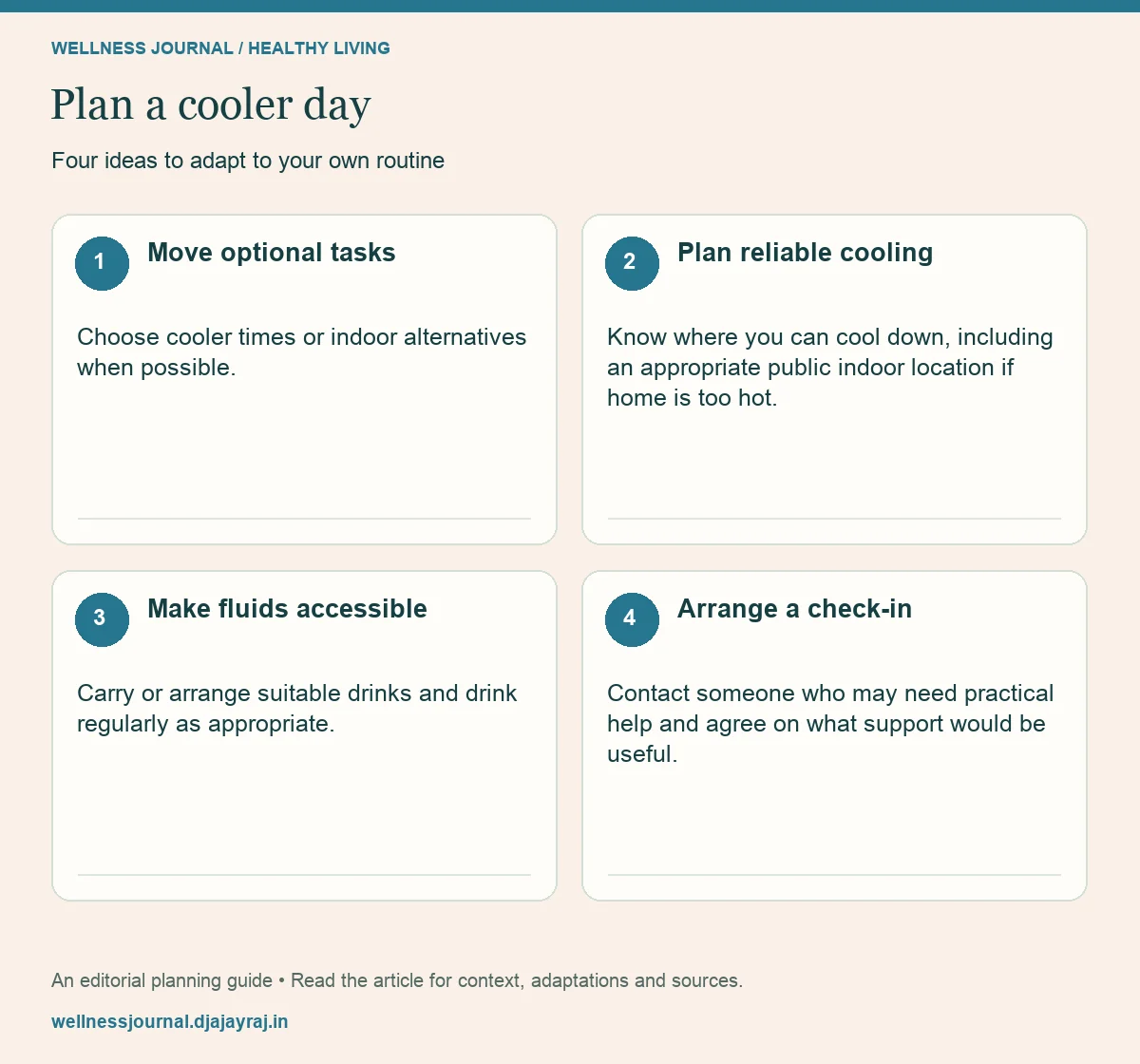
Move optional tasks
Choose cooler times or indoor alternatives when possible. Reduce strenuous outdoor activity during dangerous conditions. If work exposure is unavoidable, follow occupational heat guidance and the arrangements required for your setting.
Plan reliable cooling
Know where you can cool down, including an appropriate public indoor location if home is too hot. Follow local advice about fans and cooling during extreme heat. A fan alone is not a reliable answer in every condition.
Make fluids accessible
Carry or arrange suitable drinks and drink regularly as appropriate. People with fluid restrictions or relevant conditions should ask their clinician about hot-weather plans. Do not replace a prescribed plan with a general litre target.
Arrange a check-in
Contact someone who may need practical help and agree on what support would be useful. A specific offer, such as transport to a cooler place, is easier to act on than a vague instruction to stay safe.
Adjust the day before the heat peaks
| Planned activity | Possible change | Backup |
|---|---|---|
| Outdoor errand | Move to a cooler time | Postpone or use help |
| Exercise | Reduce or move indoors | Rest when conditions are unsafe |
| Hot indoor afternoon | Use a reliably cooler space | Identify a public cooling option |
| Supporting someone else | Agree a check-in | Arrange transport or practical help |
Make it work for you
Know when to seek urgent help
Confusion, collapse or other signs of possible heatstroke are an emergency. Call local emergency services and begin appropriate cooling while following their instructions. Do not give drinks to someone who is not fully alert. Less severe symptoms can also need medical attention, especially if they worsen or do not improve. Follow current local public-health advice.
Prepare before leaving home
Check the route, expected wait and access to shade or cooling. Carry essential items without making the load unnecessarily heavy. If the plan has no safe escape from the heat, change the plan.
Quick checklist
- Follow local heat alerts.
- Keep vulnerable people and pets out of parked vehicles.
- Treat confusion or collapse in heat as an emergency.
Common questions
Is drinking water enough to make extreme heat safe?
No. Cooling, reducing exposure and changing activity also matter. Hydration does not cancel the risks of dangerous heat.
Should I stop a prescribed medicine because of hot weather?
Do not change medication on your own. Ask your clinician or pharmacist about a plan that fits the medicine and your health.