Good handwashing habits are easiest to keep when the sink is ready and the important moments are obvious. You do not need to disinfect your whole life or wash repeatedly without a reason. Focus on practical transitions such as preparing food, eating, using the toilet or handling something dirty. Make the action convenient for everyone in the household.
Remove the small obstacles at the sink
Check that soap is available, the tap is usable and there is a clean way to dry hands. In a shared home, refill supplies before they run out. If someone has difficulty reaching or operating the sink, adapt the setup safely. A routine that relies on asking for help every time may need a more accessible arrangement.
CDC recommends washing with soap and clean running water and scrubbing for at least 20 seconds. Sanitizer has limits and does not replace every handwashing situation.
Background guidance: CDC: Hand hygiene questions; FoodSafety.gov: Cooking and storage guidance.
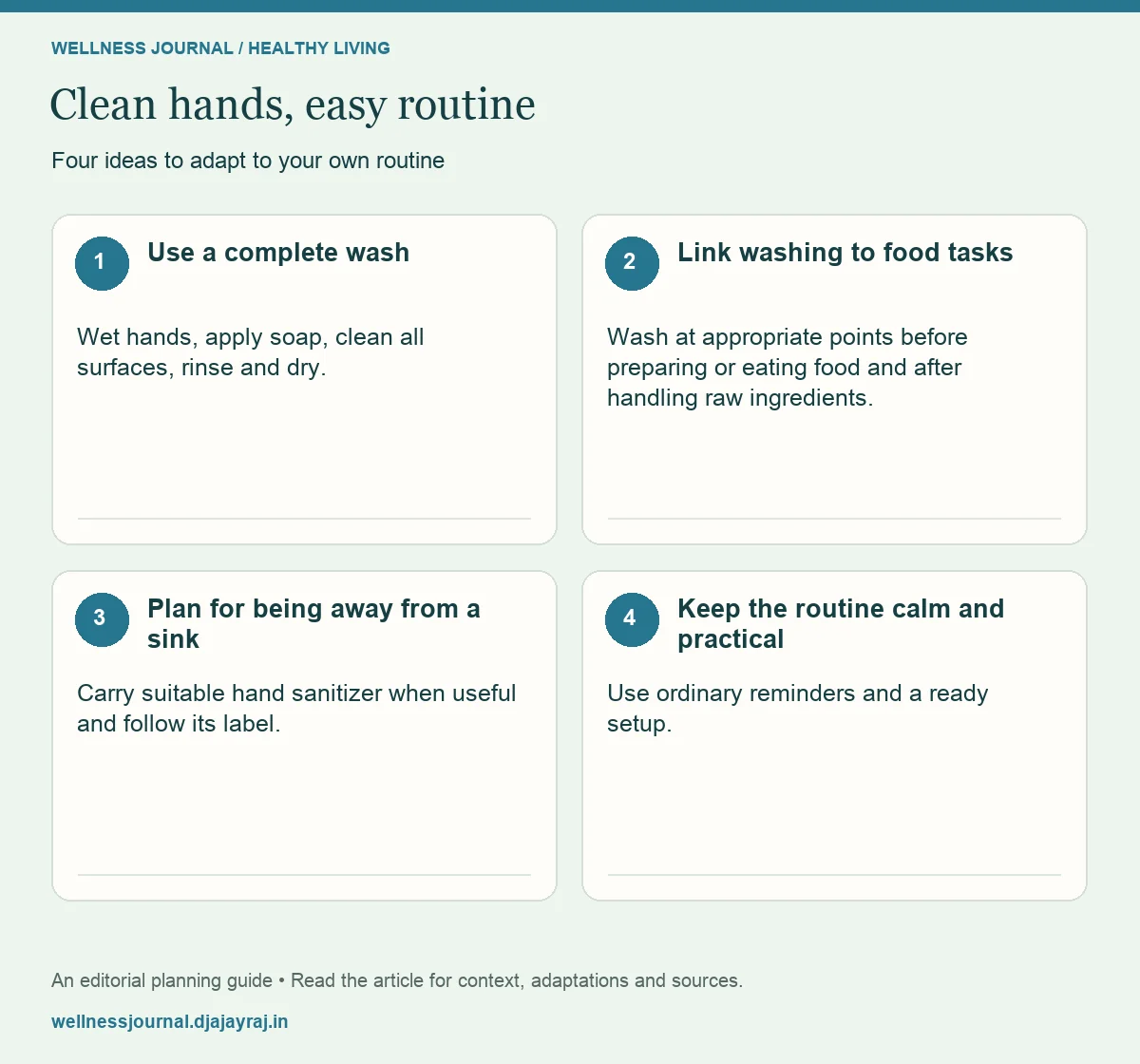
Four practical steps
Use a complete wash
Wet hands, apply soap, clean all surfaces, rinse and dry. Give attention to areas that are easy to miss, such as thumbs and between fingers. Scrub for at least 20 seconds rather than rushing through a quick rinse.
Link washing to food tasks
Wash at appropriate points before preparing or eating food and after handling raw ingredients. Keep hand hygiene separate from wiping a dirty counter. A cloth used on a surface is not a substitute for washing hands.
Plan for being away from a sink
Carry suitable hand sanitizer when useful and follow its label. CDC advises at least 60 percent alcohol when soap and water are unavailable. Wash with soap and water when hands are visibly dirty or when guidance calls for it.
Keep the routine calm and practical
Use ordinary reminders and a ready setup. Avoid turning each touch of an everyday object into an alarm. If worries about contamination lead to repeated washing that damages skin or disrupts life, seek support.
Useful moments to remember
| Moment | Practical cue | Setup help |
|---|---|---|
| Before food preparation | Start at the sink | Soap within reach |
| After using the toilet | Wash before leaving | Clean drying option |
| After handling raw food | Pause before the next task | Keep raw and ready-to-eat work separate |
| Away from facilities | Use appropriate sanitizer when suitable | Check label and storage |
Make it work for you
Protect comfort without skipping necessary care
Frequent washing can feel uncomfortable for some people. Use products you tolerate and ask a clinician or pharmacist about persistent irritation, cracks or dermatitis. Follow workplace or healthcare-specific instructions where they apply; a general household routine may not cover those settings. Keep sanitizer away from children and heat according to its label.
Make a supply check part of cleaning
When you clean the sink, check soap and towels at the same time. This simple pairing prevents a missing supply from becoming the reason the routine fails later.
Quick checklist
- Use soap and clean running water when available.
- Scrub thoroughly for at least 20 seconds.
- Follow situation-specific guidance and sanitizer labels.
Common questions
Is a quick water rinse enough?
For routine handwashing, use soap and a thorough wash rather than a brief rinse. The full process helps remove material from the hands.
Should sanitizer replace the sink at home?
Not generally when washing is appropriate and available. Sanitizer is useful in some situations, but it has limitations.