The relationship between caffeine and your sleep routine is worth exploring if late drinks seem to leave you alert at bedtime. You do not have to begin by banning every favourite beverage. First, find out what you drink, how much and when. Coffee shop sizes, brewing methods and packaged products can differ, so a vague count of cups may miss important details.
Map the routine before changing it
For a few ordinary days, note caffeinated drinks and other relevant products, including energy drinks, some supplements and medicines. Record approximate times and serving sizes. Keep the exercise neutral: you are looking for a pattern, not proving that a drink is good or bad. Ask a pharmacist if you are unsure whether a medicine contains caffeine.
FDA notes that caffeine sensitivity varies. NHLBI explains that caffeine can interfere with sleep and its effects may last for hours.
Background guidance: FDA: How much caffeine is too much?; NHLBI: Healthy sleep habits.
Four practical steps
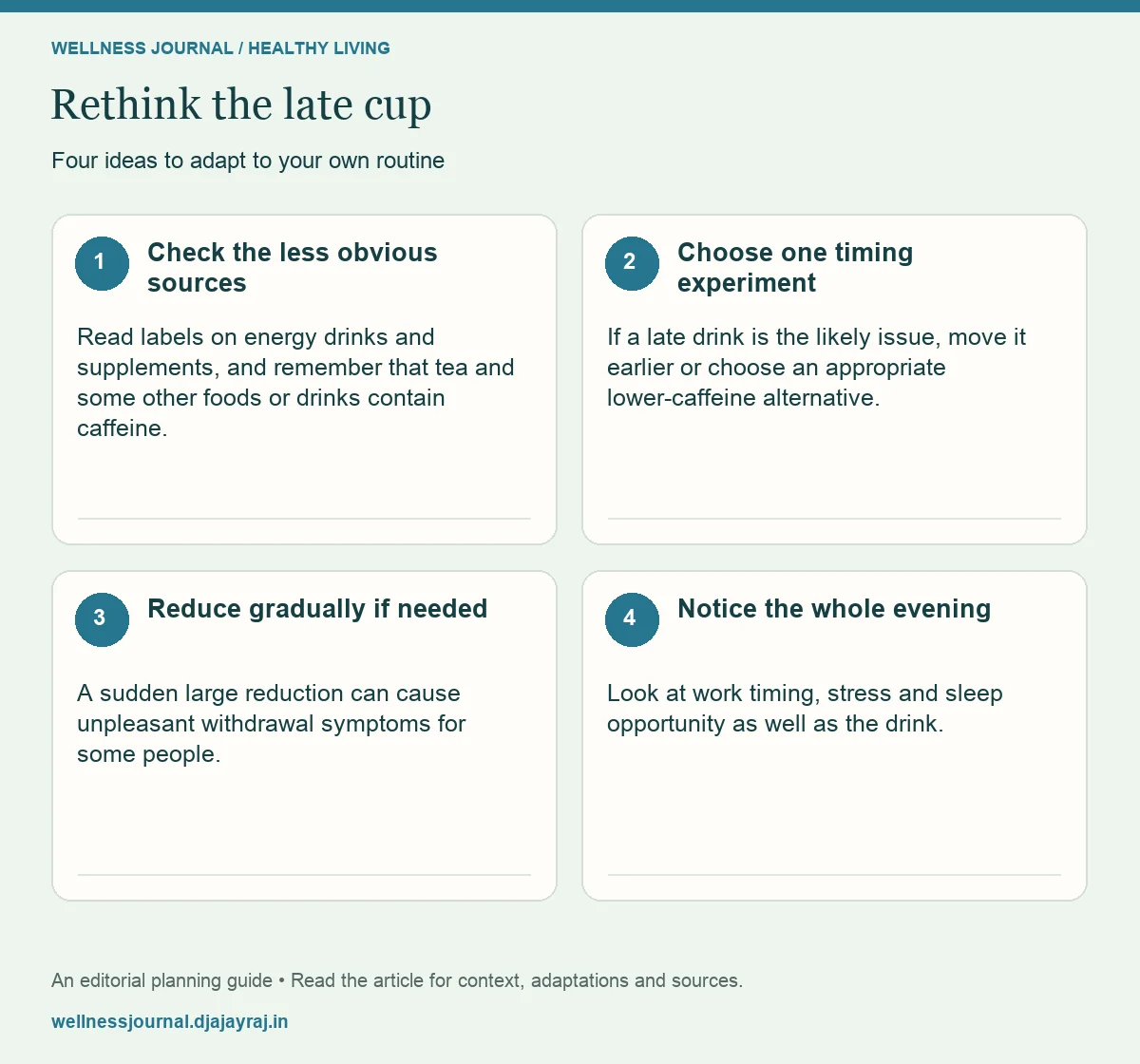
Check the less obvious sources
Read labels on energy drinks and supplements, and remember that tea and some other foods or drinks contain caffeine. Do not combine several products without understanding the total. Avoid pure or highly concentrated caffeine products.
Choose one timing experiment
If a late drink is the likely issue, move it earlier or choose an appropriate lower-caffeine alternative. Keep the rest of the routine reasonably similar so the change is easier to interpret. Sleep has many influences, so one night is not a verdict.
Reduce gradually if needed
A sudden large reduction can cause unpleasant withdrawal symptoms for some people. Consider a smaller serving or gradual change. Seek individual advice if you are pregnant, breastfeeding, taking relevant medicines or have a condition affected by caffeine.
Notice the whole evening
Look at work timing, stress and sleep opportunity as well as the drink. Replacing caffeine will not create enough sleep time if the schedule still keeps you awake. Use the observation to make a practical change rather than a rigid rule.
A simple caffeine review
| What to record | Why it helps | Possible adjustment |
|---|---|---|
| Time of use | Shows late-day patterns | Move a serving earlier |
| Serving size | Cups vary widely | Choose a smaller size |
| Product label | Finds less obvious caffeine | Compare an alternative |
| Sleep opportunity | Keeps context visible | Protect time for sleep |
Make it work for you
Use limits as guidance, not a personal guarantee
A population-level amount does not mean every person will feel comfortable at that intake. Sensitivity, pregnancy, medicines and health conditions can change the picture. If caffeine causes palpitations, marked anxiety or other concerning symptoms, seek medical advice. Do not use it to push through dangerous sleepiness, especially before driving.
Keep the ritual, change the contents
If the late cup is mainly a pause in your day, preserve the pause with a suitable alternative. The warm mug, conversation or break from work may be the part you most want to keep.
Quick checklist
- Check serving sizes and labels.
- Make one manageable change at a time.
- Ask for individual advice when health circumstances require it.
Common questions
Is there one perfect caffeine cut-off time?
No. Effects and sensitivity vary. An earlier cut-off can be a useful experiment, but it is not a universal prescription.
Does decaf mean no caffeine at all?
Not always. Decaffeinated products can contain small amounts. Check product information if you need to limit caffeine closely.