Your old routine is useful history, but it is not an instruction for your first week back. Returning to exercise after a break works better when you begin with what feels manageable now. A holiday, busy season or change in routine may simply call for a lighter restart. A break caused by illness, surgery or injury needs guidance specific to that situation.
Replace the comeback test with a baseline
Choose one familiar activity and remove the pressure to match your previous pace, weight or duration. A short walk or a reduced version of a familiar routine can show you how your body responds. Write down what you did and how you felt afterward. Avoid using a maximal effort session to discover your starting point.
Adult activity guidance allows activity to be spread across the week. NIDDK describes habit change as a process with setbacks and adjustments.
Background guidance: CDC: Adult activity guidelines; NIDDK: Changing habits for better health.
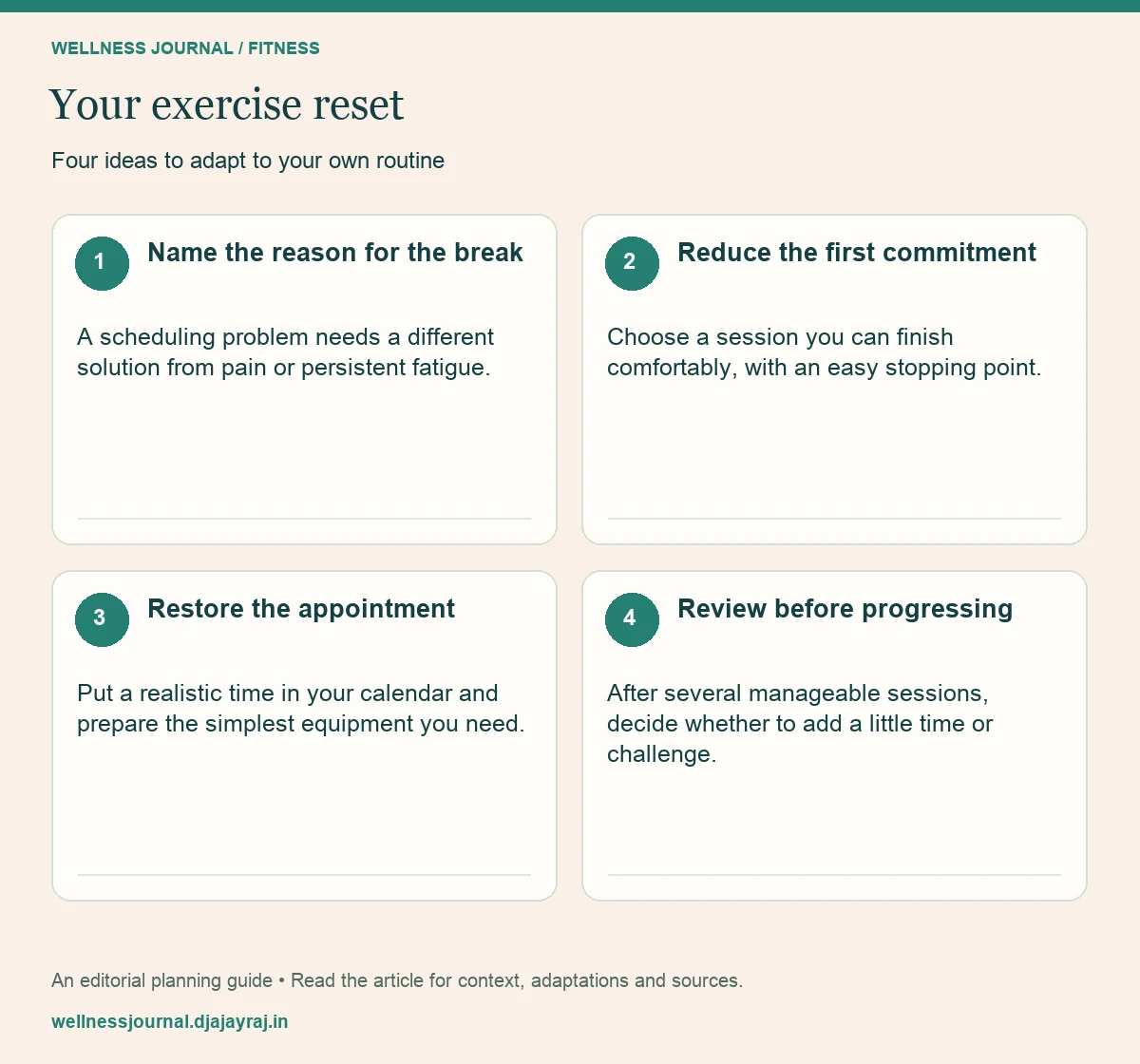
Four practical steps
Name the reason for the break
A scheduling problem needs a different solution from pain or persistent fatigue. If symptoms stopped you exercising, do not assume motivation is the missing ingredient. Resolve medical questions before building a demanding programme.
Reduce the first commitment
Choose a session you can finish comfortably, with an easy stopping point. Keep the first few attempts similar. The purpose is to gather information about recovery and logistics, not to prove that you have lost nothing.
Restore the appointment
Put a realistic time in your calendar and prepare the simplest equipment you need. If the old time no longer works, choose a new one. Returning to exercise does not require returning to the exact schedule you once followed.
Review before progressing
After several manageable sessions, decide whether to add a little time or challenge. Keep one feature stable while changing another. If you feel unusually exhausted afterward, step back and seek advice if it persists.
Match the restart to the obstacle
| What changed | Useful first move | Avoid |
|---|---|---|
| Less free time | Shorter planned sessions | Waiting for a perfect week |
| Longer period inactive | Gentler familiar activity | Testing old personal records |
| New pain or illness | Individual medical guidance | Training through symptoms |
| Motivation feels low | Choose an enjoyable option | Punishment workouts |
Make it work for you
Use a two-level plan
Write a normal version and a minimum version of your session. For example, the normal version might be a comfortable neighbourhood loop, while the minimum is a short walk near home. Decide in advance that the minimum is a valid choice. This removes the all-or-nothing decision that can turn one busy day into another long break.
When the first session feels disappointing
Compare it with doing nothing that week, not with your best performance years ago. The useful outcome is a starting point you can build on. Fitness history does not remove the need for recovery.
Quick checklist
- Use current comfort as your baseline.
- Keep the first week flexible.
- Get tailored advice after injury, surgery or significant illness.
Common questions
How long will it take to regain fitness?
There is no reliable universal timetable. The length and reason for the break, your previous activity and your health all matter.
Should I make up missed workouts?
Avoid stacking extra demanding sessions to repay a perceived debt. Resume a manageable schedule and adjust it from there.