To exercise with a friend comfortably, agree on the purpose before you start. You may want conversation, company or a shared appointment that makes beginning easier. Those goals do not require matching fitness levels. A useful partnership lets each person adjust without embarrassment and keeps the friendship more important than finishing a particular route or routine.
Choose an activity with easy adjustments
A familiar walk with turnaround points, a suitable class with modifications or parallel activities in the same place can work. Consider transport, cost, accessibility and time. Avoid choosing only the activity the fitter or more experienced person prefers. A shared plan should have room for both people's needs.
Social support can be part of wellbeing, and walking is an accessible activity for many people. Partners may need different paces or adaptations.
Background guidance: NIH: Social wellness toolkit; NHS: Walking for health.
Four practical steps
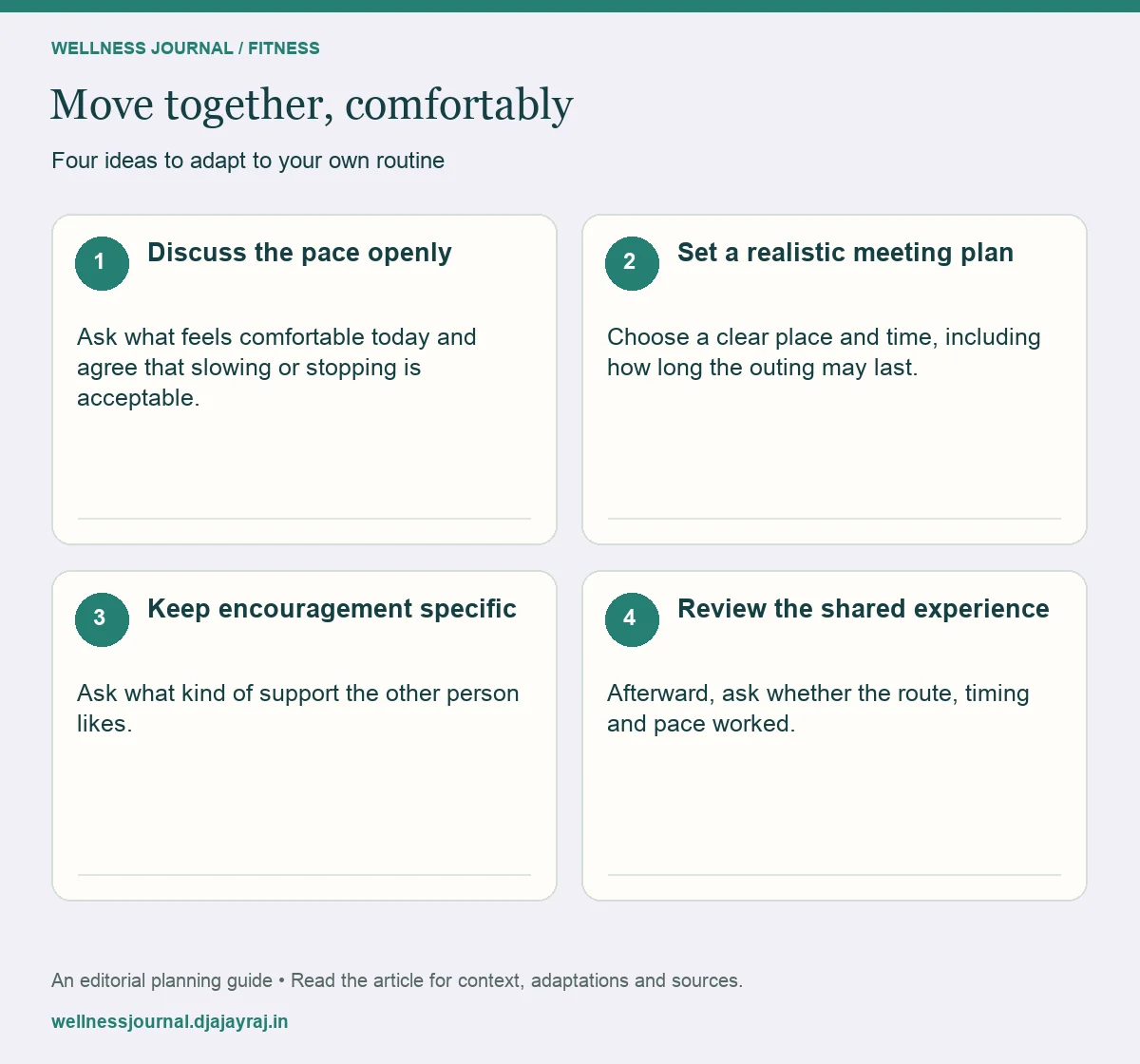
Discuss the pace openly
Ask what feels comfortable today and agree that slowing or stopping is acceptable. Use conversation as a guide when appropriate. Do not make someone explain a private health condition to justify an easier option.
Set a realistic meeting plan
Choose a clear place and time, including how long the outing may last. Agree what happens if someone is late or cannot attend. Practical clarity reduces the pressure and uncertainty around the appointment.
Keep encouragement specific
Ask what kind of support the other person likes. Some enjoy reminders; others dislike being pushed. Avoid comments about bodies, calories or effort that the person has not invited.
Review the shared experience
Afterward, ask whether the route, timing and pace worked. Adjust next time. A plan that one person repeatedly dreads is not successful just because the sessions happened.
Agree on the basics
| Topic | Useful agreement | Why it helps |
|---|---|---|
| Purpose | Company, conversation or practice | Avoids mismatched expectations |
| Pace | Either person can slow down | Reduces pressure |
| Logistics | Clear meeting and finish | Makes attendance easier |
| Encouragement | Ask what is welcome | Keeps support respectful |
Make it work for you
Allow different versions of the activity
You can share the start and finish while doing different amounts in between. One person may walk a shorter loop or use a different exercise variation. This can preserve companionship without forcing identical performance. Follow personal medical guidance and do not let group momentum override symptoms.
Start with a short trial outing
Choose a plan that is easy to end and review. You are learning whether the arrangement fits, not committing to a permanent training partnership.
Quick checklist
- Agree that stopping is acceptable.
- Respect privacy and ability differences.
- Keep encouragement welcome rather than assumed.
Common questions
What if our fitness levels differ?
Choose adjustable activities or different versions in the same setting. You do not need identical performance to share the experience.
Should I push my friend to keep going?
Ask what support they want and respect symptoms and limits. Pressure is not a substitute for appropriate coaching or care.