A work shutdown routine is a way to leave yourself a clear starting point for tomorrow. It does not require finishing every task before you stop. When the to-do list is longer than the day, a brief handoff can be more realistic than one last push that keeps expanding. The routine should fit your role and any genuine on-call responsibilities.
Define what finished means for today
Look at the commitments that actually need attention before you leave. Separate urgent responsibilities from tasks that simply feel uncomfortable to leave open. If the workload is consistently impossible, the solution may involve a conversation about priorities or capacity. A better checklist cannot create unlimited time or make unreasonable expectations sustainable.
NIMH self-care guidance includes setting priorities. A shutdown routine can organise unfinished work, but it cannot solve excessive workload on its own.
Background guidance: NIMH: Caring for your mental health; NIH: Emotional wellness toolkit.
Four practical steps
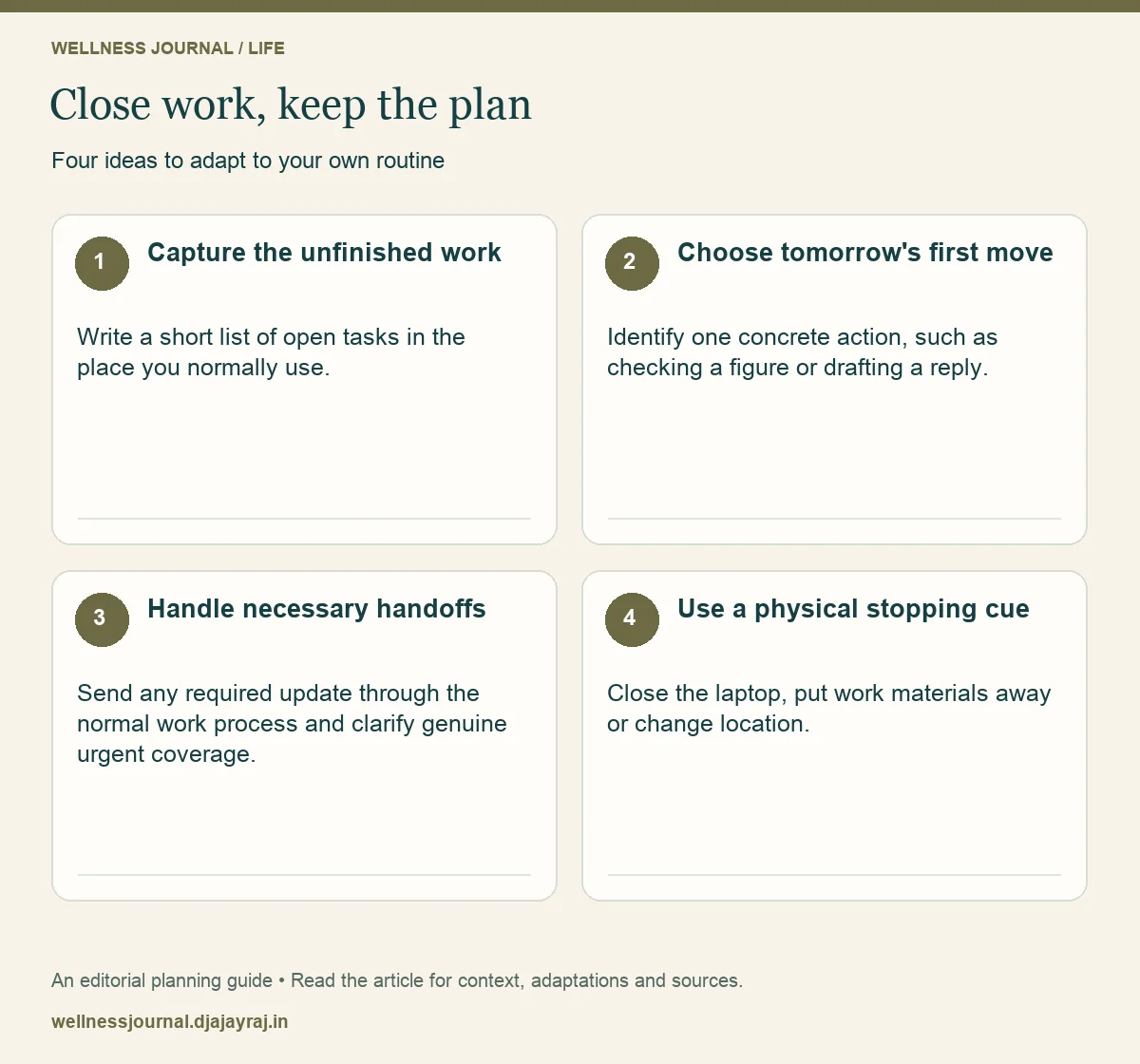
Capture the unfinished work
Write a short list of open tasks in the place you normally use. Add enough context that tomorrow's version of you can understand the next action. Avoid rewriting the entire project plan at the end of a tiring day.
Choose tomorrow's first move
Identify one concrete action, such as checking a figure or drafting a reply. A clear action is easier to start than a broad label like finish project. Keep it small enough that you can begin before becoming distracted by new messages.
Handle necessary handoffs
Send any required update through the normal work process and clarify genuine urgent coverage. Set availability expectations where your role allows. Do not silently ignore agreed responsibilities, but do not assume every notification deserves an immediate evening response.
Use a physical stopping cue
Close the laptop, put work materials away or change location. In a shared room, a simple cover or folder can mark the transition. Choose a cue that is possible even when you cannot leave a separate office.
A short end-of-day handoff
| Step | Useful output | Avoid |
|---|---|---|
| Capture | A short open-task list | Replanning every project |
| Prioritise | Tomorrow's first action | A vague giant task |
| Communicate | Necessary handoff | Unclear availability assumptions |
| Close | A physical stopping cue | Starting another optional task |
Make it work for you
Make room for exceptional days
Some days require a later finish or a planned return to work. Name that exception clearly and decide what it changes. An occasional exception should not quietly become the default. If work repeatedly affects sleep, relationships or health, consider discussing workload and support with the appropriate person or professional.
For an abrupt finish
Write one sentence: 'I stopped here; next I need to do this.' Save the relevant file safely and close. Even a short handoff can be more useful than trying to hold the task in memory all evening.
Quick checklist
- Capture unfinished tasks once.
- Clarify real urgent responsibilities.
- Use a clear, practical stopping cue.
Common questions
What if I work from my bedroom?
Use a small physical boundary, such as putting the laptop away or covering work materials. The cue does not require a separate room.
Will a routine fix burnout?
No. Persistent work-related distress may require changes to demands, support and professional care. A routine is only one practical tool.