Safe listening habits begin before the music gets loud. A noisy train, a busy gym or a long gaming session can make it easy to turn the volume up and stop noticing it. Use a few practical checks to keep listening deliberate. No single percentage on a volume slider guarantees safety because devices, headphones and recordings differ.
Notice when the environment drives the volume
If you repeatedly increase volume to overcome background noise, consider changing the listening situation. Move to a quieter place when possible or use appropriate equipment without losing awareness of hazards. Noise-cancelling headphones are not automatically certified hearing protection for loud work or events. Choose protection intended for the environment when it is needed.
NIDCD explains that hearing risk depends on sound level and exposure duration. Reducing noise exposure helps prevent noise-related hearing damage.
Background guidance: NIDCD: Noise-induced hearing loss; NIDDK: Changing habits for better health.
Four practical steps
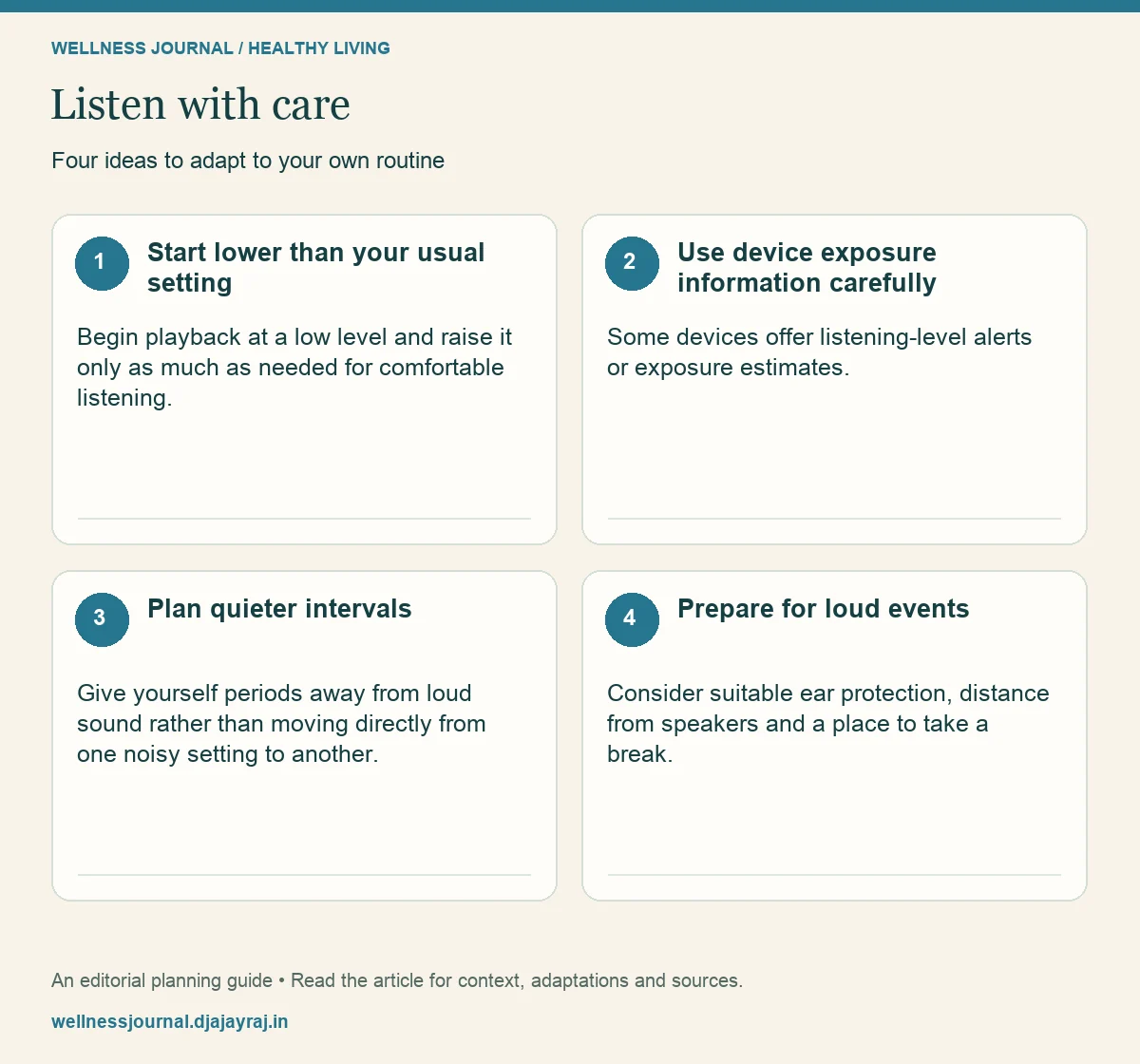
Start lower than your usual setting
Begin playback at a low level and raise it only as much as needed for comfortable listening. Check again after a while, because a level can start feeling normal even when it is unnecessarily loud.
Use device exposure information carefully
Some devices offer listening-level alerts or exposure estimates. These can be useful prompts, but they are not a medical assessment. Keep the alerts enabled when helpful and do not treat an apparently acceptable estimate as permission to ignore discomfort.
Plan quieter intervals
Give yourself periods away from loud sound rather than moving directly from one noisy setting to another. A break works best when it is actually quieter. Turning off headphones while standing beside loud speakers is not much of a change.
Prepare for loud events
Consider suitable ear protection, distance from speakers and a place to take a break. Learn how to fit the protection correctly. If your work involves noise, follow occupational guidance and the protection required for the task.
Make a safer listening decision
| Situation | Useful action | Avoid assuming |
|---|---|---|
| Noisy commute | Reduce competing noise safely | More volume is the only solution |
| Long headphone session | Check level and take quiet breaks | A fixed slider percentage is universal |
| Concert or loud event | Use suitable protection | Distance alone always solves exposure |
| Persistent ringing or hearing change | Seek professional assessment | It will always disappear |
Make it work for you
Keep hearing changes on your radar
Ringing, muffled hearing or difficulty following conversation can be reasons to get advice, especially if they persist. Sudden hearing loss needs urgent medical attention. Do not wait for a listening app to confirm a problem. A professional assessment can help identify what is happening and what protection or treatment is appropriate.
Make protection easy to find
Store suitable ear protection with the items you take to loud events or noisy work. Check its condition and instructions. Protection left in a drawer at home cannot help when the sound starts.
Quick checklist
- Keep volume and duration in view.
- Use properly fitted protection when needed.
- Seek prompt care for sudden hearing changes.
Common questions
Is a 60-percent volume setting always safe?
No. Output differs between devices and headphones. Sound level, duration and circumstances matter more than one universal slider rule.
Are ordinary headphones hearing protection?
Not necessarily. Use equipment designed and rated for the noise exposure when protection is required.