Boundary setting examples are most useful when they sound like something you would actually say. You do not need a formal speech to explain that you are unavailable tonight or cannot take on another task. A small boundary names what you can do and what you cannot. It is about your actions and limits, not controlling another person's feelings or behaviour.
Choose one concrete limit
Start with a specific situation rather than announcing a new personality. You might need a response window, a quieter evening or a smaller commitment. Decide what you can genuinely follow through on. A boundary that depends on making another person agree with you may be less workable than one that clearly describes your own availability.
NIMH self-care guidance includes setting priorities and saying no when appropriate. Boundaries depend on the relationship and the safety of the situation.
Background guidance: NIMH: Caring for your mental health; NIH: Social wellness toolkit.
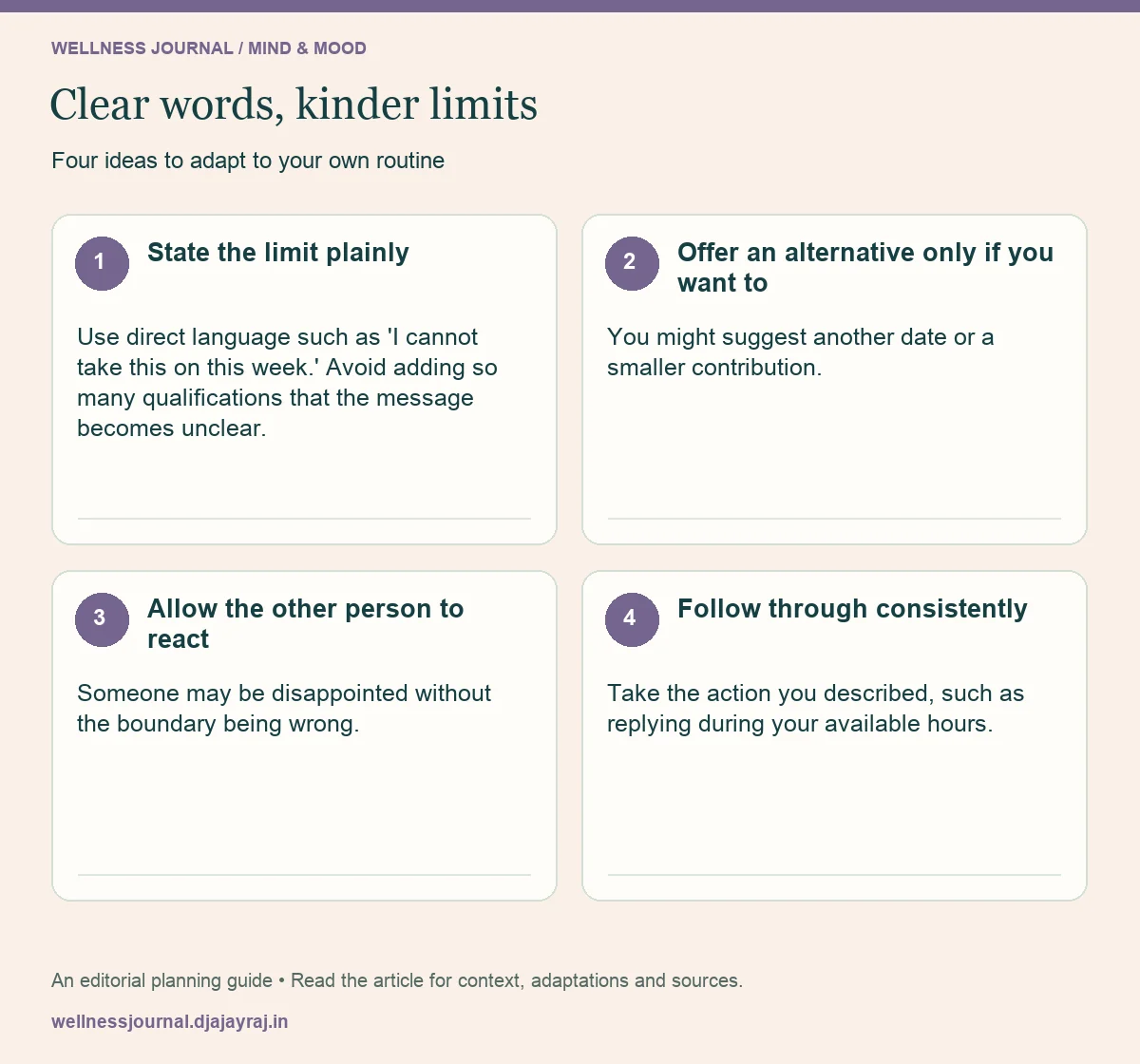
Four practical steps
State the limit plainly
Use direct language such as 'I cannot take this on this week.' Avoid adding so many qualifications that the message becomes unclear. A brief explanation is optional when appropriate; you do not need to argue every detail.
Offer an alternative only if you want to
You might suggest another date or a smaller contribution. Do not offer a substitute that creates the same overload you were trying to avoid. An alternative should reflect real capacity, not a way to soften every no.
Allow the other person to react
Someone may be disappointed without the boundary being wrong. You can listen respectfully while keeping the limit clear. If negotiation is useful, discuss practical details rather than repeatedly defending your right to have a limit.
Follow through consistently
Take the action you described, such as replying during your available hours. If you need to change the arrangement, communicate that. A clear follow-through makes the boundary more understandable than increasingly elaborate explanations.
Short phrases to adapt
| Situation | Possible wording | What it clarifies |
|---|---|---|
| Extra task | I cannot add this this week | Capacity |
| Timing | I can discuss it tomorrow afternoon | Availability |
| Shorter visit | I can stay for an hour | Duration |
| Personal topic | I would rather not discuss that | Conversation limit |
Make it work for you
Consider power and safety
A workplace requirement, caring responsibility or unsafe relationship may need more than a simple script. Think about the consequences and available support. If someone responds with threats, intimidation or violence, prioritise safety and seek appropriate help. A general boundary exercise should not encourage you to confront a dangerous person without support.
Practise the sentence once
Say the wording aloud and remove unnecessary apologies or detail if they obscure the message. Keep the tone natural. You can be respectful without making a long case.
Quick checklist
- Name a specific limit.
- Offer only alternatives you can sustain.
- Prioritise safety when a response may be threatening.
Common questions
Is saying no selfish?
A limit can be a reasonable way to manage capacity. Context matters, but you do not have to accept every request to care about others.
What if I feel guilty afterward?
Discomfort can happen when changing a familiar pattern. Review whether the limit was fair and useful rather than treating guilt alone as proof it was wrong.