Gratitude journal prompts can help you notice a good moment without claiming that the whole day was good. You might appreciate a useful conversation, a comfortable meal or someone making a difficult task easier. The practice does not require comparing your life with someone who has less. It can coexist with grief, frustration and the need for real change.
Make the observation specific
Instead of writing that you are grateful for everything, choose one moment and describe what mattered. Specificity makes the entry more personal and easier to understand later. You do not need to find a dramatic event. An ordinary detail can be enough, and on some days you may prefer not to do the exercise at all.
NIH and NIMH resources include gratitude among possible self-care practices. It should not be used to dismiss distress or replace support.
Background guidance: NIH: Emotional wellness toolkit; NIMH: Caring for your mental health.
Four practical steps
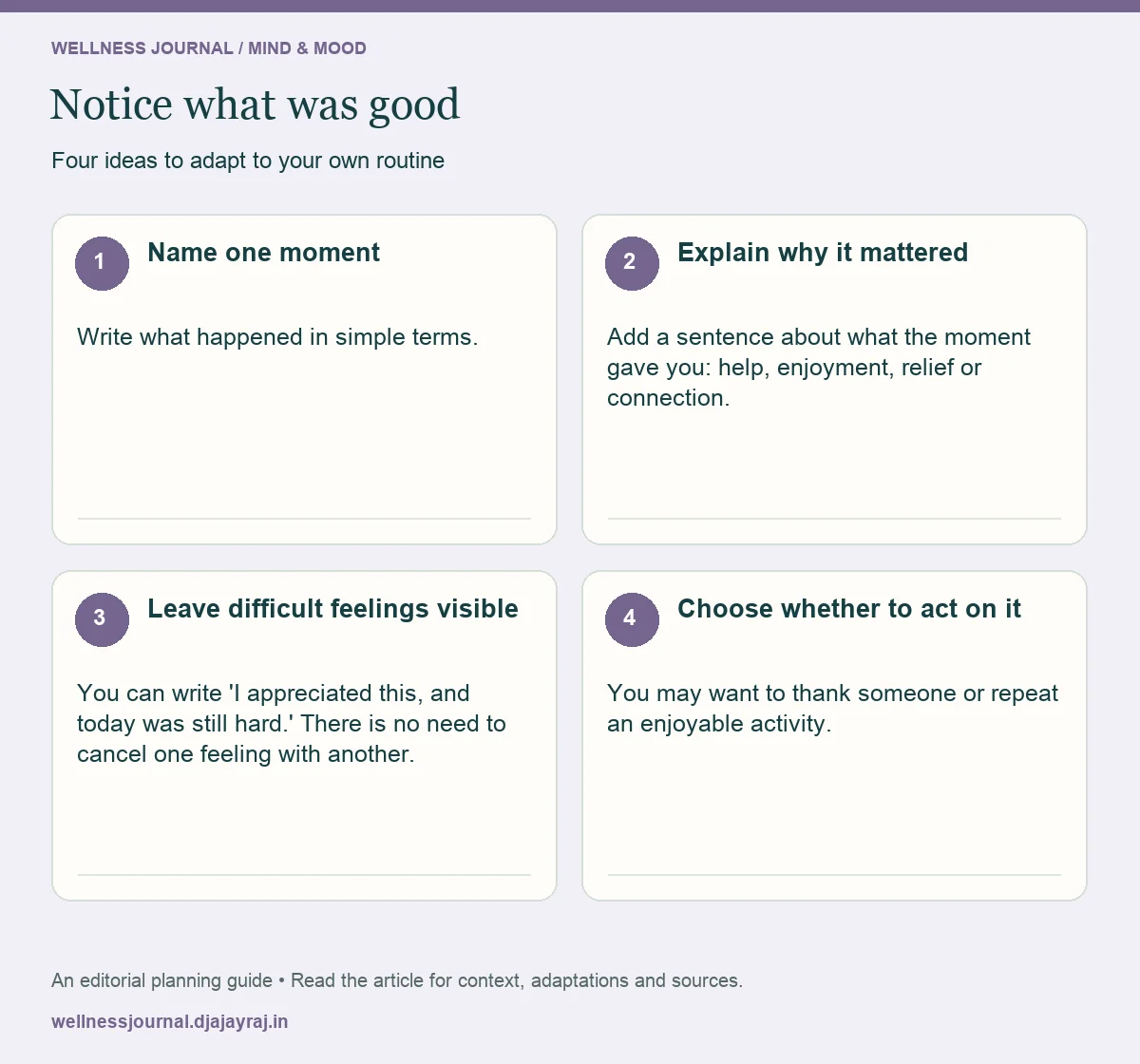
Name one moment
Write what happened in simple terms. Perhaps someone saved you a seat or you enjoyed a quiet cup of tea. Avoid turning the entry into a performance for an audience; it can remain private and imperfect.
Explain why it mattered
Add a sentence about what the moment gave you: help, enjoyment, relief or connection. This keeps the entry grounded in your experience rather than a generic list of things people are supposed to appreciate.
Leave difficult feelings visible
You can write 'I appreciated this, and today was still hard.' There is no need to cancel one feeling with another. Gratitude should not become a reason to tolerate harm or ignore a problem that needs action.
Choose whether to act on it
You may want to thank someone or repeat an enjoyable activity. That is optional. The journal entry can also simply record the moment without creating another task or obligation.
Prompts that allow a mixed day
| Prompt | What it notices | Example direction |
|---|---|---|
| What made one task easier? | Practical help | A colleague clarified something |
| What did I enjoy briefly? | Ordinary pleasure | A meal, sound or view |
| Who made me feel understood? | Connection | A thoughtful conversation |
| What can be good and hard together? | Mixed feelings | Support during a difficult day |
Make it work for you
Avoid turning gratitude into a demand
If the exercise makes you feel guilty for being unhappy, change the wording or stop. You might prefer a neutral observation journal instead. People dealing with depression, trauma or grief do not need to prove appreciation before receiving help. A reflection practice is useful only if it supports your life rather than making your feelings less welcome.
Write one sentence, then close the page
Use 'One thing I appreciated today was…' and finish with a concrete detail. You do not need three entries, a streak or a long explanation every time.
Quick checklist
- Choose a specific moment.
- Allow mixed feelings.
- Keep the exercise optional.
Common questions
What if I cannot think of anything?
You can skip the exercise or record a neutral detail. Do not force a positive statement that feels false.
Does gratitude mean accepting an unfair situation?
No. You can appreciate support while also setting limits, seeking help or working to change the situation.