A simple bedtime routine should help you finish the day, not give you ten more tasks to complete. Start with the part of the evening that repeatedly delays sleep: unfinished chores, work messages or losing track of time. Then choose a short sequence that fits your household. The routine is an invitation to wind down, not a guarantee that you will fall asleep immediately.
Work backward from the time available for sleep
Consider when you need to wake and how much sleep opportunity you can realistically protect. Avoid treating the evening as an unlimited container for everything left undone. Choose a stopping point for optional tasks. If work, caring responsibilities or shift patterns restrict your schedule, a flexible plan is more useful than an idealised timetable that ignores those constraints.
NHLBI recommends consistent sleep timing and a quieter period before bed. Persistent insomnia may need treatment beyond routine changes.
Background guidance: NHLBI: Healthy sleep habits; NHLBI: Understanding insomnia.
Four practical steps
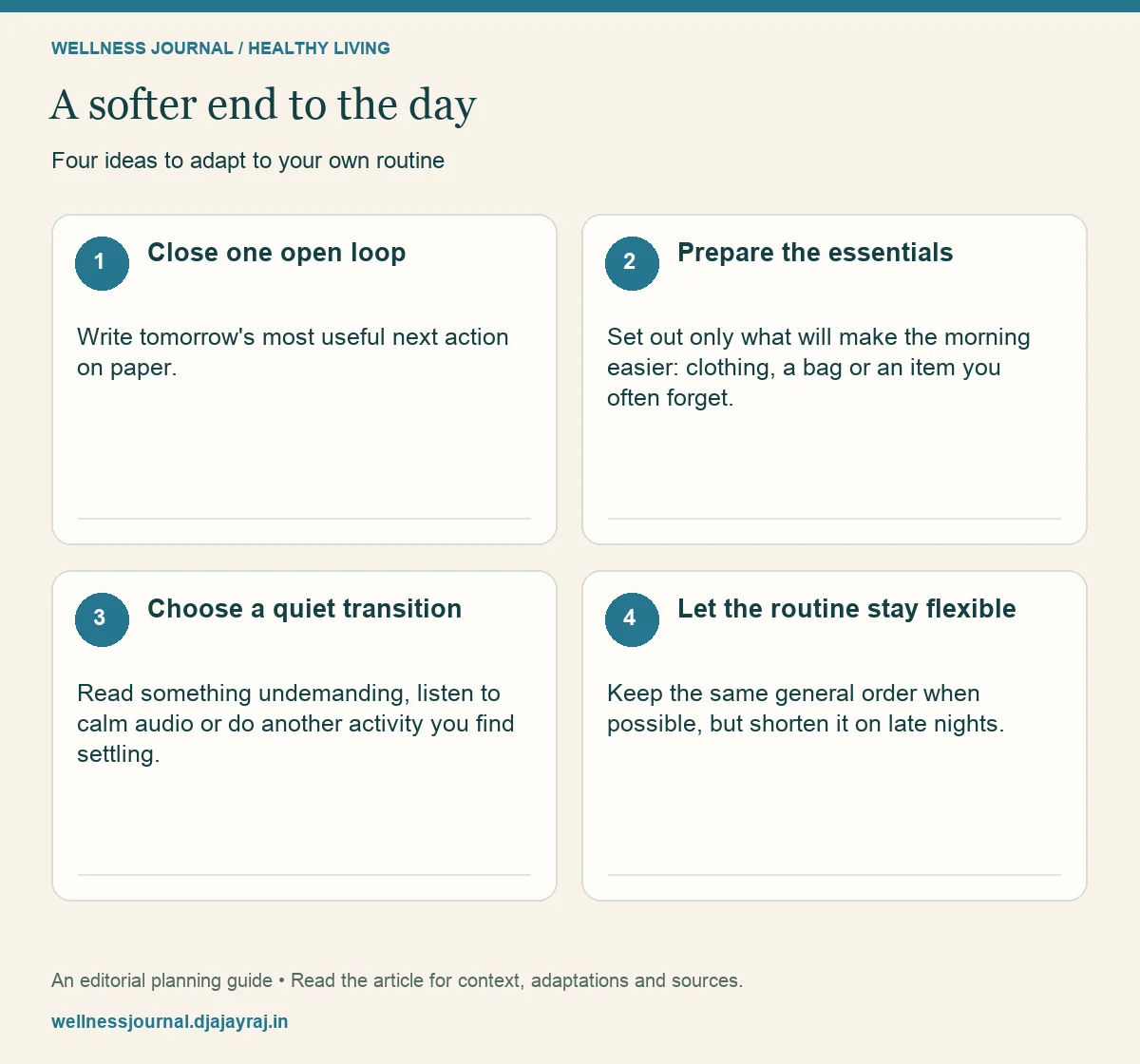
Close one open loop
Write tomorrow's most useful next action on paper. You do not need to plan the entire week. A short note can let an unfinished task remain unfinished without requiring you to keep rehearsing it while getting ready for bed.
Prepare the essentials
Set out only what will make the morning easier: clothing, a bag or an item you often forget. Keep this step brief. Turning bedtime into a full household reset can delay the sleep you were trying to protect.
Choose a quiet transition
Read something undemanding, listen to calm audio or do another activity you find settling. Avoid selecting a routine solely because someone claims it works for everyone. If an activity makes you more alert or frustrated, try a different option.
Let the routine stay flexible
Keep the same general order when possible, but shorten it on late nights. The essential outcome is enough time for sleep. Missing a bath, journal entry or relaxation exercise does not mean the night is ruined.
Build a short evening sequence
| Step | Example | Minimum version |
|---|---|---|
| Close the day | Write tomorrow's next action | One sentence |
| Prepare | Set out essentials | One important item |
| Wind down | Quiet reading or audio | A few calm minutes |
| Protect sleep | Stop optional tasks | Leave them for tomorrow |
Make it work for you
Do not turn sleep into a score
Tracking can be useful for some people, but repeatedly checking the clock or a sleep score may make bedtime feel more pressured. If sleep problems persist, affect daytime functioning or involve loud snoring and breathing concerns, speak with a clinician. A routine cannot diagnose the cause or replace evidence-based treatment for a sleep disorder.
For an unexpectedly late evening
Use the shortest version: essential hygiene, one preparation task and bed when appropriate. Do not stay up to complete the full routine. The routine exists to support sleep time.
Quick checklist
- Keep the sequence short.
- Protect a realistic sleep opportunity.
- Seek help for persistent or concerning sleep problems.
Common questions
How long should a bedtime routine take?
There is no required length. Choose enough time for a comfortable transition without creating a long checklist that delays bed.
Will this cure insomnia?
No routine can promise that. Persistent insomnia may need professional assessment and specific treatment.